What This Document Is
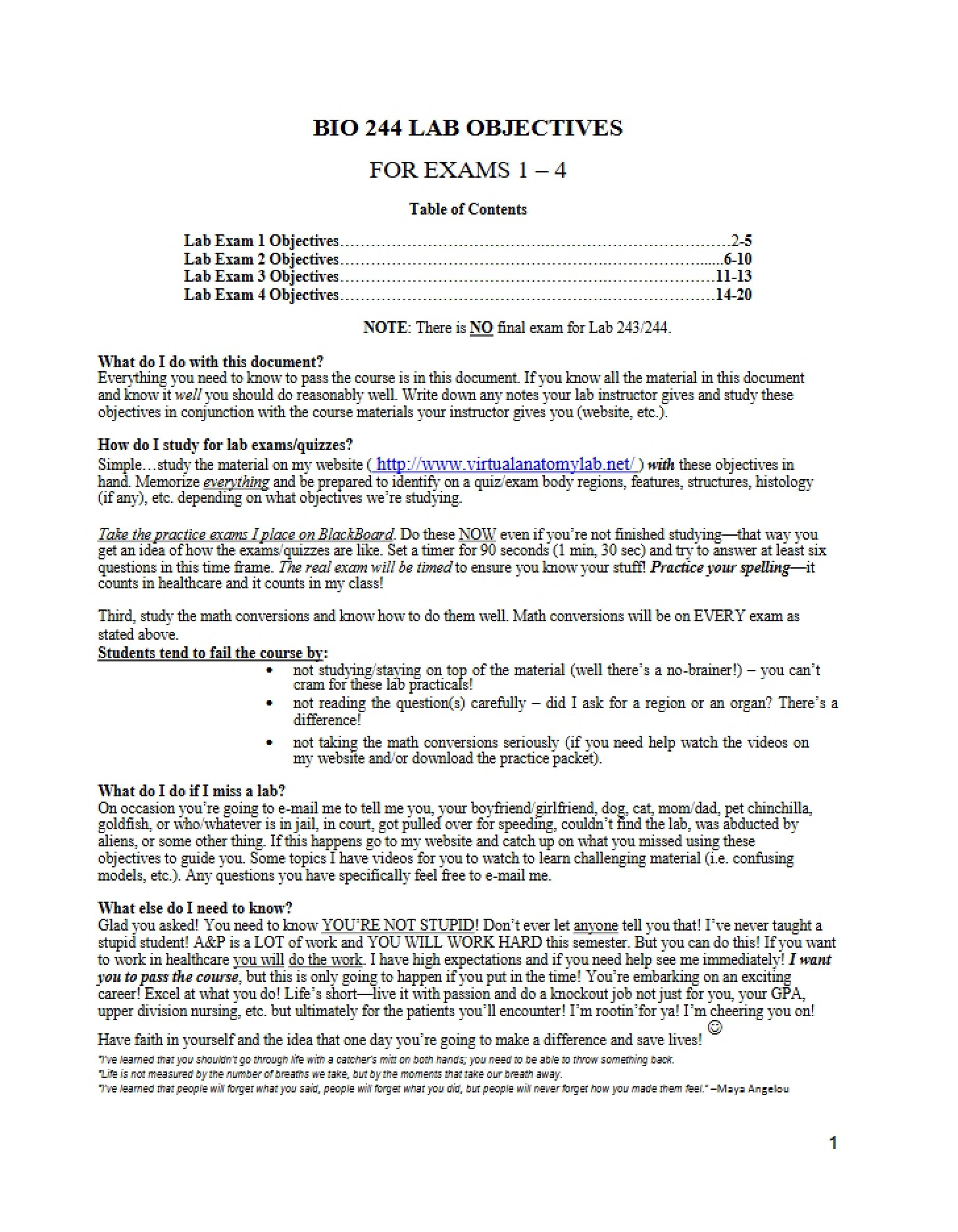
This resource is a comprehensive lab objective guide specifically designed for students enrolled in Human Anatomy & Physiology II (BIOL 244) at the University of South Carolina. It functions as a focused study aid, outlining the key concepts and skills expected to be mastered across multiple laboratory exams. It’s structured around a series of lab exams – numbered 1 through 4 – and provides a roadmap for successful preparation.
Why This Document Matters
This guide is invaluable for students aiming to excel in the laboratory portion of BIOL 244. It’s particularly helpful when used *in conjunction* with course materials provided by your instructor (lectures, website content, and dissection materials). Students who proactively utilize this guide alongside their regular studies will gain a clearer understanding of the precise topics emphasized in the lab exams and can tailor their preparation accordingly. It’s a crucial tool for identifying knowledge gaps and prioritizing study efforts.
Common Limitations or Challenges
This document is *not* a substitute for attending lab sessions, completing assigned coursework, or engaging with your instructor. It does not contain the actual lab materials themselves, detailed explanations of anatomical structures, or step-by-step instructions for dissections. It also doesn’t include the final exam objectives, as there is no final lab exam for this course. Success requires active learning and a thorough understanding of all course components.
What This Document Provides
* A clear breakdown of objectives organized by lab exam (Exams 1-4).
* Guidance on effective study strategies for lab exams and quizzes.
* Information regarding important mathematical conversions frequently tested.
* Insights into common pitfalls students encounter in the course.
* Advice on how to approach missed lab sessions and access supplemental learning resources.
* A focus on key systems including the Endocrine System and Blood (as exemplified by Lab Exam #1 objectives).
* A list of expected skills, such as identifying glands and understanding hormone functions.