What This Document Is
This document comprises lecture materials from a Sedimentary Petrology course (GY 402) at the University of South Alabama, specifically focusing on primary and diagnostic sedimentary structures. It delves into the characteristics and formation of features found within sedimentary rocks, offering a detailed exploration of how these structures reveal information about past depositional environments. The lecture builds upon previous discussions of flow regimes and sediment transport, expanding into more complex interpretations.
Why This Document Matters
This resource is invaluable for students studying sedimentary geology, paleoclimatology, and related earth science disciplines. It’s particularly useful for those seeking a deeper understanding of how to interpret the history recorded within sedimentary rocks. Geologists, environmental scientists, and anyone analyzing sedimentary sequences for resource exploration or hazard assessment will find this material beneficial. It’s best utilized during coursework, while preparing for field work, or when needing a reference for sedimentary structure identification.
Common Limitations or Challenges
This lecture focuses on theoretical frameworks and observational descriptions. It does not provide hands-on laboratory exercises or detailed field guides for structure identification. While it references key publications in the field, it doesn’t include the full text of those sources. Furthermore, it assumes a foundational understanding of sediment transport principles and basic geological terminology. It is a component of a larger course and doesn’t stand alone as a complete introduction to sedimentary petrology.
What This Document Provides
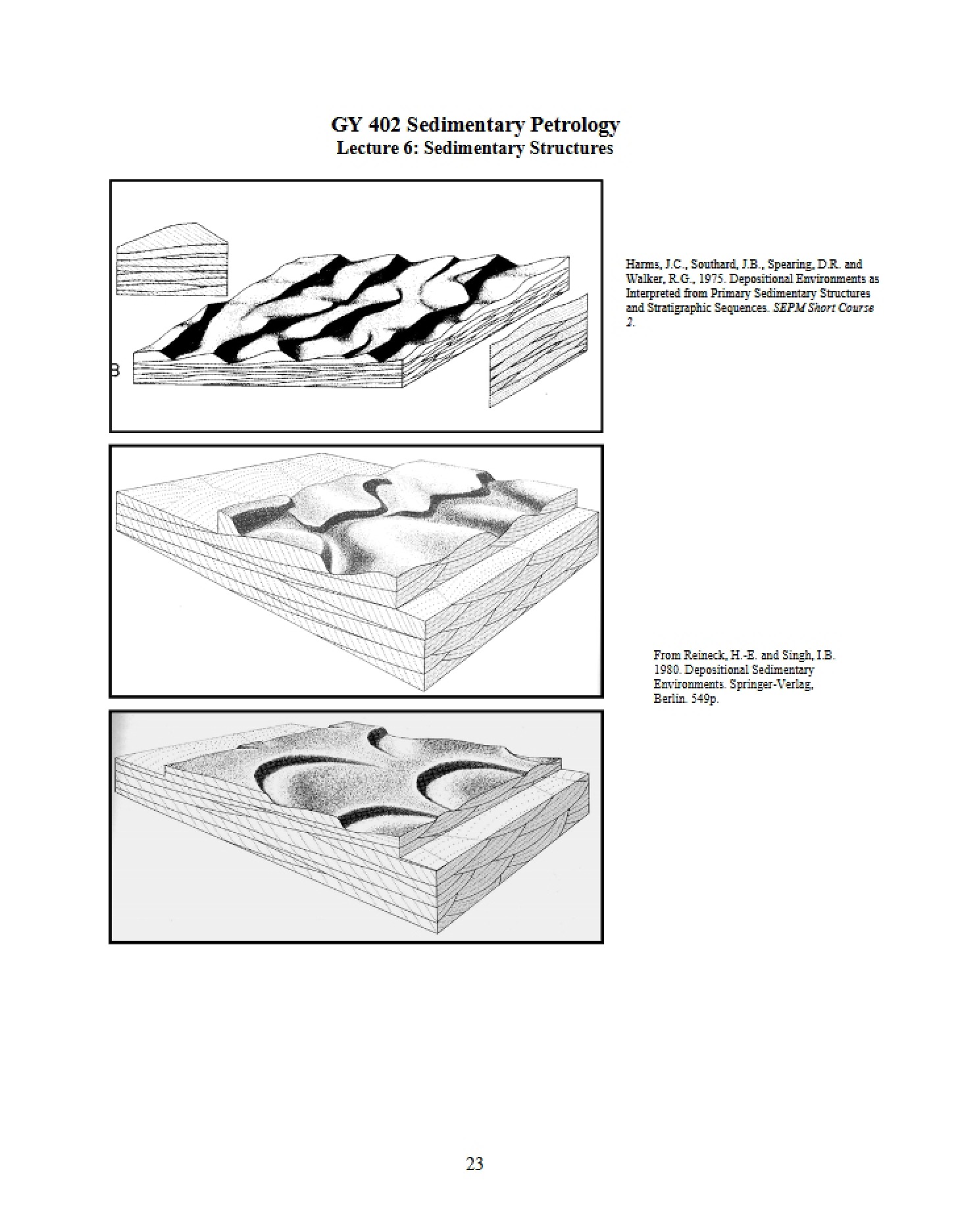
* An examination of traction structures formed by sediment movement.
* Discussion of how current velocity influences sedimentary structure development.
* Exploration of ripple morphology and its relationship to flow conditions.
* Analysis of various types of sedimentary structures, including laminations, ripples, and dunes.
* Consideration of erosional and surface features within sedimentary deposits.
* An overview of intrusive sedimentary structures and their formation processes.
* Guidance on recognizing truly diagnostic sedimentary structures for environmental interpretation.