What This Document Is
This document contains lecture notes exploring the foundational concept of worldview and its profound impact on cultural understanding. It delves into the intricate ways individuals and groups perceive reality, organize information, and interact with the world around them. The material examines both personal and cultural worldviews, offering a framework for analyzing diverse perspectives and recognizing potential areas of intercultural communication challenges. It’s designed to build a strong theoretical base for understanding cultural diversity.
Why This Document Matters
Students enrolled in Exploring Cultural Diversity (EPSY 202) will find these notes particularly valuable as they navigate complex concepts related to cultural differences and societal structures. This resource is ideal for reviewing material presented in lectures, preparing for class discussions, and building a solid foundation for further coursework. Anyone seeking to deepen their understanding of the underlying assumptions that shape human behavior and intercultural interactions will benefit from exploring these concepts.
Topics Covered
* The core components and characteristics of worldviews
* The interplay between cultural and personal worldviews
* Deep structural elements that shape cultural perspectives (ontology, epistemology, axiology)
* Variations in communication styles across cultures, including verbal and non-verbal cues
* Levels of discrimination – individual, institutional, and structural – and their impact
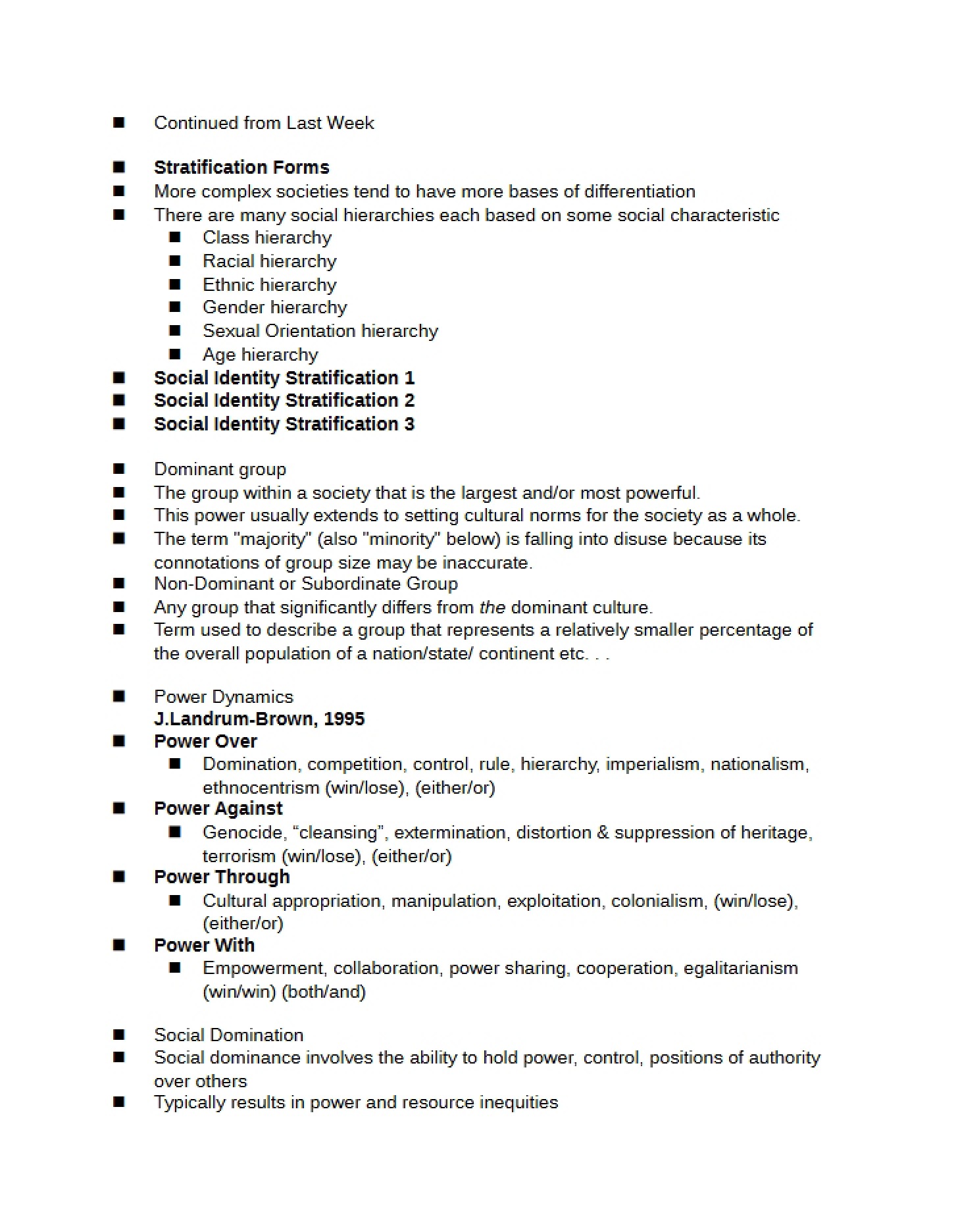
* The concept of dominant and non-dominant groups within a society
* Core values often associated with US American culture
What This Document Provides
* A detailed breakdown of the elements that constitute a worldview.
* An exploration of how worldviews influence processes like action orientation, time perception, and communication.
* A framework for analyzing communication differences, including discourse patterns and non-verbal behaviors.
* An overview of different forms of discrimination and their systemic implications.
* A discussion of the role of power dynamics in shaping cultural norms and values.
* A starting point for critical self-reflection on personal biases and assumptions.