What This Document Is
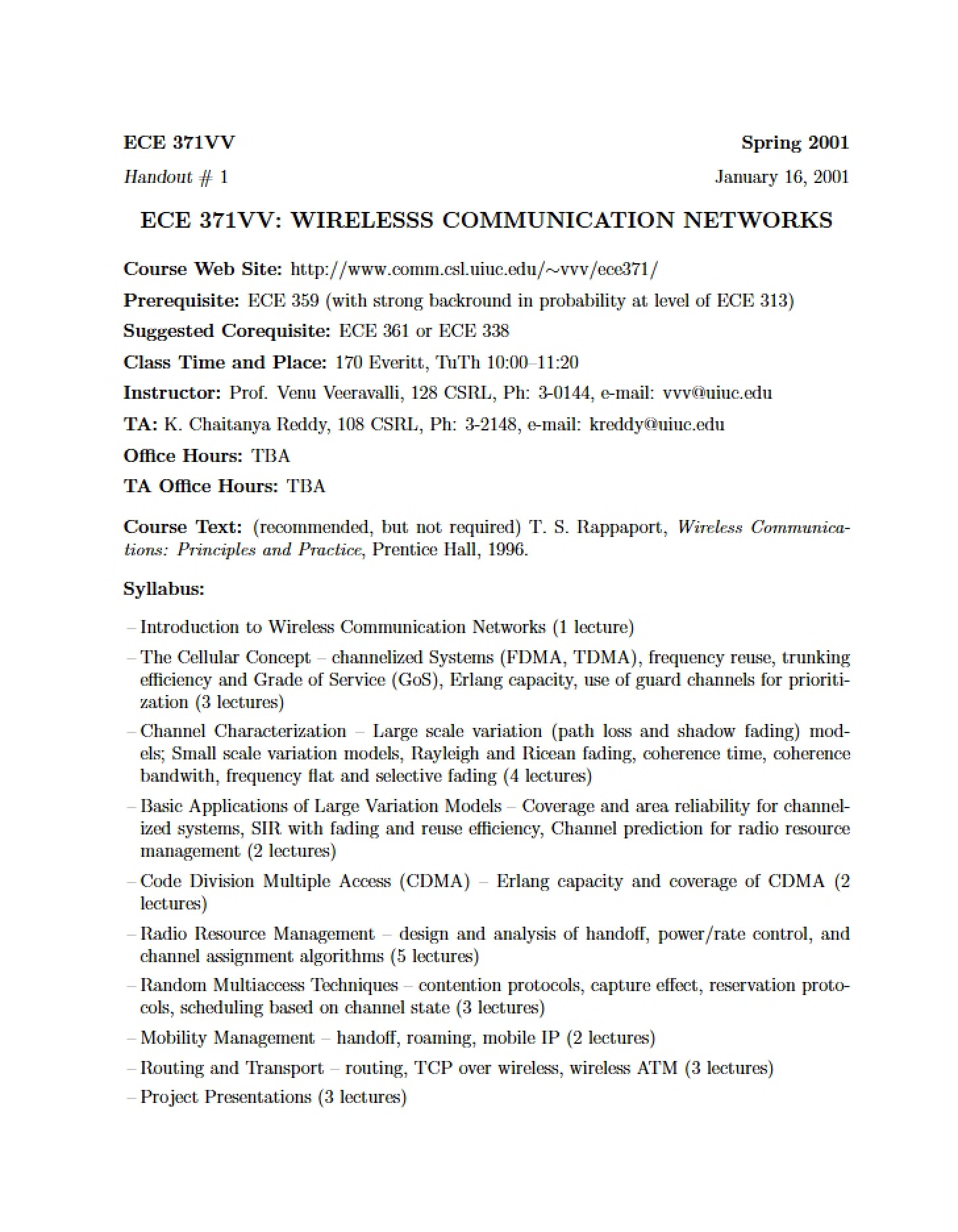
These are detailed lecture notes from ECE 371VV: Wireless Communication Networks, offered at the University of Illinois at Urbana-Champaign. The notes focus on a specific second-generation cellular standard, providing an in-depth look at its architecture and key operational principles. This material is designed to supplement classroom learning and offer a comprehensive resource for understanding the intricacies of this important communication system. It delves into both the transmission and reception processes, offering a foundational understanding of the technologies involved.
Why This Document Matters
This resource is ideal for students currently enrolled in a wireless communication course, particularly those seeking a deeper understanding of early CDMA technologies. It’s also valuable for anyone preparing to study more advanced wireless systems, as it establishes core concepts applicable to later generations. Individuals reviewing fundamental wireless principles or needing a reference for specific standard details will find these notes particularly useful. Access to the full notes will allow for a more thorough grasp of the subject matter and aid in successful course completion.
Topics Covered
* Forward and Reverse Link Communication
* Channel Structure and Allocation
* Error Correction and Detection Techniques
* Spreading and Scrambling Methods
* Power Control Mechanisms
* Code Generation and Application
* Synchronization and Paging Procedures
* Comparison to other 2G standards
What This Document Provides
* A detailed breakdown of the system’s frequency bands and channel organization.
* Explanations of the roles of key components like the Walsh code generator and PN sequences.
* Illustrations of how data is processed for robust transmission.
* Insights into the mechanisms used for signal quality enhancement and security.
* A focused examination of the control schemes employed within the system.
* A structural overview of the system’s modulation techniques.