What This Document Is
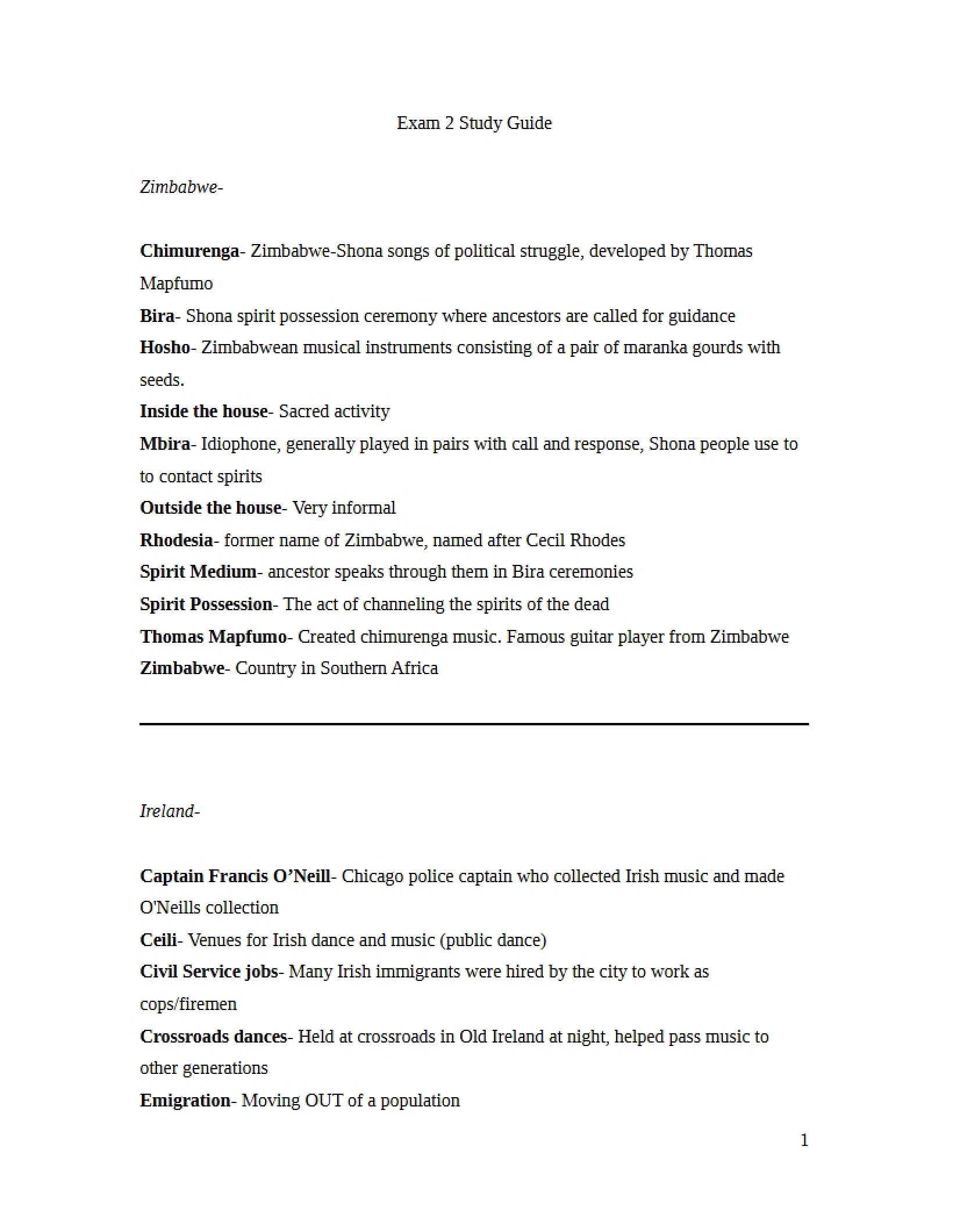
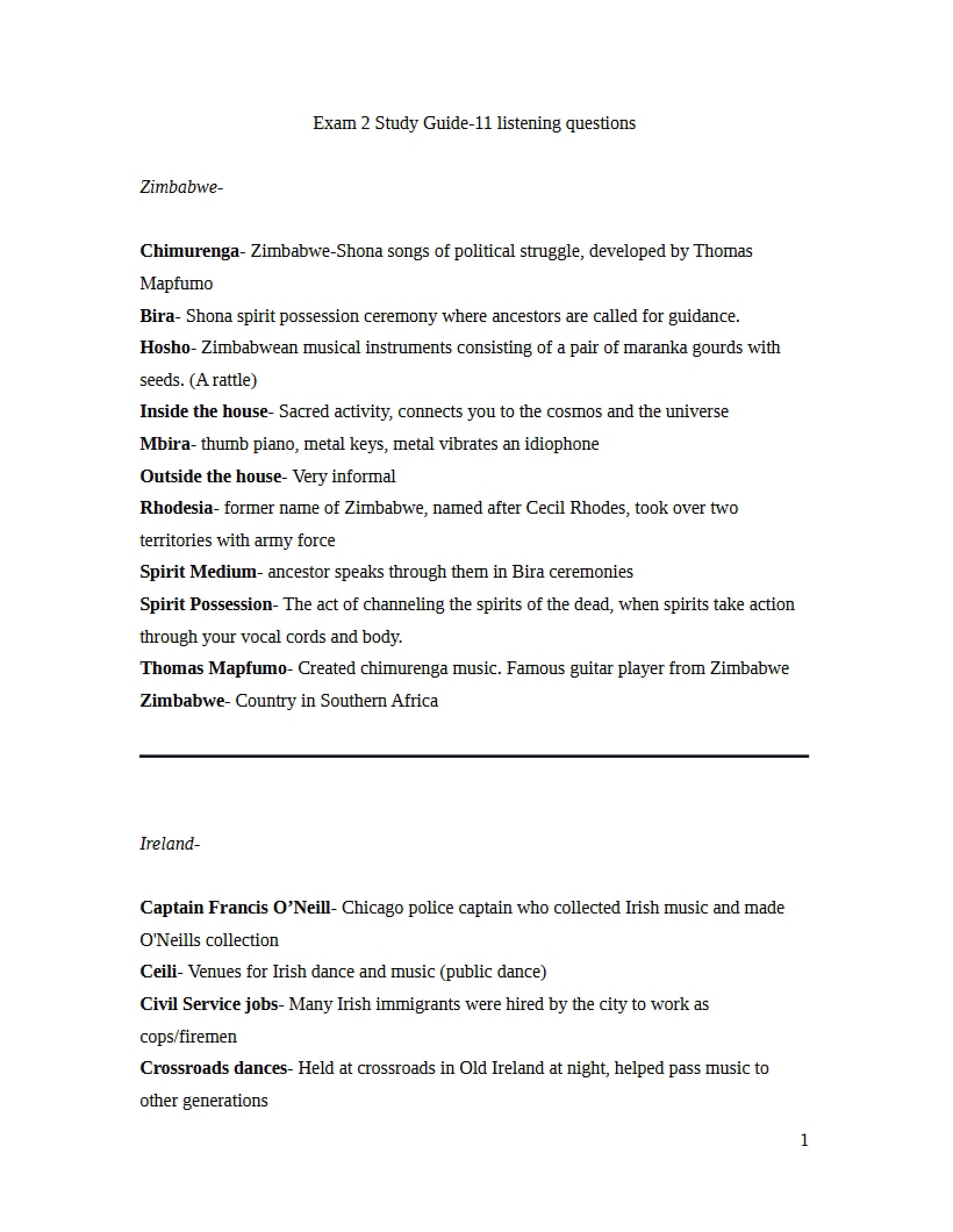
This document comprises lecture notes and a review guide specifically prepared for the third exam in Illinois State University’s Experiencing Music (MUS 152) course. It focuses on two distinct musical traditions: Irish/Irish American music and Cuban music. The material synthesizes historical context with musical characteristics and key figures associated with each tradition.
Why This Document Matters
This study guide is essential for students enrolled in MUS 152 preparing for their third exam. It consolidates information presented in lectures, providing a focused resource for review. Understanding the historical and cultural forces shaping these musical styles is central to the course’s objectives. It’s designed to be used in the days leading up to the exam on November 17th, following a dedicated review session on November 10th.
Common Limitations or Challenges
This document is a *review* and set of *notes*; it does not substitute for attending lectures or completing assigned readings. It provides a framework for understanding the material but doesn’t offer in-depth musical analysis or listening exercises. It’s a study *aid*, not a comprehensive textbook.
What This Document Provides
The full document includes:
* A timeline of key events in Irish history, from St. Patrick to the Great Famine and subsequent emigration.
* Definitions of terms like “planxty,” “ceili,” “chain migration,” and “feis.”
* Information on significant figures in Irish music, including Turlough O’Carolan and Captain Francis O’Neill.
* A historical overview of Cuba, from the arrival of Columbus to the Cuban Revolution and its impact on music.
* Key terms related to Cuban music, such as “rumba,” “clave,” “salsa,” and “santeria.”
* Profiles of influential Cuban musicians like Arsenio Rodriguez and Celia Cruz.
* Details regarding extra credit opportunities due November 14th.
This preview does *not* include detailed musical examples, listening guides, or practice exam questions. It also does not contain the full historical narratives presented in the lectures.