What This Document Is
This document comprises detailed lecture notes from SOC 3155: Quantitative Research Methods and Analysis, offered at the University of Minnesota Twin Cities. It’s a comprehensive resource designed to support understanding of core concepts and techniques used in quantitative social science research. The notes cover foundational principles, moving from basic definitions to more complex statistical ideas. It’s structured as a direct accompaniment to course lectures, offering a detailed record of topics discussed.
Why This Document Matters
Students enrolled in SOC 3155, or similar quantitative research methods courses, will find these notes invaluable. They are particularly helpful for reviewing material after lectures, preparing for quizzes and exams, and building a strong foundation for more advanced coursework. Researchers needing a refresher on fundamental quantitative concepts will also benefit. This resource is most useful when used *in conjunction* with course readings and assignments – it’s designed to clarify and expand upon those materials, not replace them.
Common Limitations or Challenges
These notes are specifically tailored to the content and approach of the SOC 3155 course at the University of Minnesota. While the core principles are broadly applicable, specific examples and the level of detail may not align perfectly with other courses. This resource does *not* provide step-by-step instructions for conducting statistical analyses, nor does it offer practice problems with solutions. It’s a record of concepts, not a hands-on tutorial. Access to the full document is required to see the detailed explanations and examples.
What This Document Provides
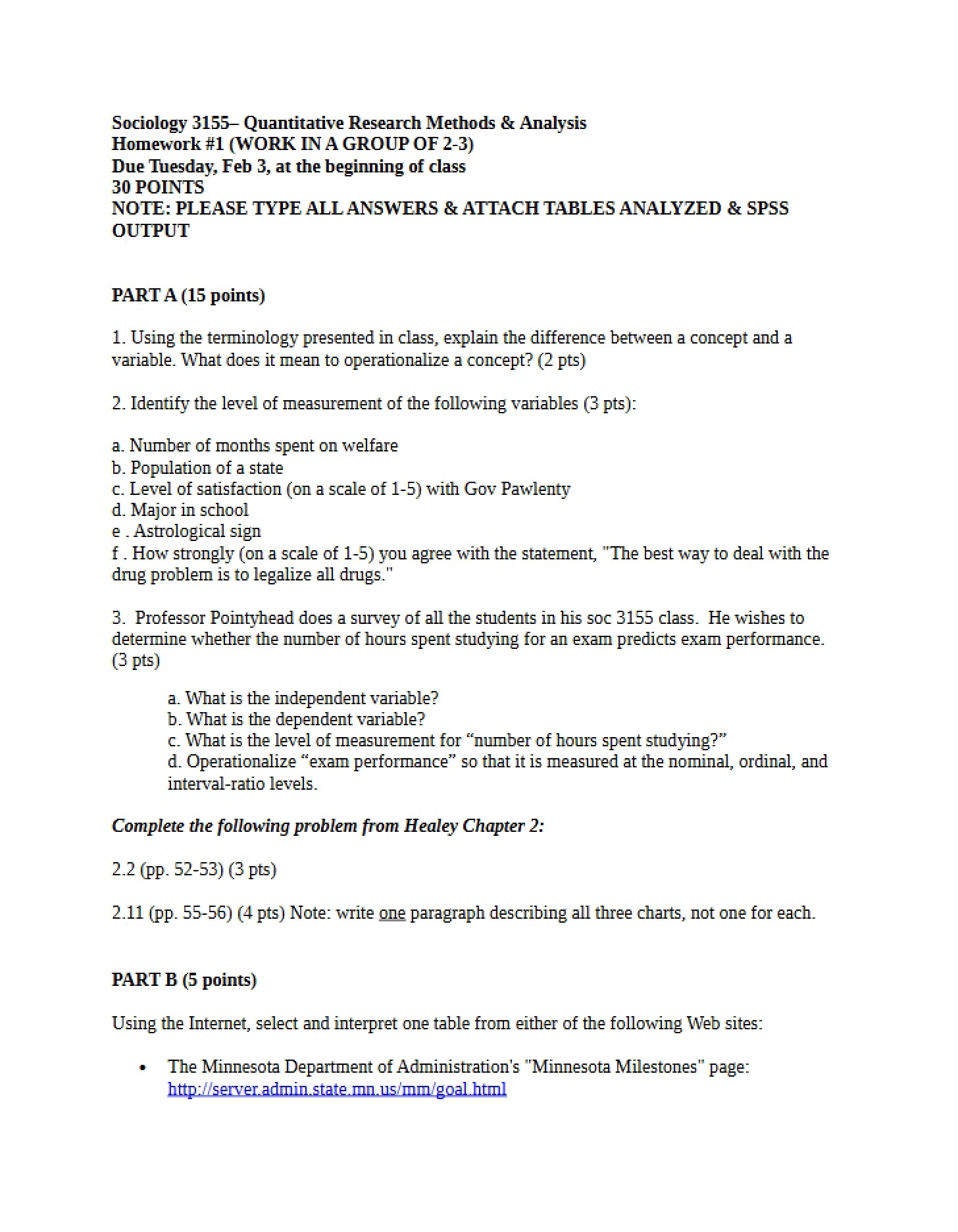
* A review of fundamental concepts like variables, attributes, and levels of measurement (nominal, ordinal, interval/ratio).
* An overview of the distinction between descriptive and inferential statistics.
* An exploration of data reduction techniques and their importance in quantitative research.
* Discussion of key descriptive statistics, including proportions, percentages, ratios, and frequency distributions.
* Considerations regarding the appropriate use and potential misinterpretations of statistical summaries.
* Illustrative examples demonstrating how statistical concepts can be applied to real-world research scenarios.