What This Document Is
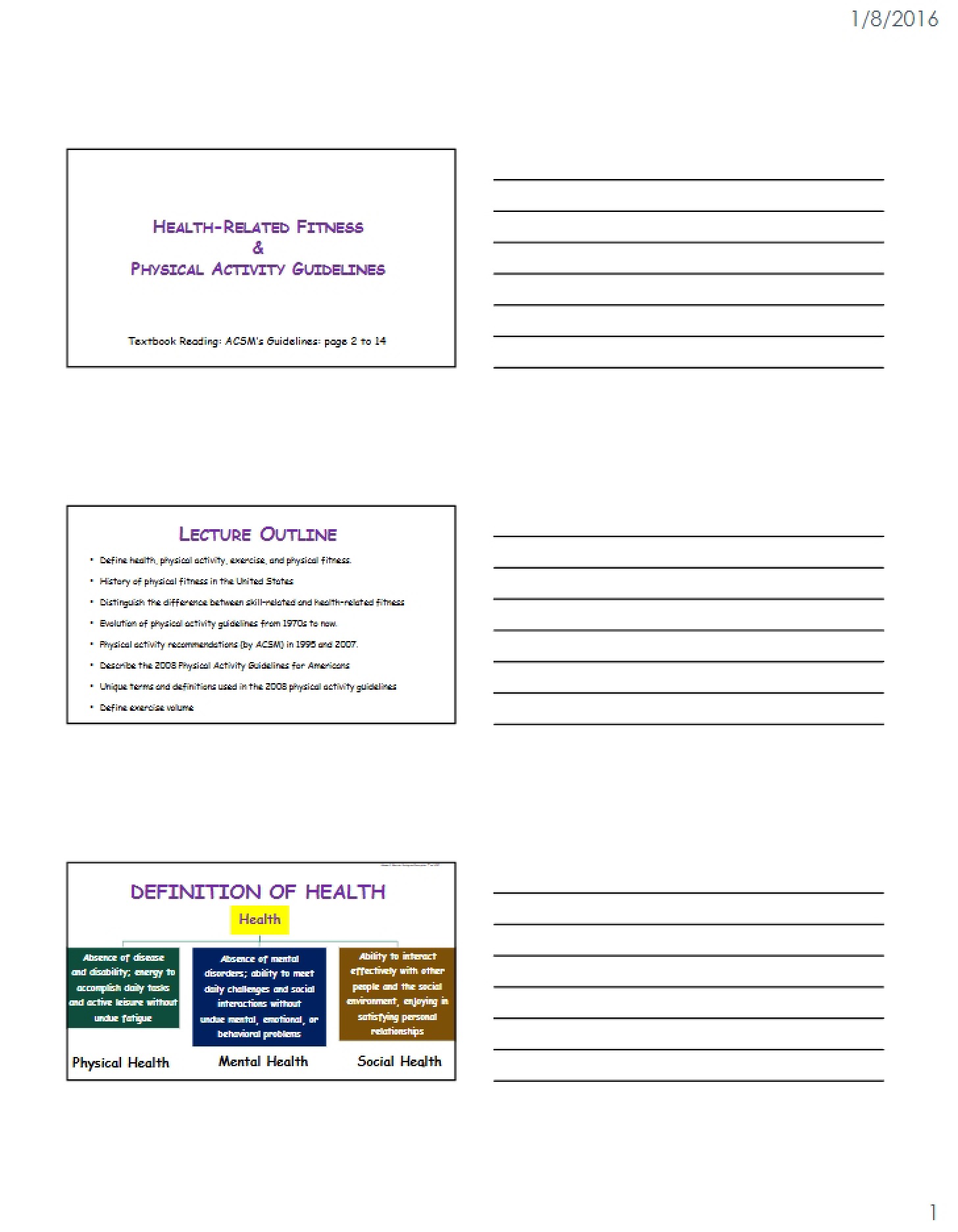
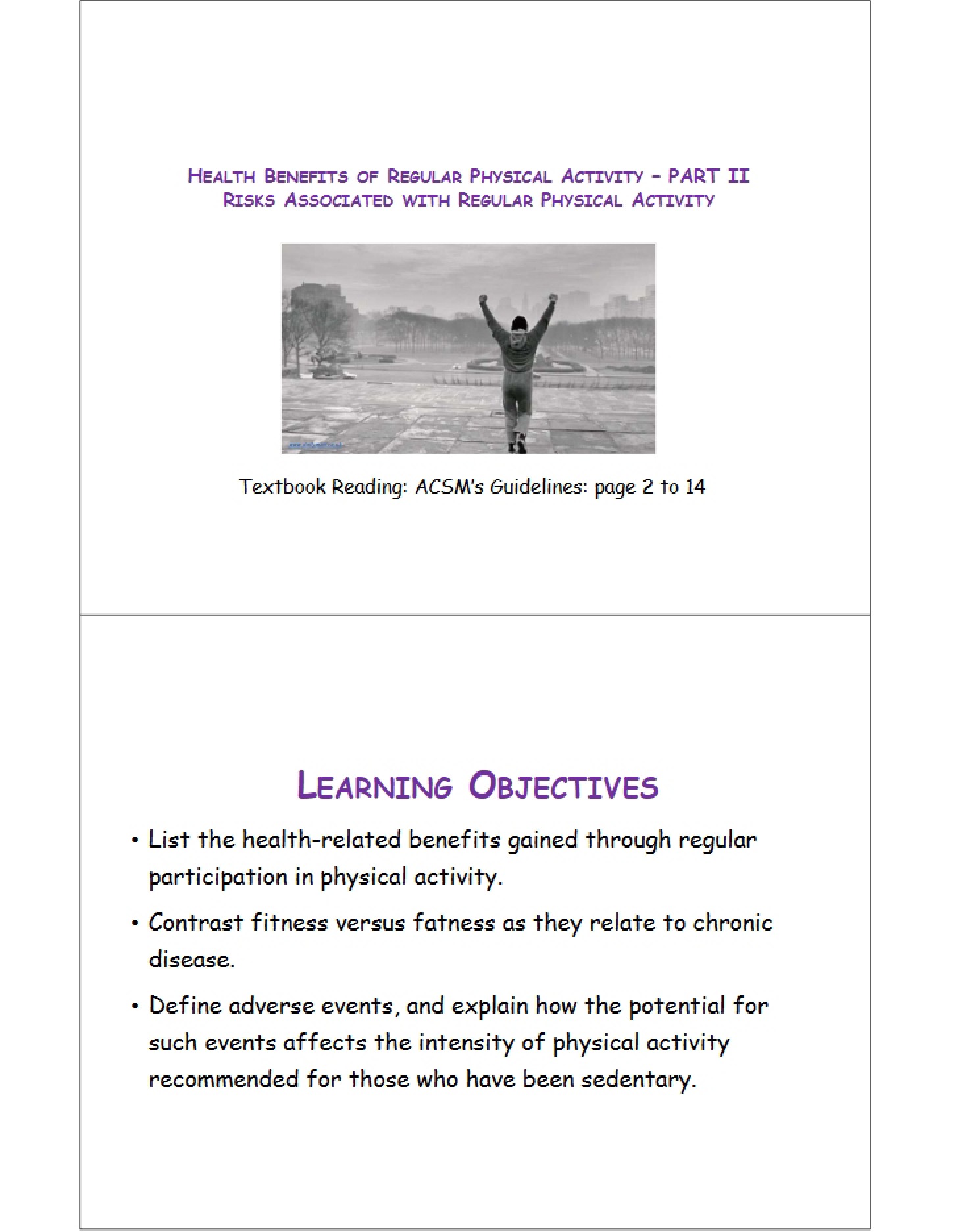
This material represents lecture notes from an advanced-level Clinical Exercise Physiology course (EXSC 531) at the University of South Carolina. It focuses on the critical relationship between physical activity, health, and disease prevention. The lecture appears to delve into the significant public health implications of inactivity and explores how exercise impacts various health outcomes, moving beyond simply focusing on weight management. It draws upon research and data from prominent organizations and studies.
Why This Document Matters
This lecture will be particularly valuable for students pursuing careers in exercise science, clinical physiology, healthcare, and related fields. It’s designed for those seeking a deeper understanding of the physiological basis for exercise recommendations and the role of physical activity in managing and preventing chronic conditions. It’s best utilized *during* the course alongside active participation in lectures and labs, and as a reference point for further study and research. Professionals seeking to update their knowledge on current perspectives in exercise physiology will also find this beneficial.
Common Limitations or Challenges
This lecture provides a focused overview of key concepts and research findings. It does *not* offer detailed exercise prescriptions or individualized training programs. It also doesn’t cover the full spectrum of clinical exercise physiology topics – it’s a single lecture within a larger course. The material presents data and research, but doesn’t provide exhaustive explanations of statistical methods or research design. It is intended to supplement, not replace, comprehensive textbooks and clinical experience.
What This Document Provides
* An overview of the impact of physical inactivity on overall public health.
* Discussion of the relationship between physical activity levels and mortality risk.
* Presentation of data regarding leading causes of preventable death.
* Exploration of the connection between fitness, obesity, and health outcomes.
* Insights into research findings related to physical activity and specific diseases (e.g., cardiovascular disease, breast cancer, diabetes).
* References to key studies and organizations in the field of exercise physiology.
* Consideration of attributable fractions related to all-cause mortality.