What This Document Is
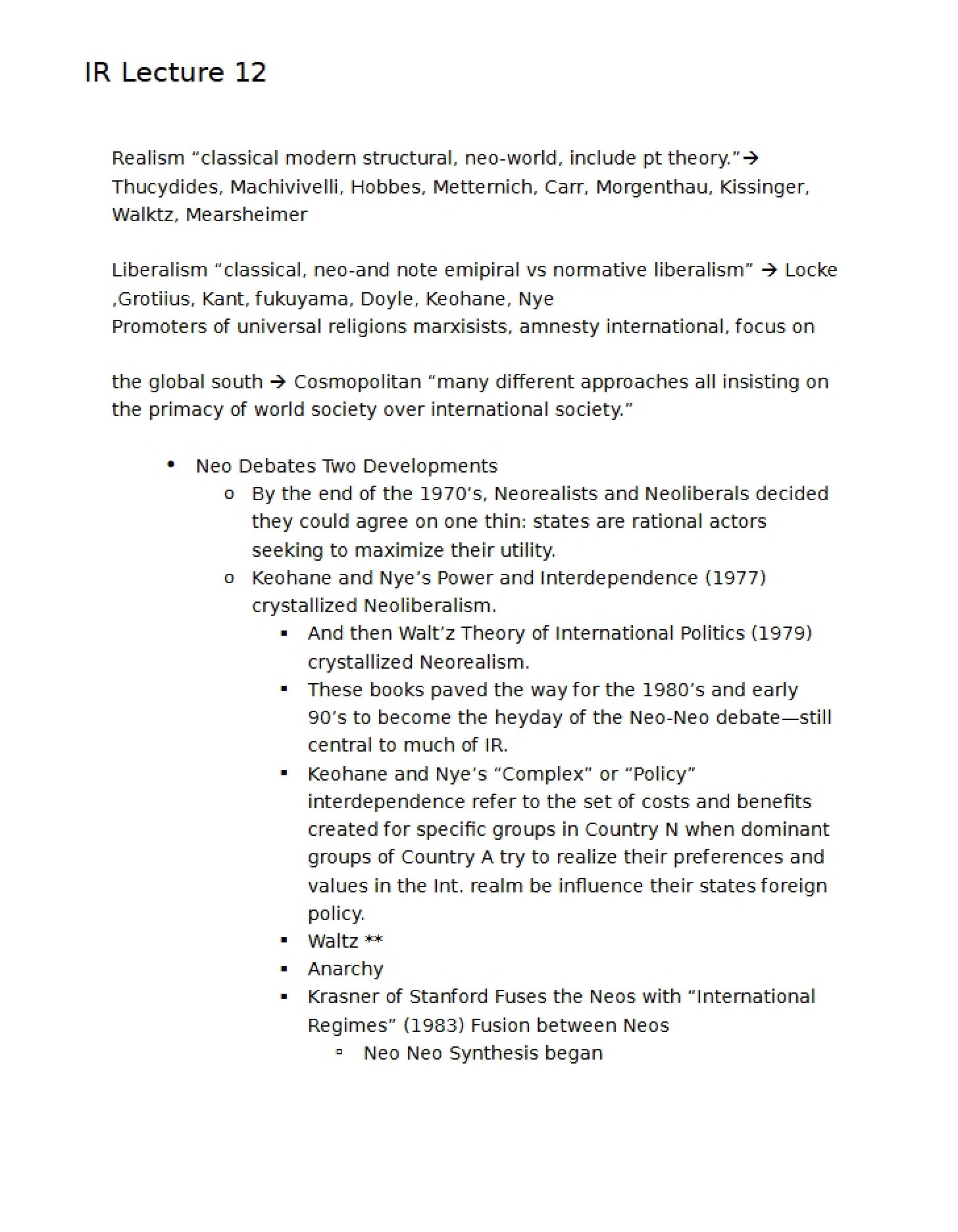
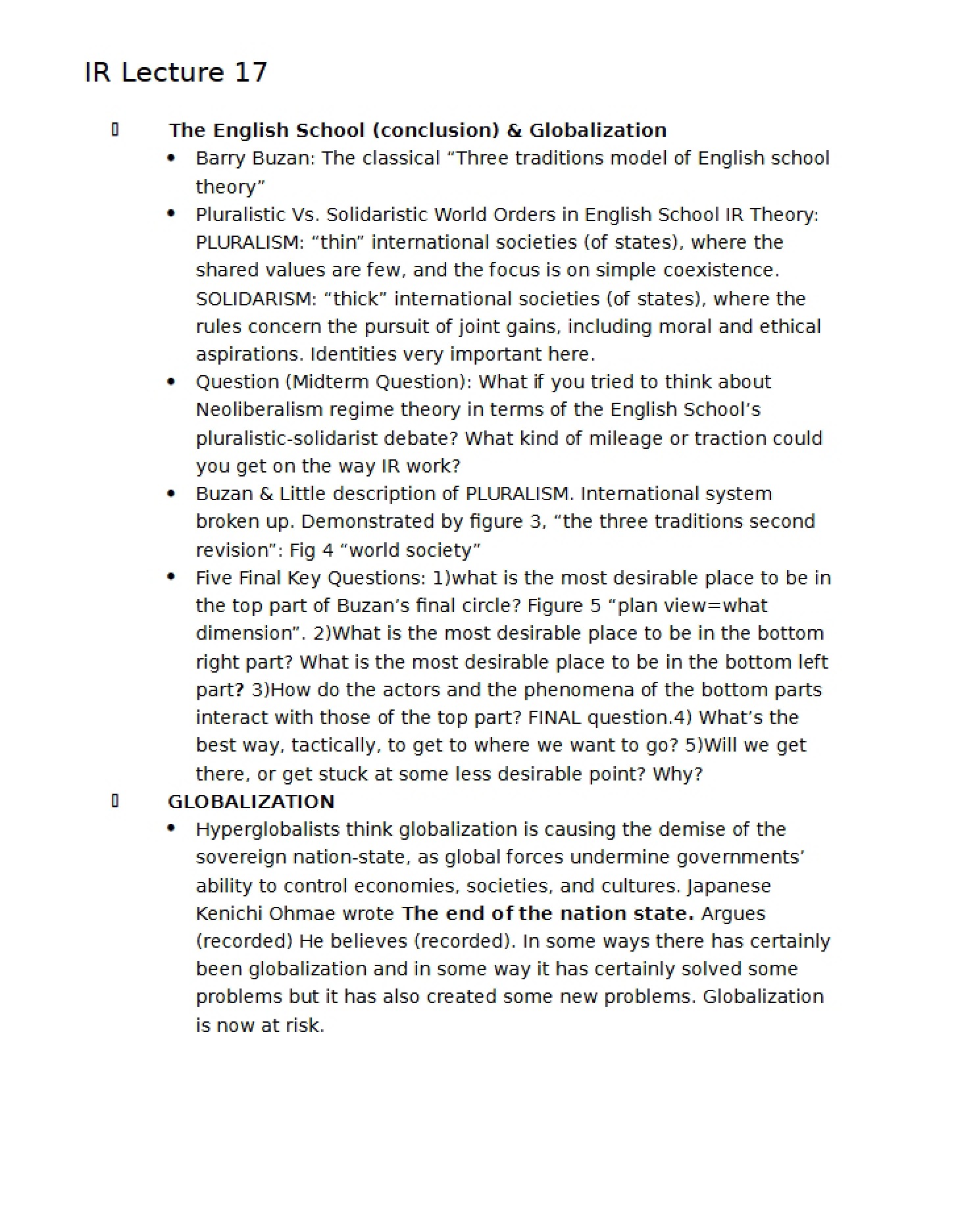
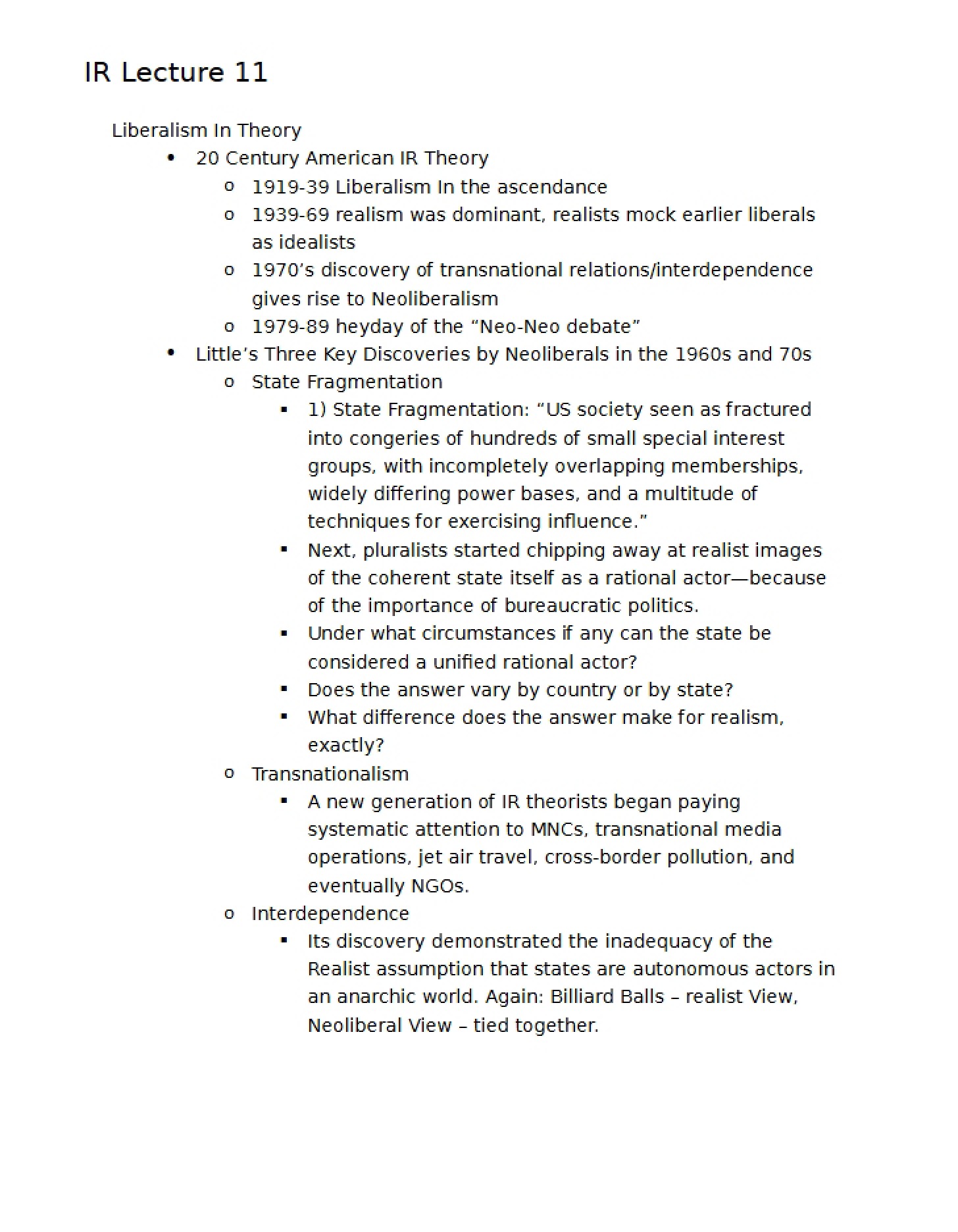
This document comprises lecture notes from an Introduction to International Relations (IR) course at the University of Southern California. Specifically, it covers a lecture focused on the school of thought known as Realism – a foundational theory within the field. It delves into the historical roots of Realism, examining its core tenets and its enduring influence on both academic study and practical foreign policy. The lecture explores Realism not just as a theory, but as a ‘discourse’ shaping how we understand international politics.
Why This Document Matters
Students enrolled in introductory IR courses, or those seeking a foundational understanding of international politics, will find this material particularly valuable. It’s ideal for supplementing textbook readings and preparing for class discussions. Individuals interested in the historical development of political thought, and the intellectual underpinnings of foreign policy decision-making, will also benefit. Understanding Realism is crucial for analyzing current events and grasping the motivations behind state behavior on the global stage. This resource is best utilized *before* tackling more complex theoretical frameworks.
Common Limitations or Challenges
This lecture provides a focused exploration of Realism, but it does not offer a comprehensive overview of *all* IR theories. It concentrates on the historical development and core principles of Realism, and doesn’t delve into detailed case studies or comparative analyses with alternative perspectives. It also doesn’t provide a step-by-step guide to applying Realist thought, but rather lays the groundwork for critical engagement with the theory. Access to the full lecture is required for a complete understanding of the nuances presented.
What This Document Provides
* An examination of Realism as a dominant ‘discourse’ in International Relations.
* Historical context tracing the origins of Realist thought, including references to key historical figures.
* Exploration of core concepts central to the Realist perspective, such as the security dilemma.
* Discussion of the influence of Realism on US foreign policy and strategic studies.
* An overview of key principles associated with prominent Realist scholars.