What This Document Is
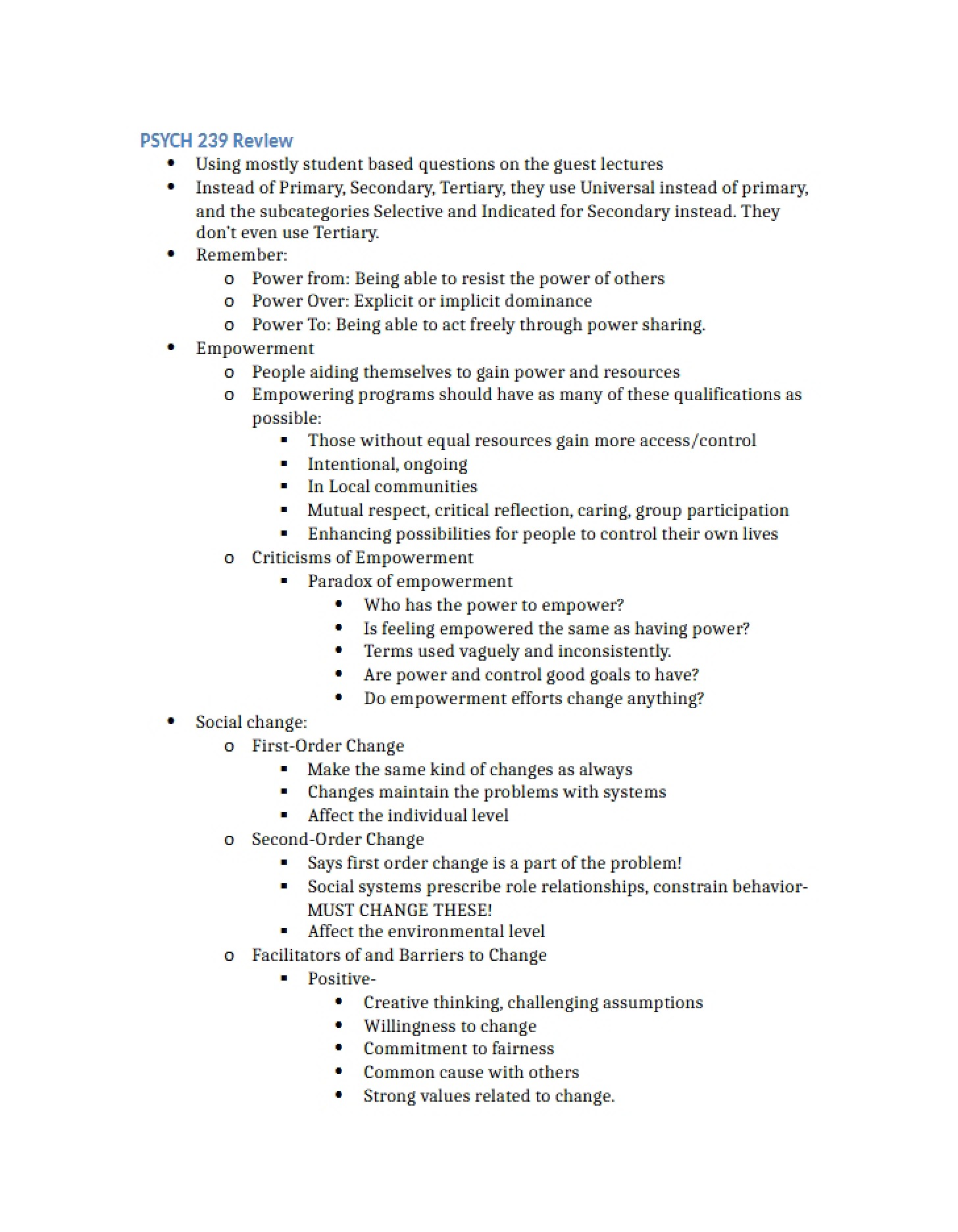
This material explores the nuanced concepts of empowerment and liberation within the field of Community Psychology. It delves into the theoretical underpinnings of these approaches, examining how they differ and intersect as strategies for social change. The resource focuses on understanding systemic issues and moving beyond individual-level interventions to address root causes of inequality. It’s designed for students seeking a deeper understanding of proactive, justice-oriented community work.
Why This Document Matters
This resource is particularly valuable for students in PSYC 239 at the University of Illinois at Urbana-Champaign, especially as you prepare for upcoming coursework and assessments. It’s ideal for anyone grappling with how to effectively address social issues, moving beyond simply providing services to actively dismantling oppressive structures. Students preparing to engage in community-based projects, research, or advocacy will find this exploration of empowerment and liberation particularly insightful. It’s best utilized *alongside* assigned readings and class discussions to solidify your understanding.
Common Limitations or Challenges
This material presents a theoretical framework and does not offer step-by-step guides for implementing specific interventions. It will not provide pre-written solutions to complex social problems, nor does it substitute for engaging directly with communities and understanding their unique contexts. It also doesn’t offer a comprehensive overview of *all* approaches to community psychology, focusing specifically on the empowerment/liberation spectrum.
What This Document Provides
* A comparative analysis of empowerment and liberation as distinct approaches to social change.
* Discussion of key features associated with settings and practices considered “empowering.”
* Exploration of the core tenets of Liberation Psychology.
* Insights from a prominent theorist in Liberation Psychology and the resources needed for dismantling oppression.
* Links to external resources, such as a podcast, for further exploration of the topic.
* Consideration of the importance of collective action and the roles of both marginalized and dominant groups in achieving liberation.