What This Document Is
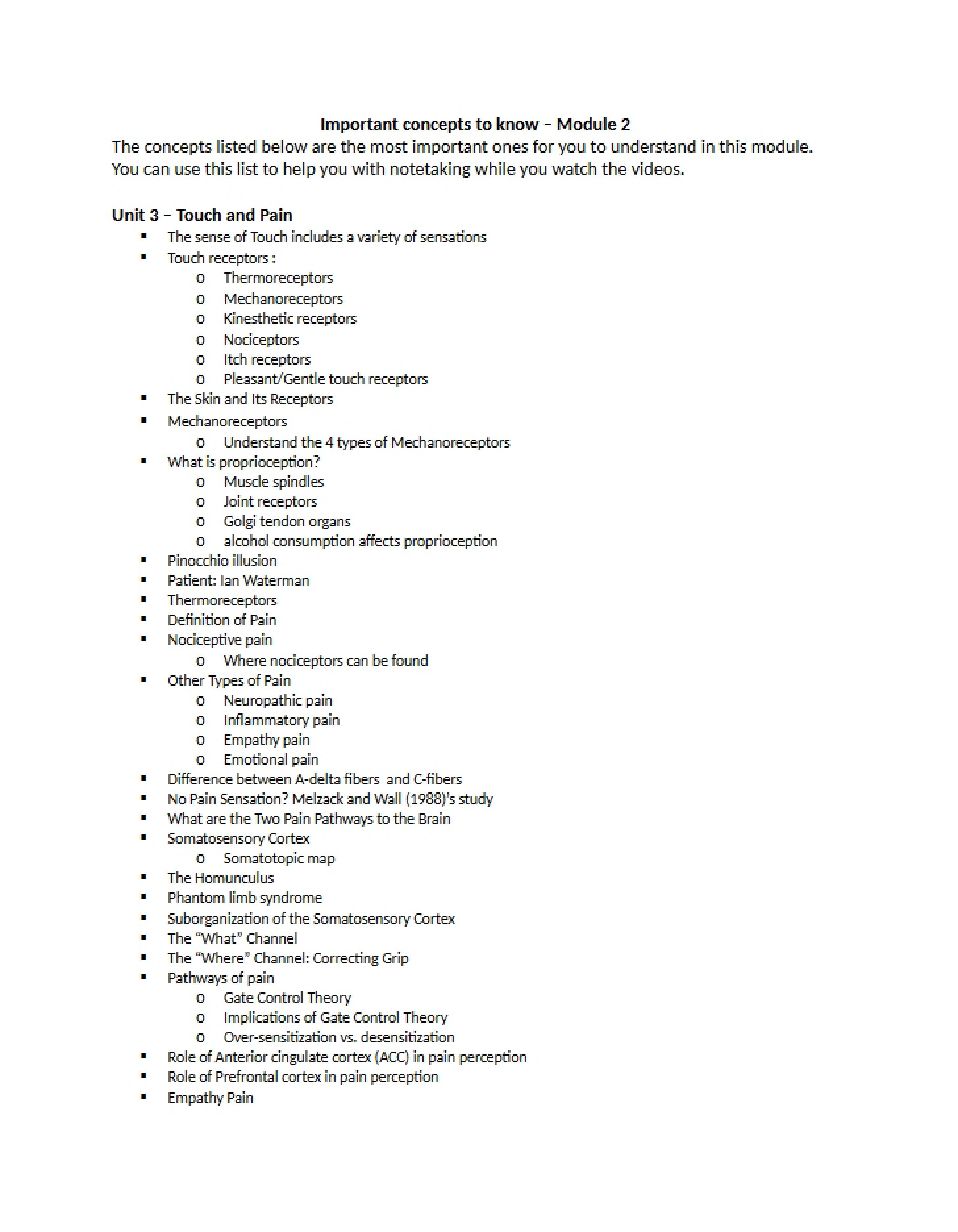
This resource is a focused review of core concepts covered in Module 1 of PSYC 239: Community Psychology at the University of Illinois at Urbana-Champaign. It’s designed to act as a concentrated guide to the foundational ideas presented in the module’s learning materials. The review is structured around two primary units: the fundamentals of perception and the methodologies used to study it. It aims to synthesize key theories and approaches within these areas, offering a structured overview for students.
Why This Document Matters
This review is particularly helpful for students who are looking to solidify their understanding of the initial concepts in sensation and perception. It’s ideal for use *while* engaging with the module’s videos and readings, serving as a framework for effective note-taking. Students preparing for quizzes or exams covering this material will also find it valuable for identifying areas needing further study. It’s especially useful if you’re feeling overwhelmed by the breadth of information and need a clear, organized starting point.
Common Limitations or Challenges
This review is *not* a substitute for the full module content – it doesn’t include detailed explanations, experimental data, or in-depth analyses. It won’t walk you through problem-solving or provide complete answers to complex questions. Think of it as a roadmap, pointing you towards the most important landmarks, but requiring you to explore the terrain yourself. It also doesn’t cover every single topic mentioned in the course; it focuses on what are considered the *most* important concepts.
What This Document Provides
* A categorized overview of key ideas related to the nature of perception.
* A summary of influential historical perspectives on sensory processing.
* An outline of fundamental principles governing how we experience stimuli.
* A breakdown of research methods used in the study of sensation and perception, including techniques for measuring thresholds and sensitivity.
* An introduction to neurological approaches to understanding perception.
* Key terminology related to psychophysics and signal detection theory.