What This Document Is
This study guide provides a focused exploration of Karl Marx’s influential critique of religion, situated within the broader context of his philosophical framework. It delves into his core arguments concerning ideology, materialism, and the societal functions of religious belief. The guide also extends beyond religion to examine Marx’s views on morality, commodification, and the fundamental principles of Marxism as a whole. It’s designed to support students engaging with complex philosophical concepts and historical analysis.
Why This Document Matters
This resource is ideal for students enrolled in courses like Philosophies of Life, Social Theory, or History of Ideas. It’s particularly beneficial when preparing for essays, debates, or exams that require a nuanced understanding of Marx’s thought. Students grappling with the relationship between belief systems, power structures, and economic forces will find this guide especially valuable. It serves as a strong foundation for deeper exploration of Marxist theory and its continuing relevance.
Topics Covered
* Marx’s core philosophical tenets: atheism and materialism
* The concept of ideology and its role in maintaining social order
* Marx’s analysis of religion as an “opium of the masses”
* The critique of “otherworldliness” and its implications
* Marx’s perspective on morality – conventional versus “true” morality
* The concept of commodification and “commodity fetishism” under capitalism
* Key tenets of Marxism: class struggle, historical materialism, and revolution
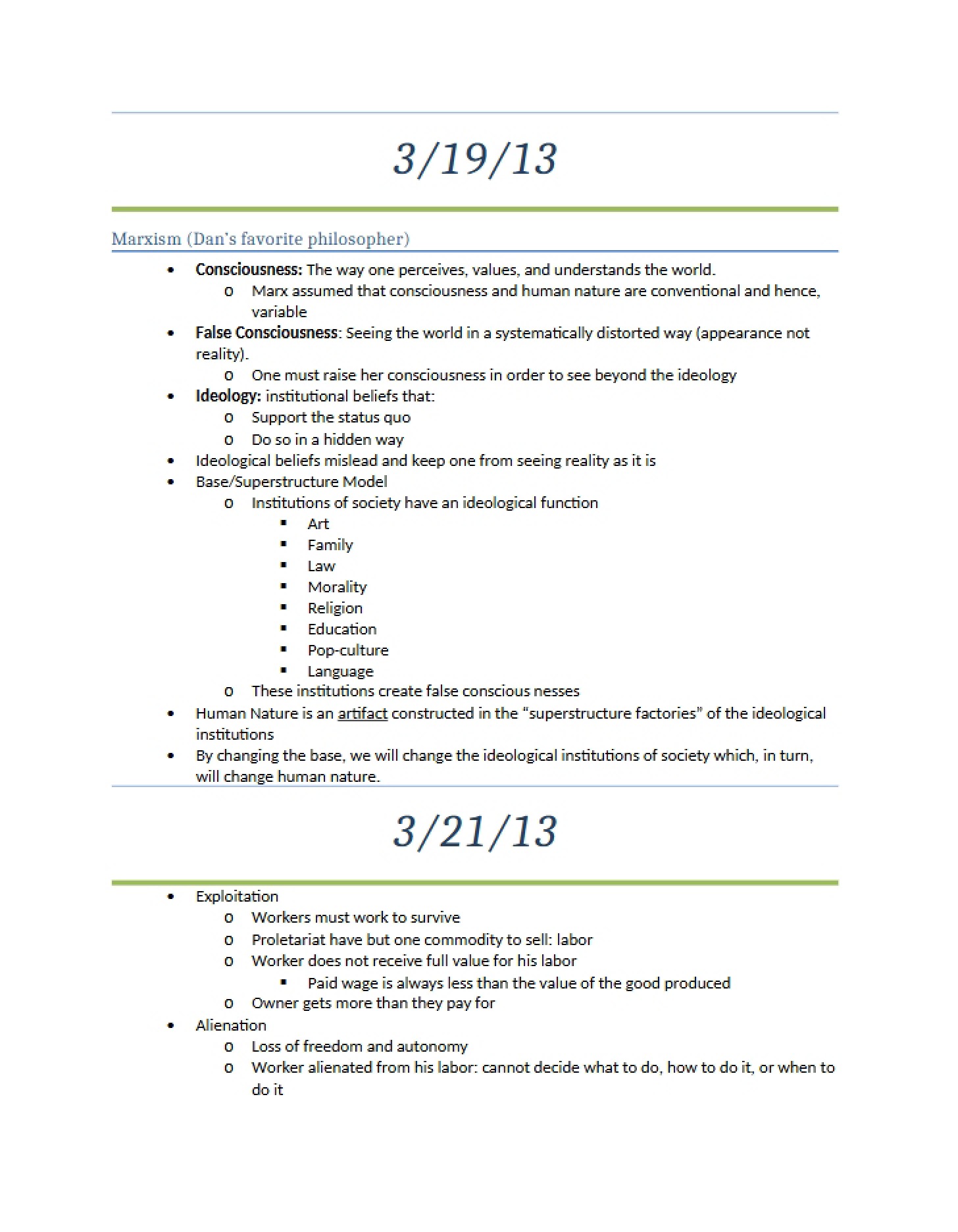
* A survey of core Marxist concepts: false consciousness, alienation, and economic egalitarianism
* Critical assessments of Marxism and its historical implementations
* Comparison of worldviews: naturalism, supernaturalism, and their proponents
What This Document Provides
* A structured overview of Marx’s arguments concerning religion and its societal impact.
* An examination of the connections between Marx’s critique of religion and his broader economic and political theories.
* A detailed outline of key Marxist concepts and terminology.
* Points for critical reflection on the strengths and weaknesses of Marxist thought.
* Contextualization of Marx’s ideas within a wider philosophical landscape, including comparisons to other thinkers like Freud and Plato.