What This Document Is
This document presents a focused lecture exploring the core tenets of Medieval Philosophy, specifically examining the intellectual landscape of the Middle Ages. It delves into how prominent thinkers attempted to reconcile ancient Greek philosophical traditions with religious belief systems. This lecture, part of a broader course on Great Western Philosophers, concentrates on the foundational ideas that shaped medieval thought and continue to resonate in philosophical discussions today.
Why This Document Matters
This material is essential for students enrolled in philosophy courses, particularly those focusing on historical or religious philosophy. It’s beneficial for anyone seeking a deeper understanding of the intellectual roots of Western thought and the development of theological reasoning. Use this resource to build a strong foundation before tackling more complex philosophical texts or engaging in critical discussions about faith, reason, and their intersection. It’s particularly helpful when preparing for class discussions or needing a concentrated overview of this pivotal period.
Topics Covered
* The synthesis of Greek philosophy and religious scripture
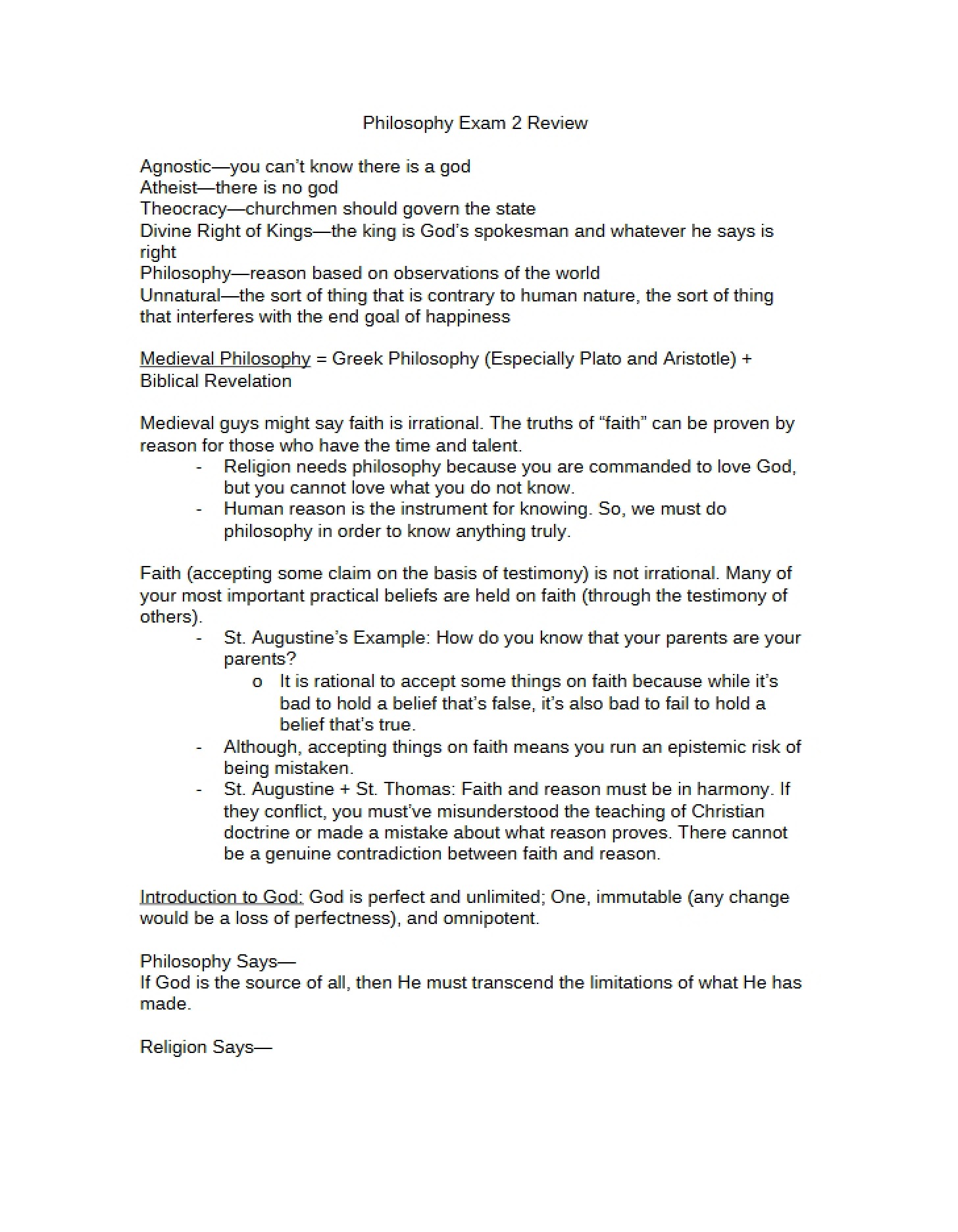
* The role of faith and reason in medieval thought
* Key characteristics attributed to the divine
* The importance of philosophical inquiry for religious understanding
* The relationship between intellectual challenge and religious belief
* Approaches to interpreting religious texts
* Foundational arguments for the existence of God
What This Document Provides
* An overview of the central aims of medieval philosophical inquiry.
* Exploration of the contributions of influential figures like St. Augustine and St. Thomas Aquinas.
* Examination of the perceived necessity of philosophy within a religious framework.
* Discussion of the challenges and opportunities presented by integrating faith and reason.
* Insights into the core attributes commonly ascribed to the divine in medieval thought.
* A framework for understanding how medieval thinkers addressed apparent conflicts between faith and emerging scientific understandings.