What This Document Is
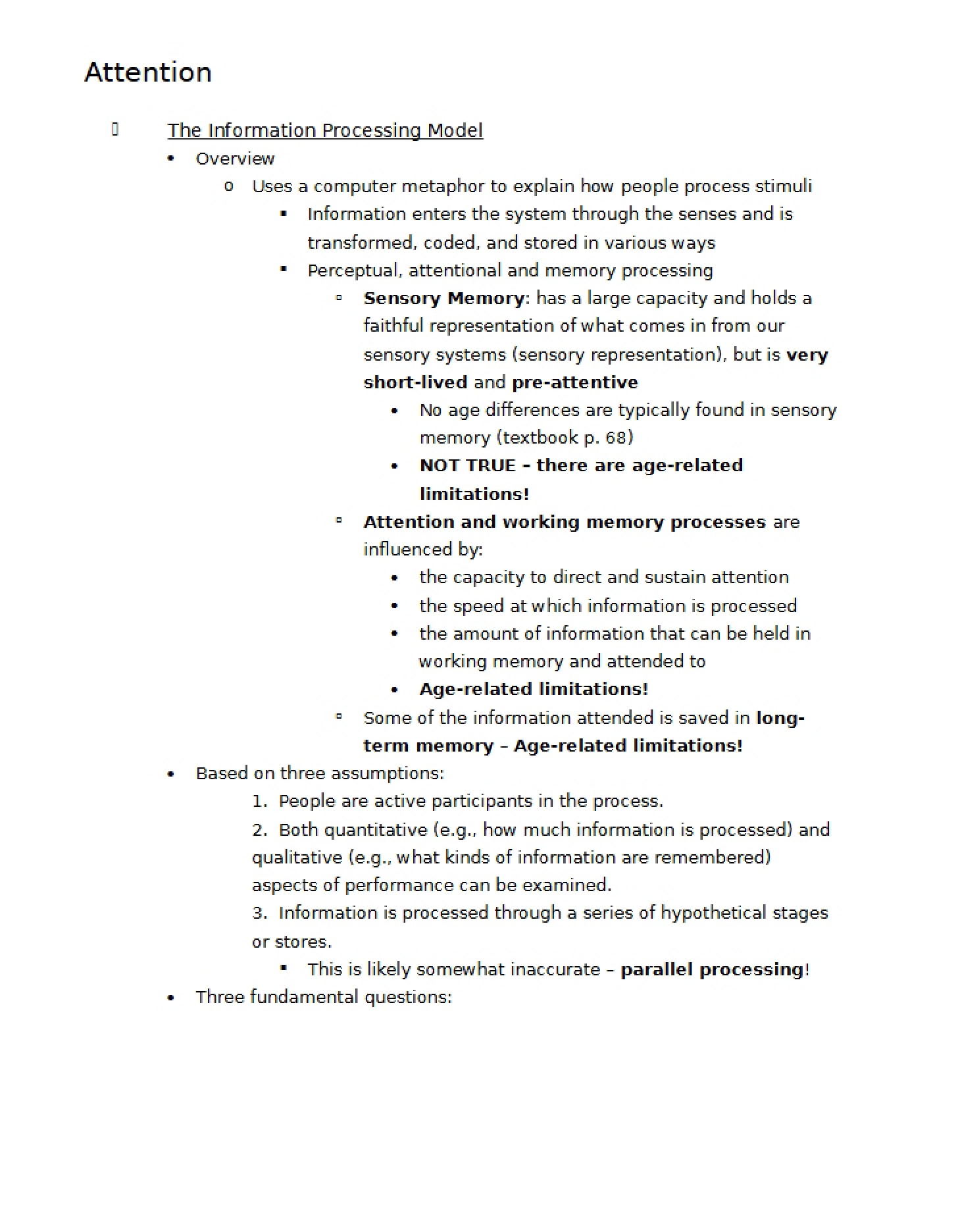
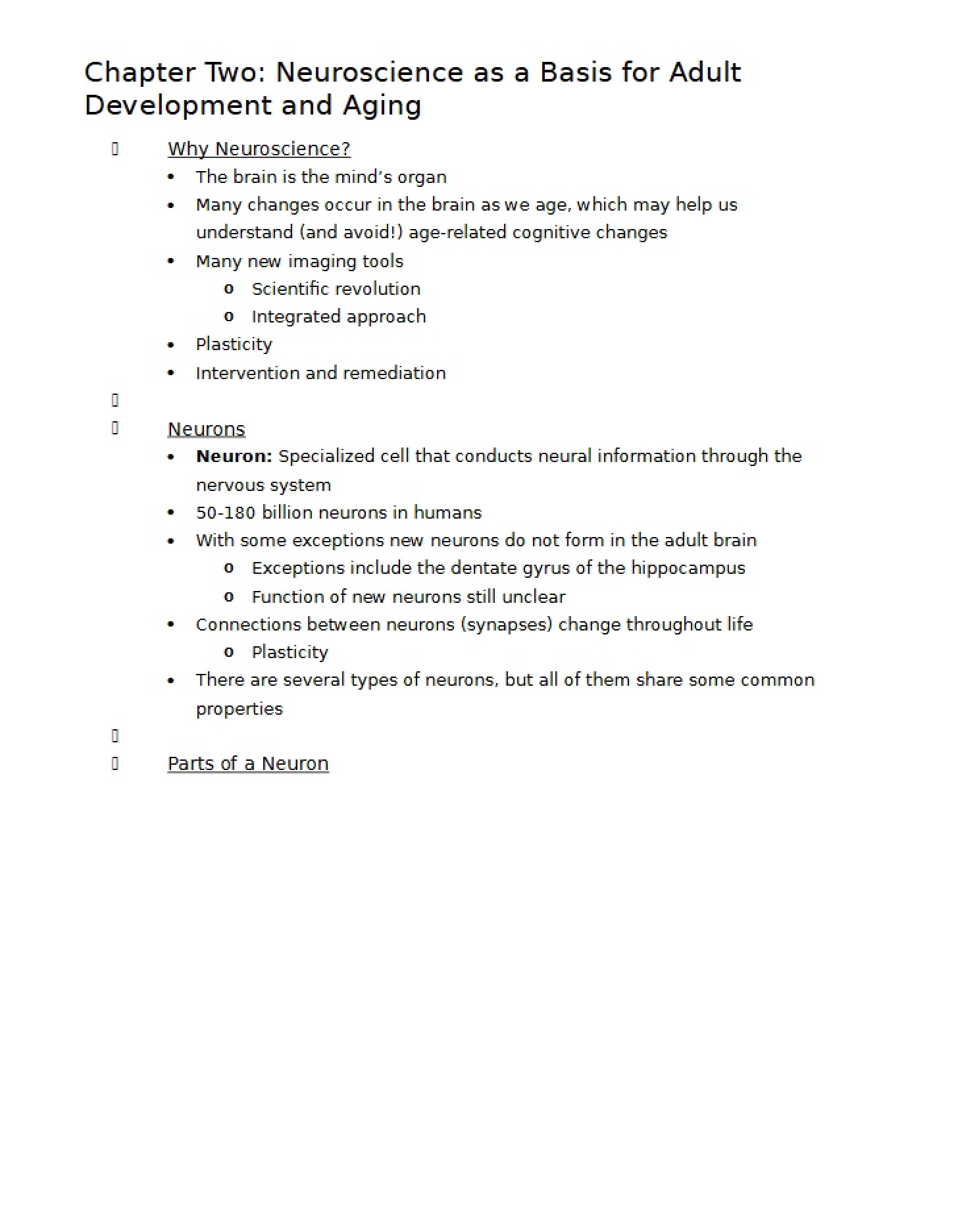
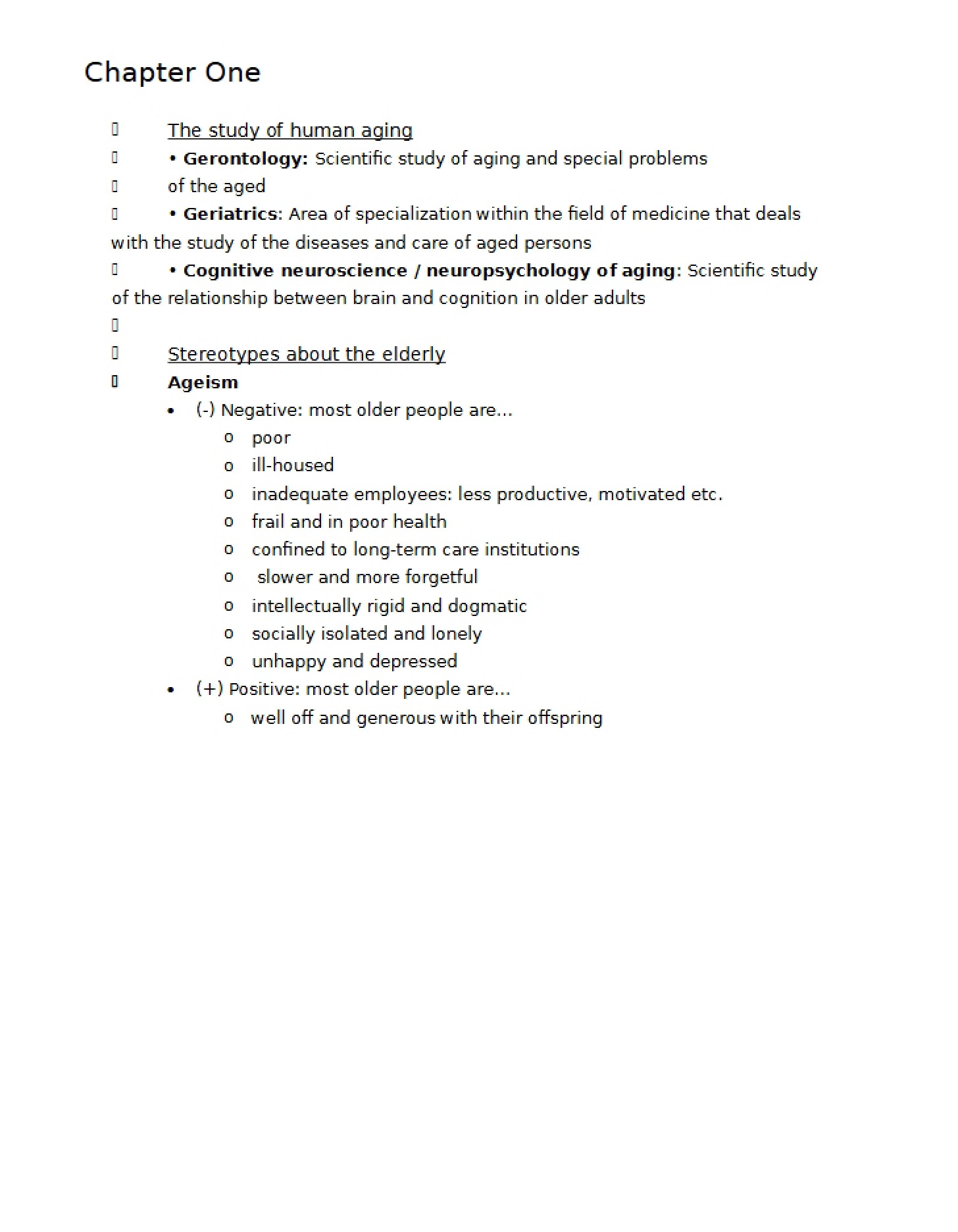
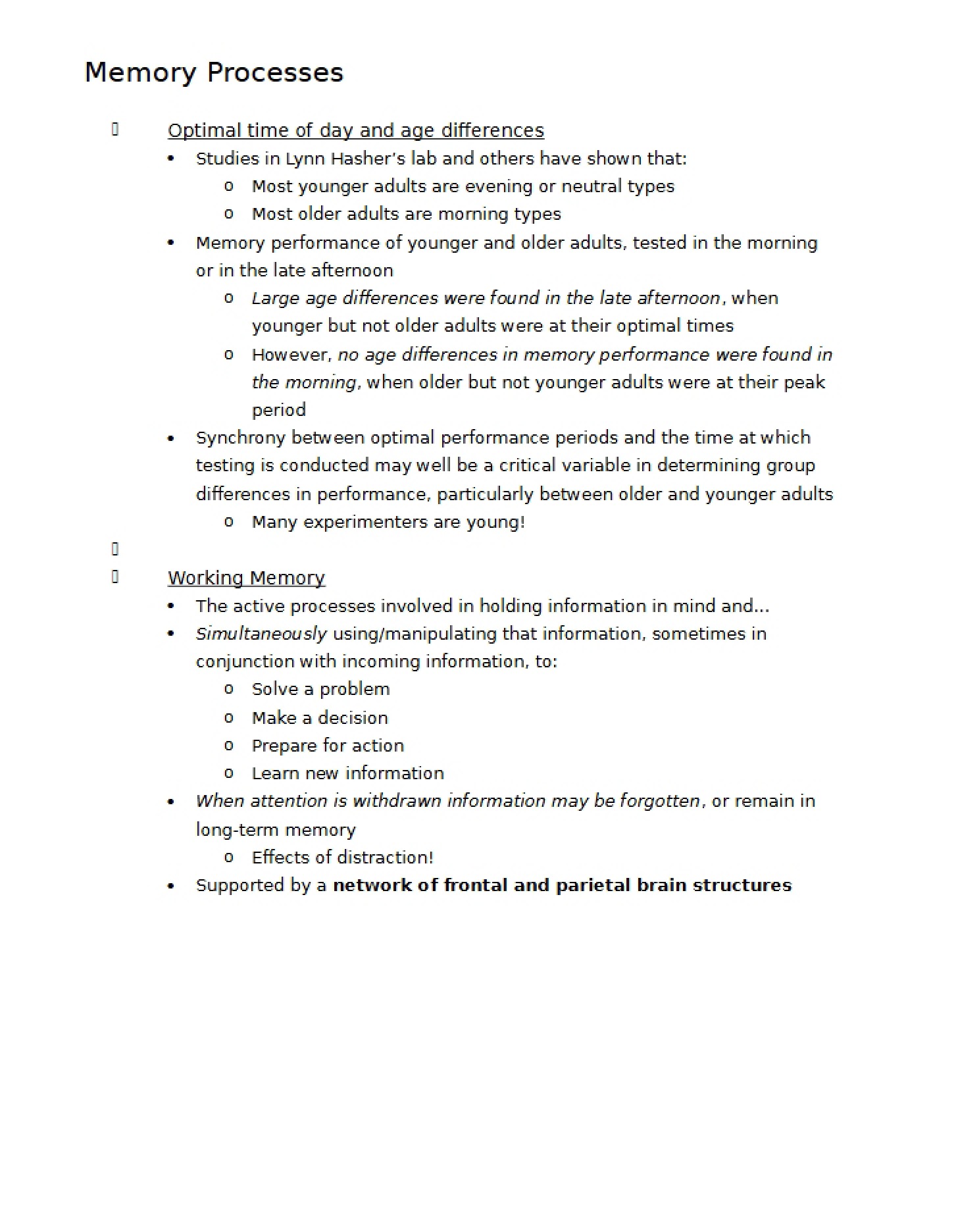
This study guide focuses on core concepts within the Psychology of Aging, specifically geared towards students in PSYC 361 at the University of Illinois at Urbana-Champaign. It’s designed to aid in preparation for assessments, likely a midterm examination, by outlining key areas of focus related to cognitive processes in later life. The material centers around how information is processed as individuals age, and the changes that occur within various memory systems. It delves into the complexities of attention, memory encoding, and retrieval processes throughout the lifespan.
Why This Document Matters
This resource is invaluable for students enrolled in advanced psychology courses concerning aging. It’s particularly useful when you’re beginning to consolidate your understanding of the theoretical frameworks and empirical findings related to cognitive aging. Use this guide during your study sessions to identify areas where you need further clarification from course lectures or assigned readings. It’s best utilized *after* you’ve engaged with the primary course materials and are looking for a structured overview to guide your review. Students who struggle with applying cognitive psychology principles to the aging process will find this especially helpful.
Common Limitations or Challenges
This guide is not a substitute for attending lectures, completing assigned readings, or engaging in active learning activities. It does not contain the full breadth of information presented in the course. It will not provide definitions of all key terms, nor will it offer detailed explanations of research methodologies. Furthermore, it does not include practice questions or direct answers to potential exam questions – its purpose is to *guide* your studying, not to *replace* it.
What This Document Provides
* An overview of prominent models used to understand information processing.
* A breakdown of different types of memory (sensory, short-term, long-term) and how they are impacted by age.
* Discussion of attentional processes and age-related changes in focus and concentration.
* Exploration of declarative and procedural memory systems and their vulnerability to age-related decline.
* Consideration of various memory retrieval phenomena, including recall, recognition, and false memories.
* Insights into autobiographical memory and the “reminiscence bump.”
* Examination of prospective memory and its challenges in older adults.