What This Document Is
This resource explores mnemonic strategies – techniques designed to enhance memory and recall. Specifically, it focuses on a method for creating memory aids from initial letters, offering a detailed look at how these can be developed and applied. It’s geared towards educators and instructional designers seeking to incorporate cognitive strategies into their teaching practices, and examines the application of these techniques within a learning environment. The material originates from a University of South Alabama instructional strategies course (ISD 613).
Why This Document Matters
If you’re looking for ways to help students improve their ability to learn and retain information, particularly lists of terms or sequences, this resource will be valuable. It’s especially relevant for those working with middle school students (grades 6-7) and seeking to address learning challenges related to memorization. Understanding how to build and utilize mnemonics can be a powerful tool for both teachers modeling effective study skills and students taking ownership of their learning process. This is useful when designing lessons requiring rote memorization or building foundational knowledge.
Common Limitations or Challenges
This resource focuses on a specific approach to mnemonic creation – one centered around single-use codes derived from initial letters. It does *not* provide an exhaustive overview of all mnemonic techniques. It also assumes a basic level of computer literacy and access to Macintosh systems for potential implementation. The resource is a focused exploration of a single strategy and doesn’t delve into broader cognitive learning theories beyond those directly related to the presented taxonomy.
What This Document Provides
* A detailed breakdown of a mnemonic strategy’s application.
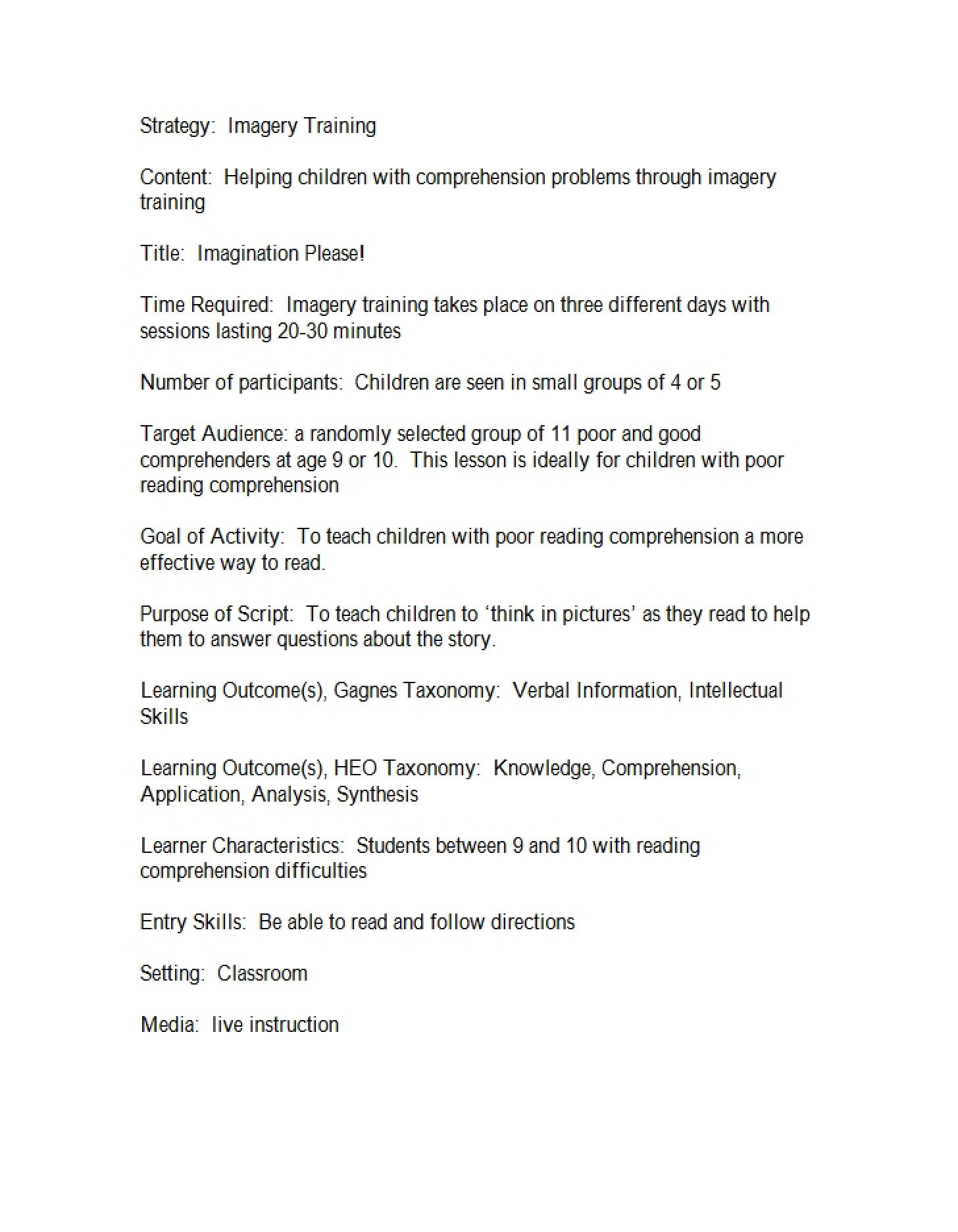
* Target audience specifications (6th & 7th grade learners).
* Clearly defined learning outcomes aligned with both Gagné’s and HEO taxonomies.
* Considerations for learner characteristics and necessary entry skills.
* A proposed media component utilizing computer graphics.
* A self-check assessment method to evaluate strategy comprehension.
* Relevant references for further research in instructional design.