What This Document Is
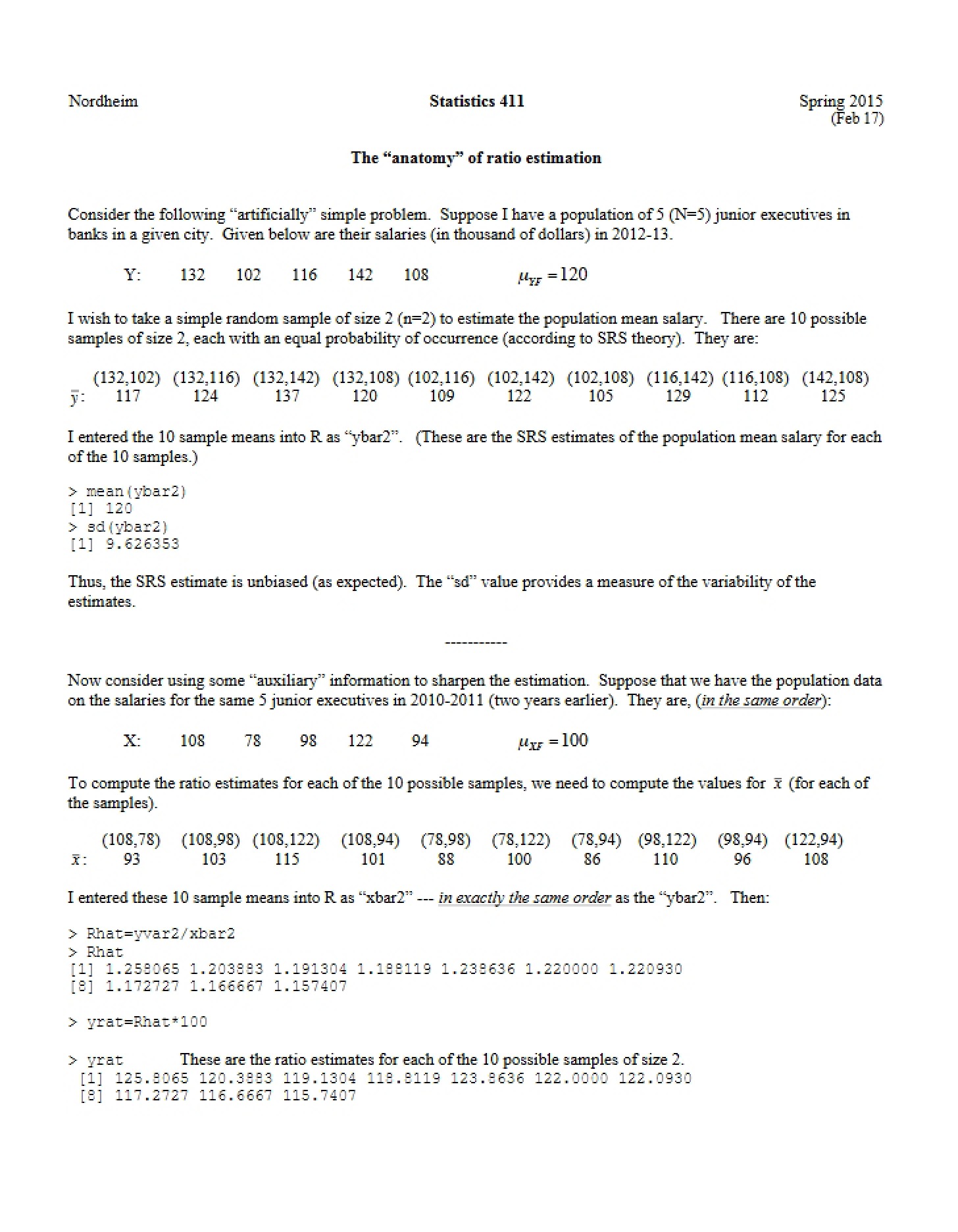
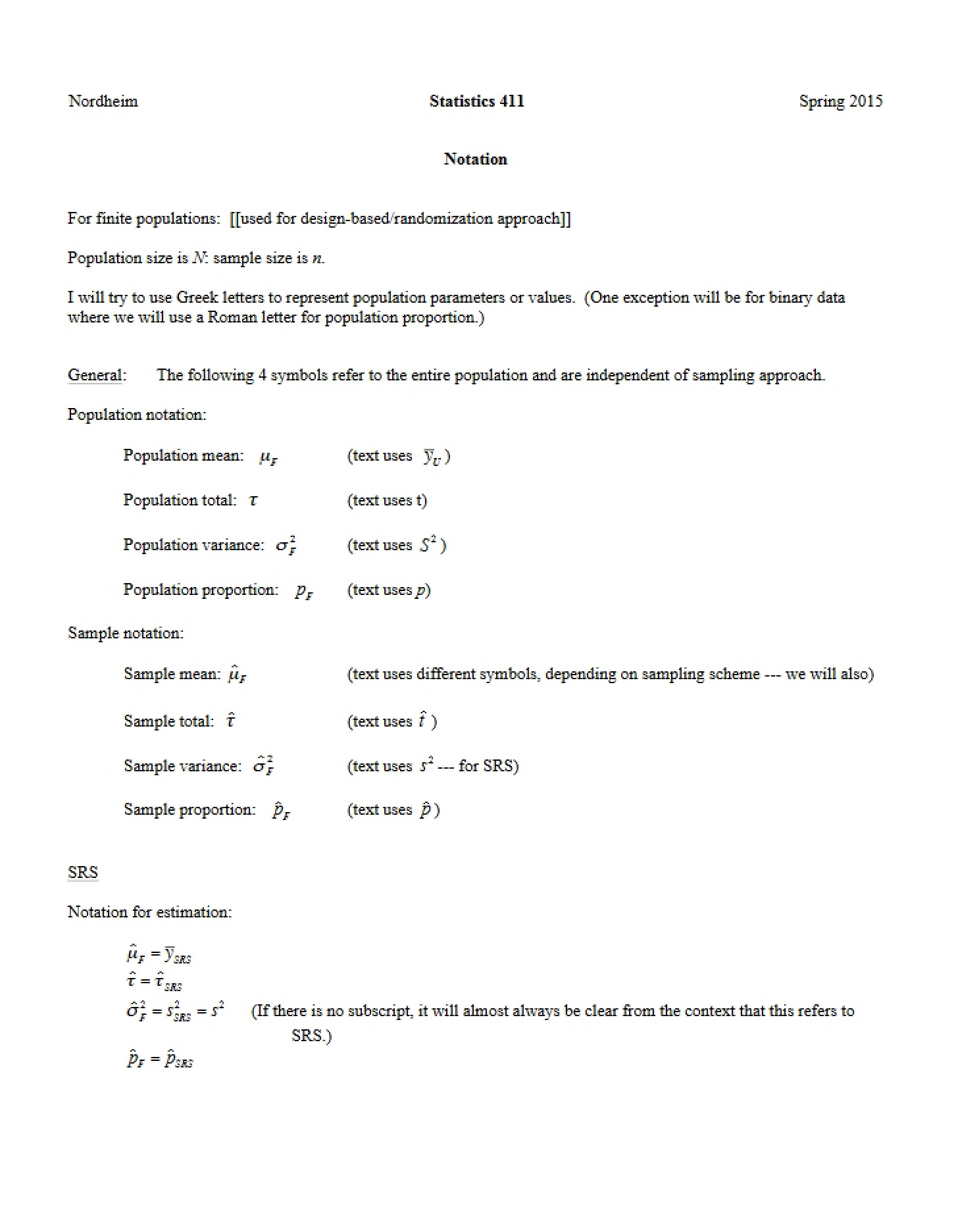
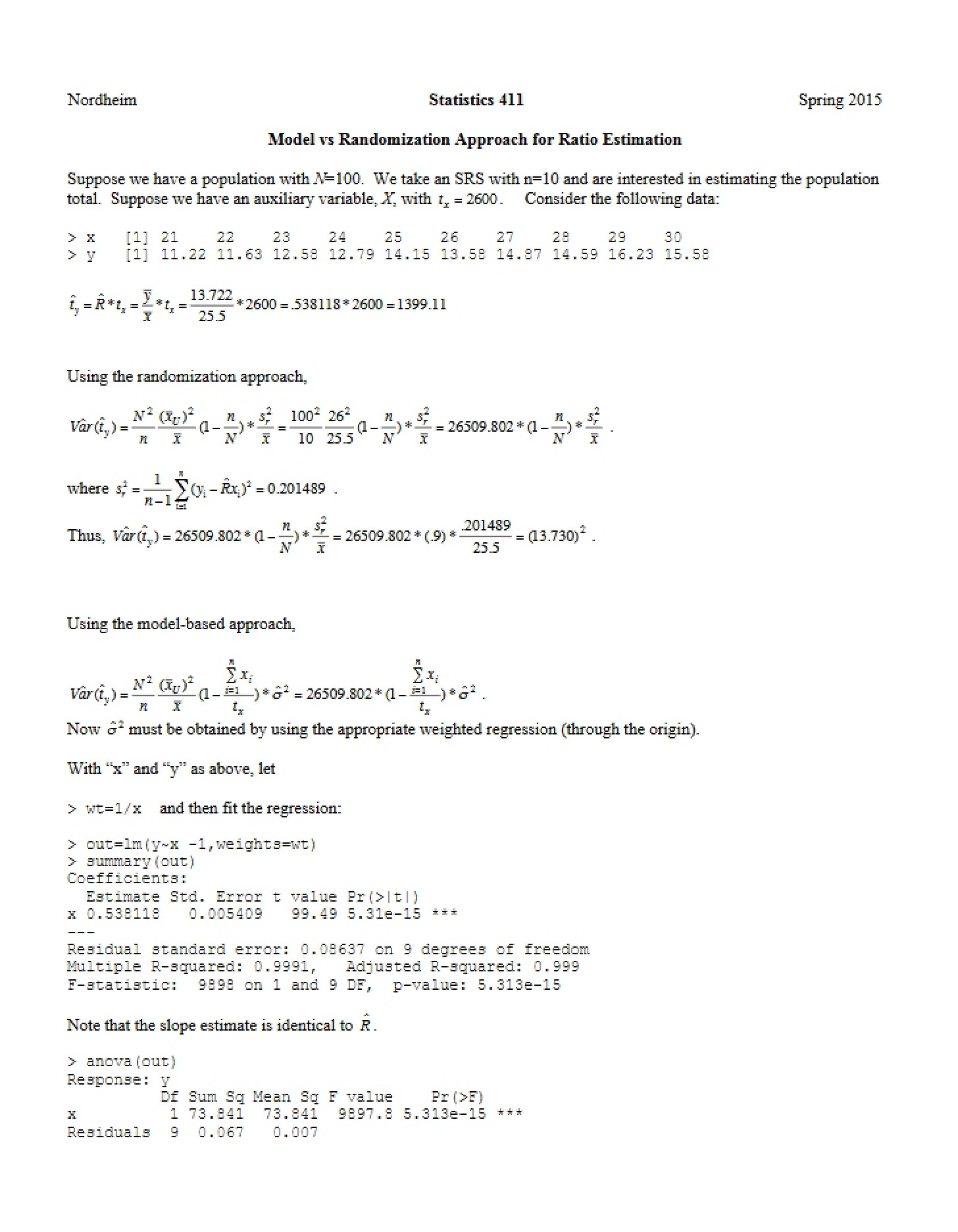
This resource is a focused exploration of statistical estimation techniques, specifically contrasting two primary approaches: model-based estimation and randomization methods. It delves into the theory behind estimating population totals using sample data, with a particular emphasis on ratio estimation. The material originates from a University of Wisconsin-Madison course on sample survey theory and methods (STAT 411) and represents a detailed session on model randomization. It utilizes statistical notation and assumes a foundational understanding of statistical concepts.
Why This Document Matters
Students and researchers involved in survey methodology, statistical analysis, or data science will find this material highly valuable. It’s particularly relevant for those seeking a deeper understanding of the assumptions underlying different estimation procedures and the impact those assumptions have on variance calculations. This resource is ideal for supplementing coursework, preparing for advanced statistical studies, or refining practical skills in survey design and analysis. Anyone needing to critically evaluate the validity of survey estimates will benefit from exploring the nuances presented here.
Common Limitations or Challenges
This material focuses on the theoretical underpinnings and comparative analysis of estimation methods. It does *not* provide a comprehensive introduction to survey sampling in general. It assumes the reader already possesses a working knowledge of concepts like simple random sampling, auxiliary variables, and basic statistical inference. Furthermore, it doesn’t offer a step-by-step guide to implementing these techniques in statistical software – it focuses on the ‘why’ rather than the ‘how’. Practical application and software-specific instructions are beyond its scope.
What This Document Provides
* A detailed comparison of model-based and randomization approaches to ratio estimation.
* An examination of variance calculation under both methodologies.
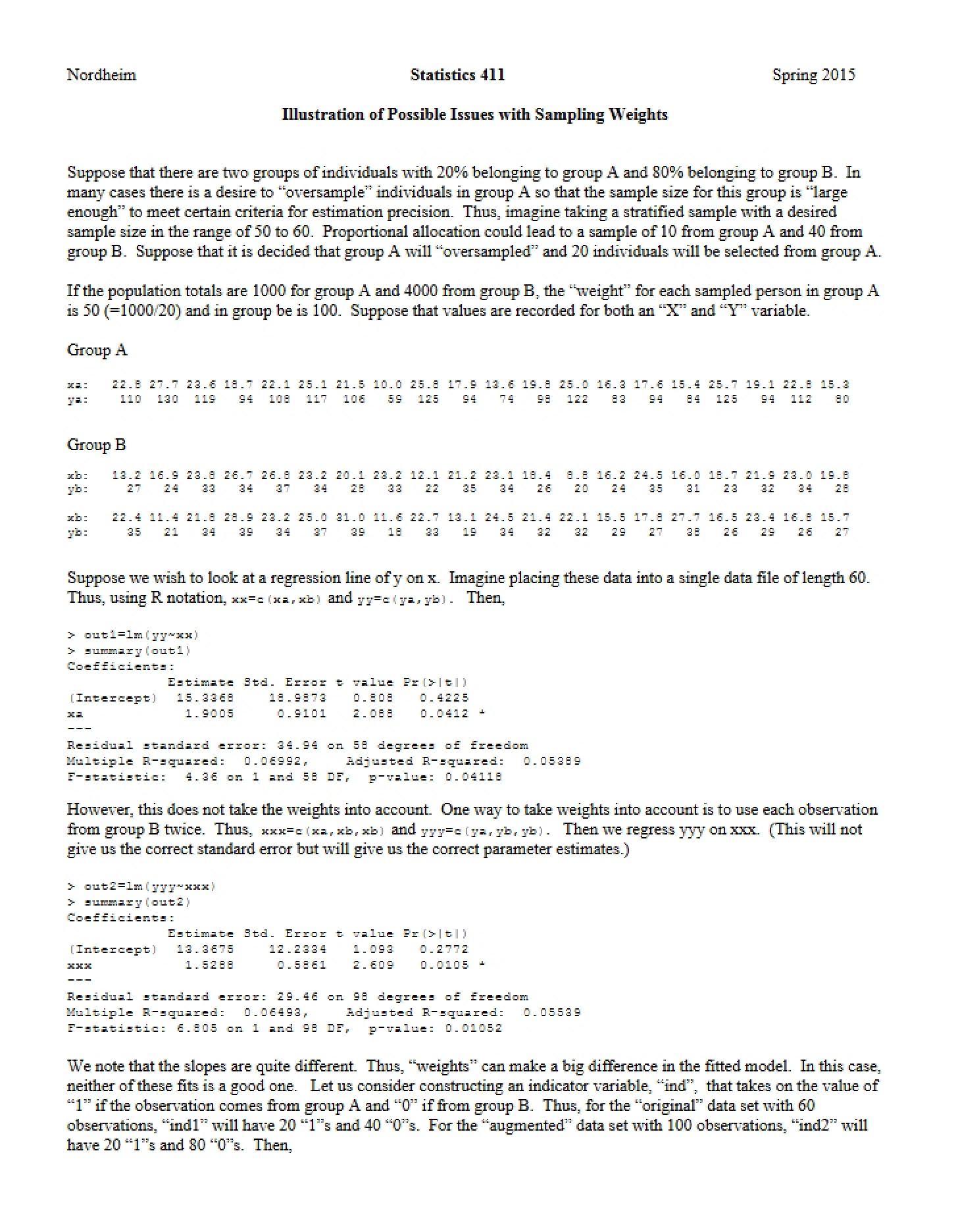
* Illustrative examples demonstrating how different approaches can yield varying results.
* Discussion of the impact of auxiliary variable characteristics on estimation accuracy.
* An exploration of weighted regression techniques relevant to model-based estimation.