What This Document Is
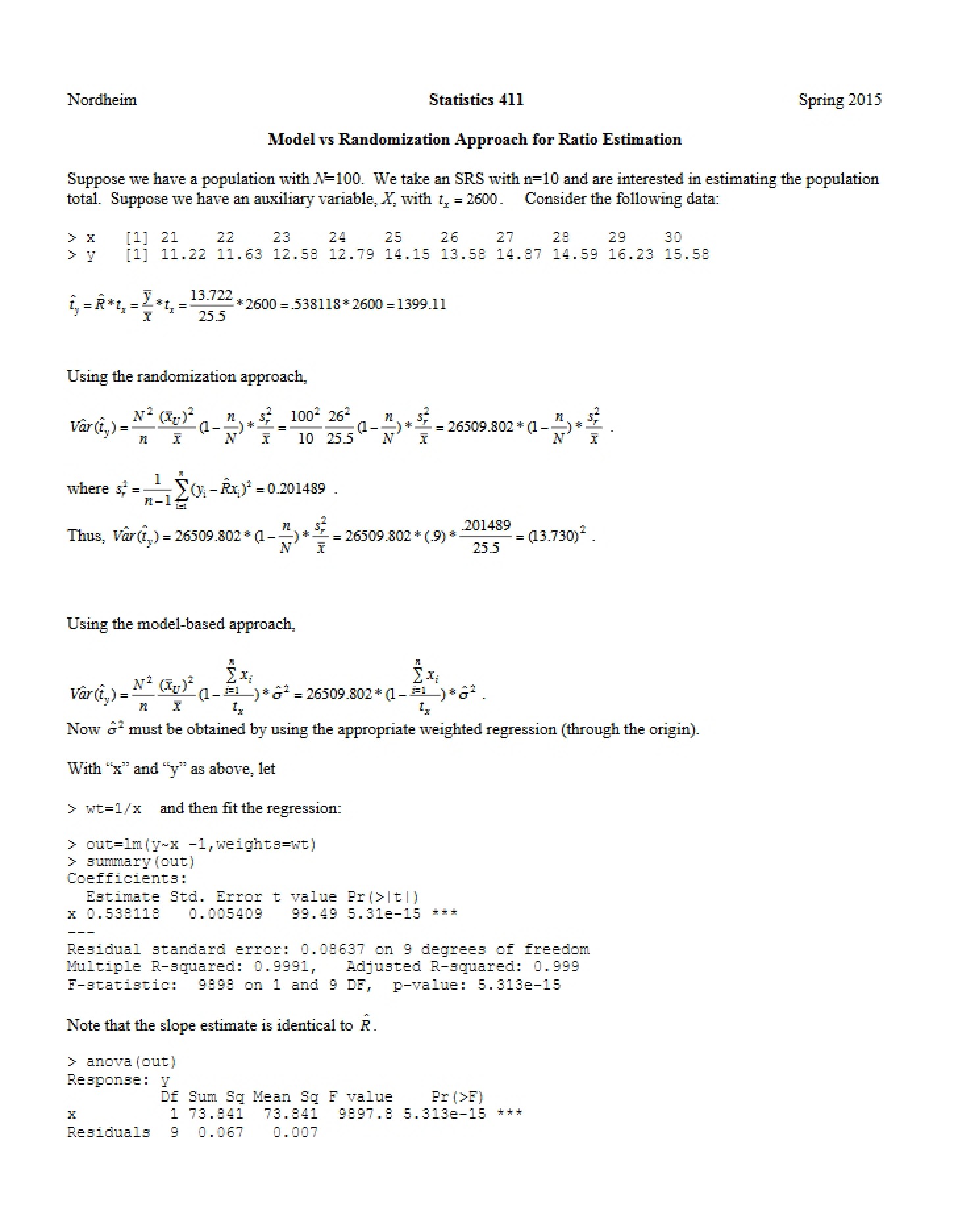
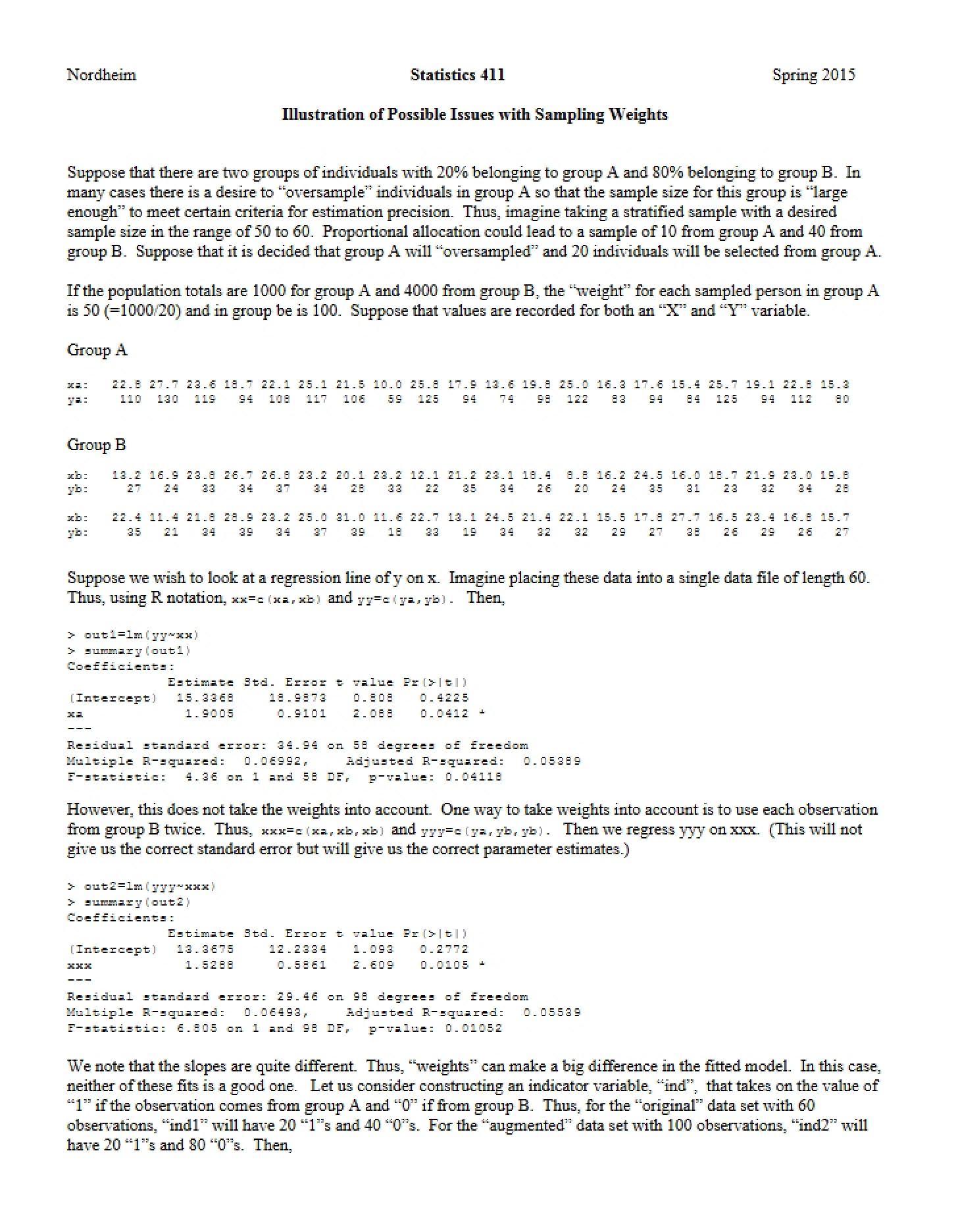
This resource is a focused exploration of estimation techniques within the field of sample survey theory. Specifically, it delves into a comparative analysis of two primary approaches: the randomization method and the model-based approach, applied to ratio estimation. It examines the theoretical underpinnings of calculating variance estimates using both methodologies, centering on a practical example involving population totals and auxiliary variables. The material assumes a foundational understanding of statistical concepts like standard error and regression.
Why This Document Matters
Students enrolled in introductory or intermediate statistics courses – particularly those focused on survey methodology – will find this resource valuable. It’s especially helpful for those seeking a deeper understanding of the assumptions and implications of different estimation strategies. Researchers and practitioners involved in designing and analyzing surveys will benefit from a clear comparison of these methods, aiding in the selection of the most appropriate technique for their specific data and research questions. This is useful when needing to justify methodological choices in reports or publications.
Common Limitations or Challenges
This resource concentrates on the theoretical comparison of the two estimation approaches. It does not provide a comprehensive overview of all ratio estimation techniques, nor does it cover alternative estimation methods. While a practical example is used, the focus remains on the mathematical derivations and conceptual differences between the approaches. It doesn’t offer guidance on software implementation or troubleshooting common issues encountered during data analysis. It also assumes a level of mathematical comfort with statistical formulas.
What This Document Provides
* A detailed comparison of the randomization and model-based approaches to ratio estimation.
* An examination of variance calculation formulas for both methods.
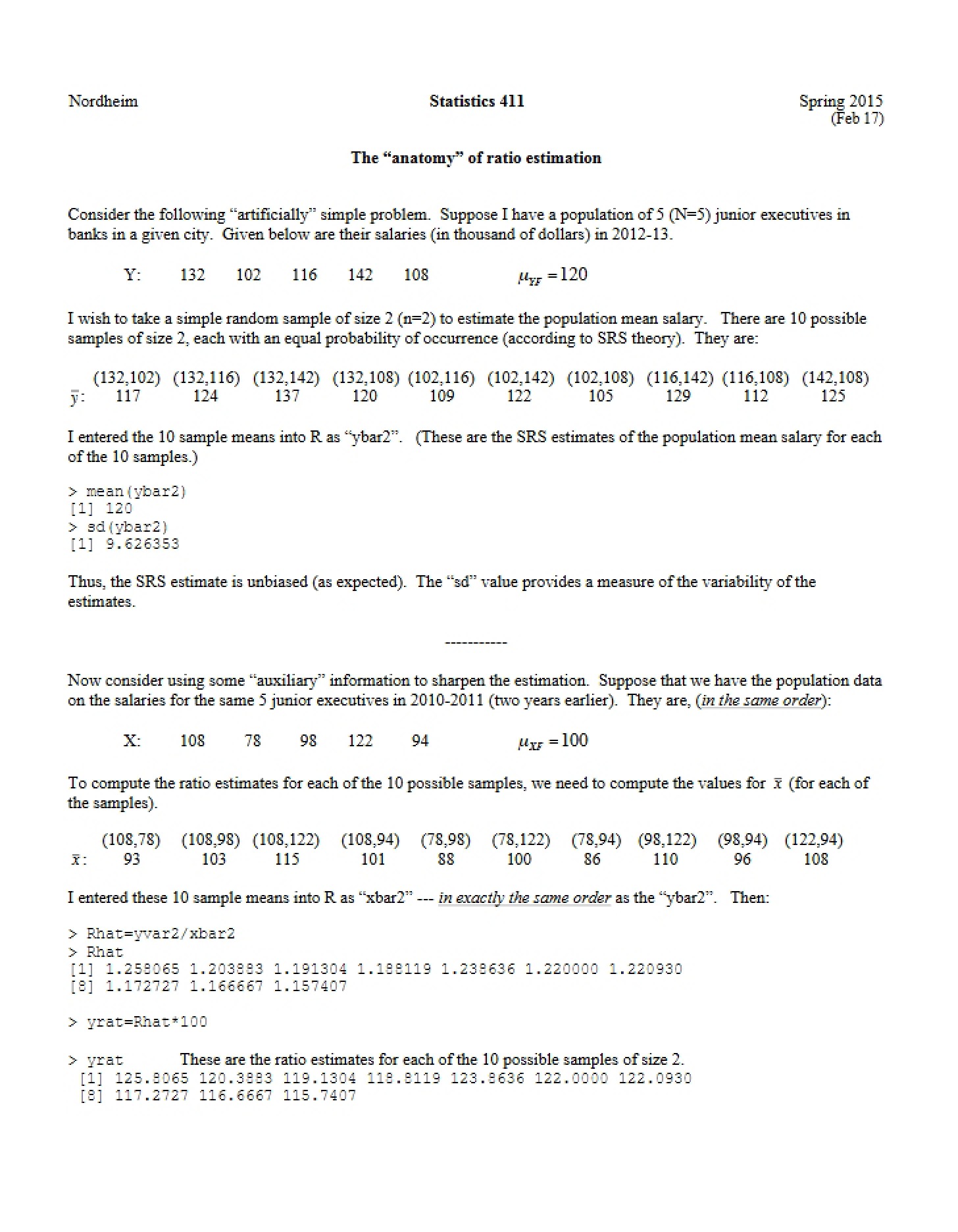
* An illustrative example demonstrating the application of these techniques.
* Discussion of the factors influencing the relative performance of each approach.
* An exploration of how weighted regression can be utilized within the model-based framework.