What This Document Is
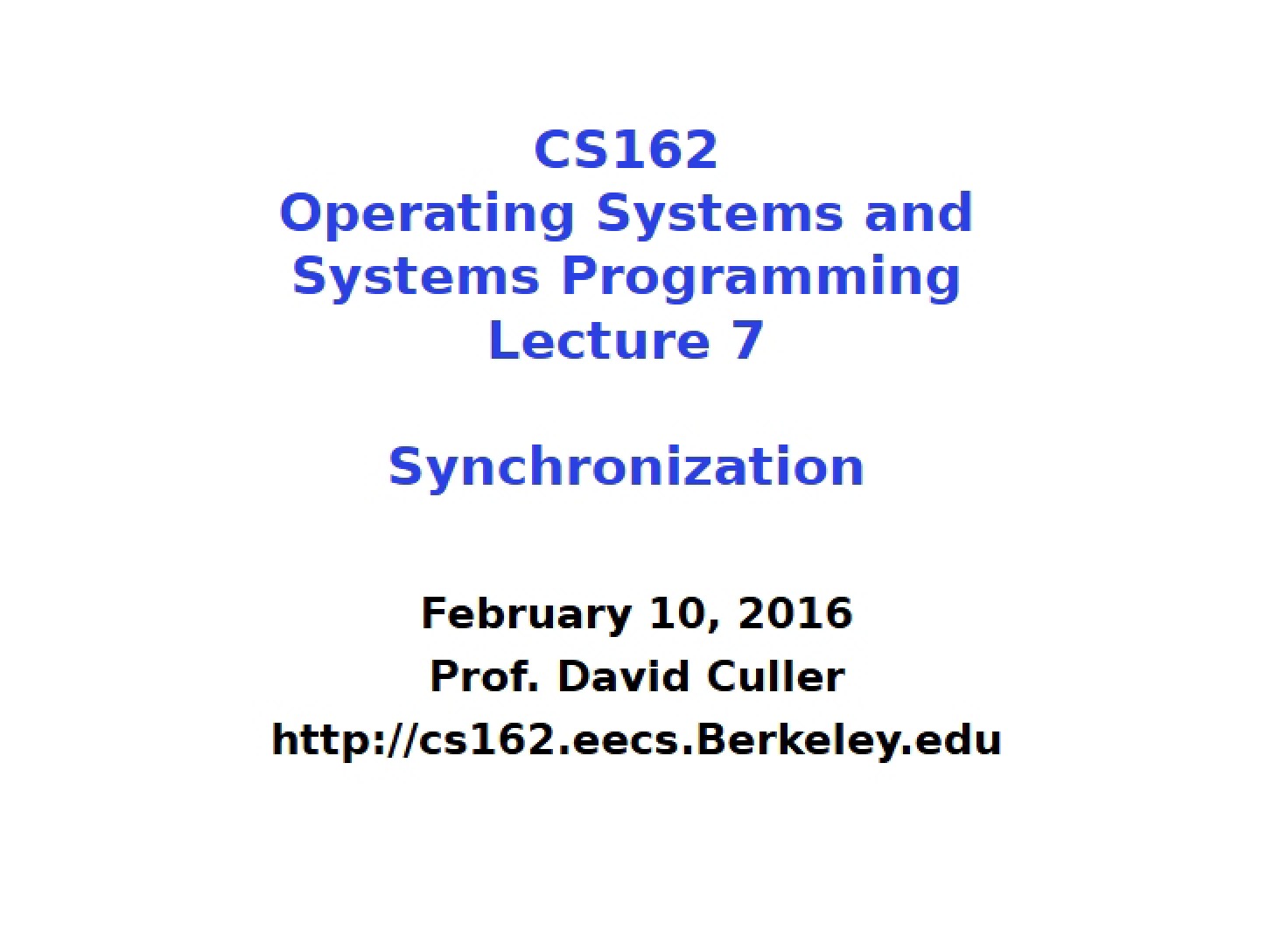
This document represents Module Eight from CS162: Operating Systems and Systems Programming at UC Berkeley. It’s a lecture-based instructional resource focused on core concepts in operating system design and implementation. The material delves into the critical area of synchronization – how multiple processes or threads coordinate and share resources safely and efficiently. It also provides a foundational introduction to the principles of scheduling within an operating system.
Why This Document Matters
This module is essential for any student seeking a deep understanding of how operating systems manage concurrency and resource allocation. It’s particularly valuable for those preparing for advanced coursework in systems programming, distributed systems, or computer architecture. Students currently working on projects involving multithreading, parallel processing, or shared memory will find the concepts discussed here directly applicable to their work. Reviewing this material before tackling complex systems programming assignments can significantly improve understanding and reduce debugging time.
Topics Covered
* Synchronization problems and their impact on data integrity
* The concept of atomic operations and their role in concurrent programming
* Techniques for preventing race conditions and ensuring data consistency
* Different approaches to synchronization, including locks, semaphores, and monitors
* The fundamental principles of process/thread scheduling
* The relationship between interrupts and lock implementation
* Critical sections and their importance in concurrent code
What This Document Provides
* A detailed exploration of common synchronization challenges using illustrative examples.
* Discussions on various lock implementation strategies and their trade-offs.
* An examination of how disabling interrupts can be used to achieve mutual exclusion.
* Insights into the responsibilities of schedulers in managing interrupt re-enablement.
* A conceptual framework for understanding the core components of operating system scheduling.
* A lecture format designed to build understanding from foundational principles.