What This Document Is
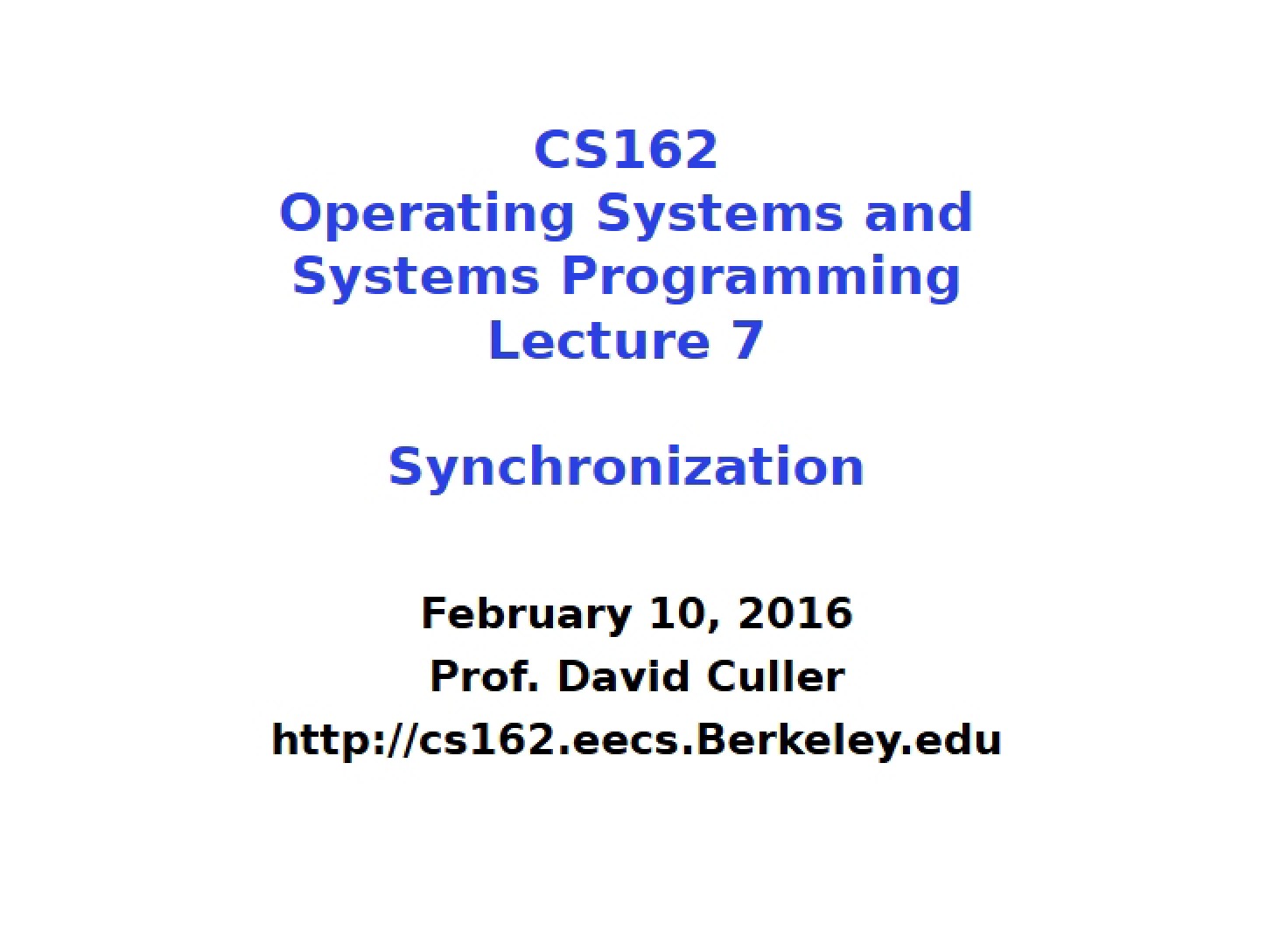
This document represents Module Six from CS162: Operating Systems and Systems Programming at UC Berkeley. It’s a lecture transcript focused on the core principles of concurrency and the beginnings of synchronization techniques within operating systems. This material builds upon previous lectures regarding threads and delves into the underlying mechanisms that allow for efficient and coordinated execution of multiple processes. It’s designed to provide a detailed exploration of how operating systems manage concurrent activities.
Why This Document Matters
This module is crucial for students studying operating systems, systems programming, or computer architecture. It’s particularly valuable when you need a comprehensive understanding of how threads are implemented at the kernel level and how the operating system facilitates their creation and management. It’s ideal for reviewing lecture material, preparing for assignments, or solidifying your grasp of fundamental concepts before moving on to more advanced topics like mutual exclusion and deadlock. Understanding these concepts is foundational for anyone aiming to develop concurrent applications or contribute to operating system design.
Topics Covered
* Thread Management and Implementation
* Thread Control Blocks (TCBs) and their components
* The process of creating new threads (ThreadFork())
* Stack initialization and management for threads
* The role of kernel-level support for threading
* The execution flow within a thread, from creation to completion
* Historical context of scheduling algorithms and their complexities
What This Document Provides
* A detailed breakdown of the components within a Thread Control Block.
* An explanation of the steps involved in initiating a new thread within an operating system environment.
* Insights into the relationship between user-level thread management and kernel-level support.
* A look at the internal workings of thread startup routines.
* A historical quote offering a glimpse into the early challenges of context switching.
* A structured presentation of concepts, suitable for in-depth study and review.