What This Document Is
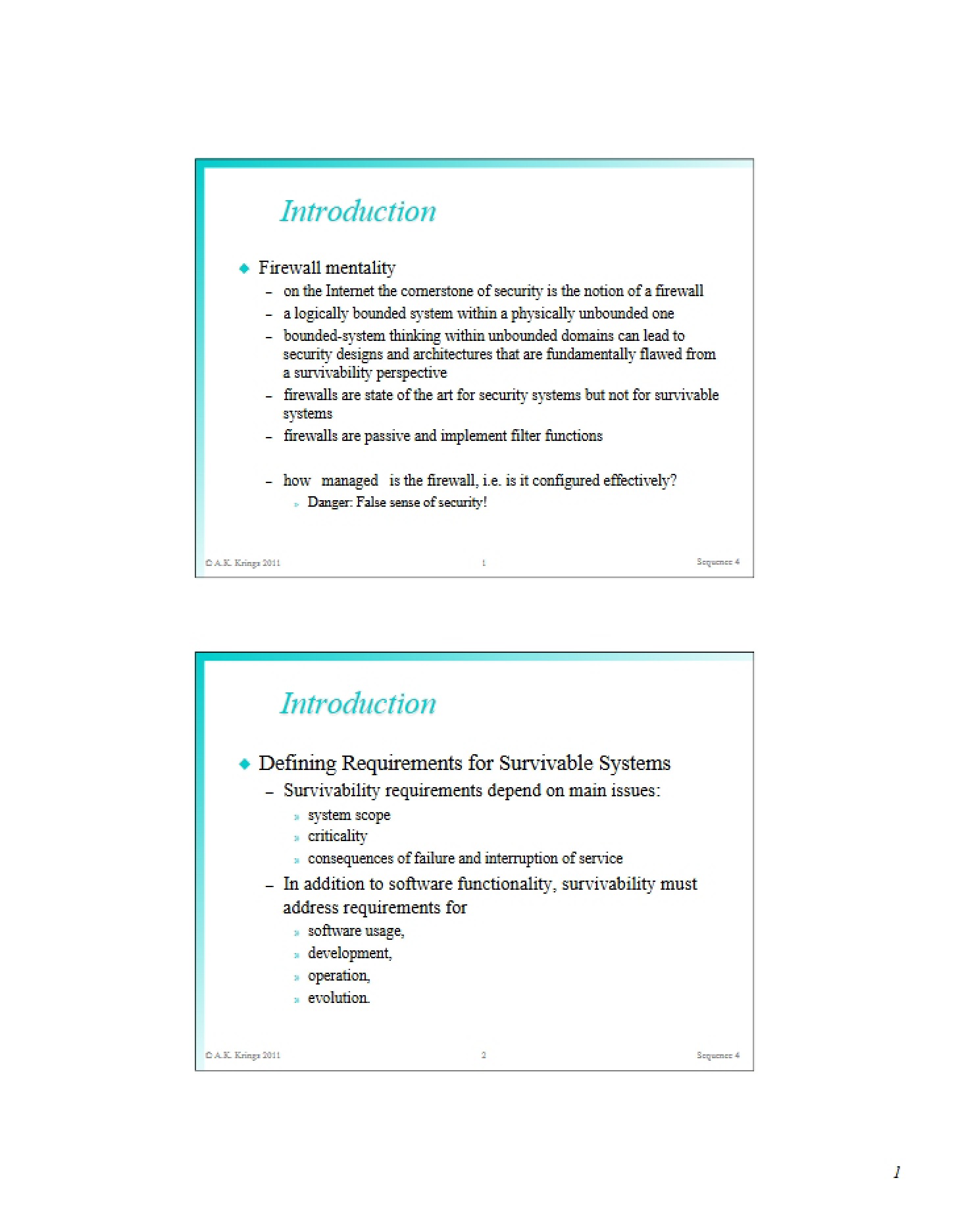
This document presents a detailed overview of established standards for managing security risks within information technology systems. It specifically focuses on guidelines developed by the National Institute of Standards and Technology (NIST), a leading authority in cybersecurity best practices. The material is based on key NIST Special Publications (SPs) relating to risk management and organizational security perspectives. It appears to be a set of lecture slides accompanying course material for Survivable Systems and Networks (CS 448) at the University of Idaho.
Why This Document Matters
This resource is invaluable for students and professionals seeking a structured understanding of how to approach risk management in a technical context. Individuals involved in system administration, network security, cybersecurity analysis, or IT management will find this particularly useful. It’s beneficial when developing or evaluating security programs, conducting risk assessments, or needing a foundational understanding of industry-recognized security frameworks. Understanding these standards is crucial for building resilient and secure systems.
Topics Covered
* The core principles of risk management as defined by NIST.
* A systematic methodology for assessing risks to information systems.
* Identifying potential threats and vulnerabilities.
* Analyzing existing security controls and their effectiveness.
* The importance of considering organizational context in risk management.
* Defining key terminology related to risk, threats, and vulnerabilities.
* The process of characterizing systems to understand their security needs.
What This Document Provides
* A foundational framework for developing a comprehensive risk management program.
* A breakdown of the key steps involved in a NIST-recommended risk assessment methodology.
* Definitions of critical security concepts, such as vulnerability, threat, and risk.
* Insights into how to identify potential threat sources and system weaknesses.
* An overview of control analysis techniques for evaluating security measures.
* A structured approach to understanding the relationship between system characteristics, threats, and vulnerabilities.