What This Document Is
This document presents a focused lecture on the fundamental building block of digital circuits: the nMOS inverter. Part of a comprehensive course in Analog and Digital Electronics, it delves into the operational characteristics of this crucial circuit element. It explores the behavior of nMOS inverters under various biasing conditions and load configurations, laying the groundwork for understanding more complex digital logic systems. The material is geared towards upper-level undergraduate electrical engineering students.
Why This Document Matters
This resource is essential for students seeking a solid understanding of digital circuit design. If you’re grappling with the core principles behind logic gates, CMOS technology, or the behavior of MOSFETs in digital applications, this lecture will provide a detailed foundation. It’s particularly valuable when you’re beginning to analyze and design digital circuits, and need to understand the underlying physics governing their operation. Students preparing for more advanced coursework in VLSI design or digital systems will also find this material highly relevant.
Common Limitations or Challenges
This lecture focuses specifically on the nMOS inverter and its characteristics. It does not cover alternative inverter designs (like CMOS inverters) in detail, nor does it provide a complete overview of all digital logic families. It assumes a foundational understanding of semiconductor device physics and basic circuit analysis techniques. While it explains the *behavior* of the inverter, it doesn’t offer step-by-step design procedures for complex circuits built *from* inverters.
What This Document Provides
* A detailed examination of nMOS inverter operation.
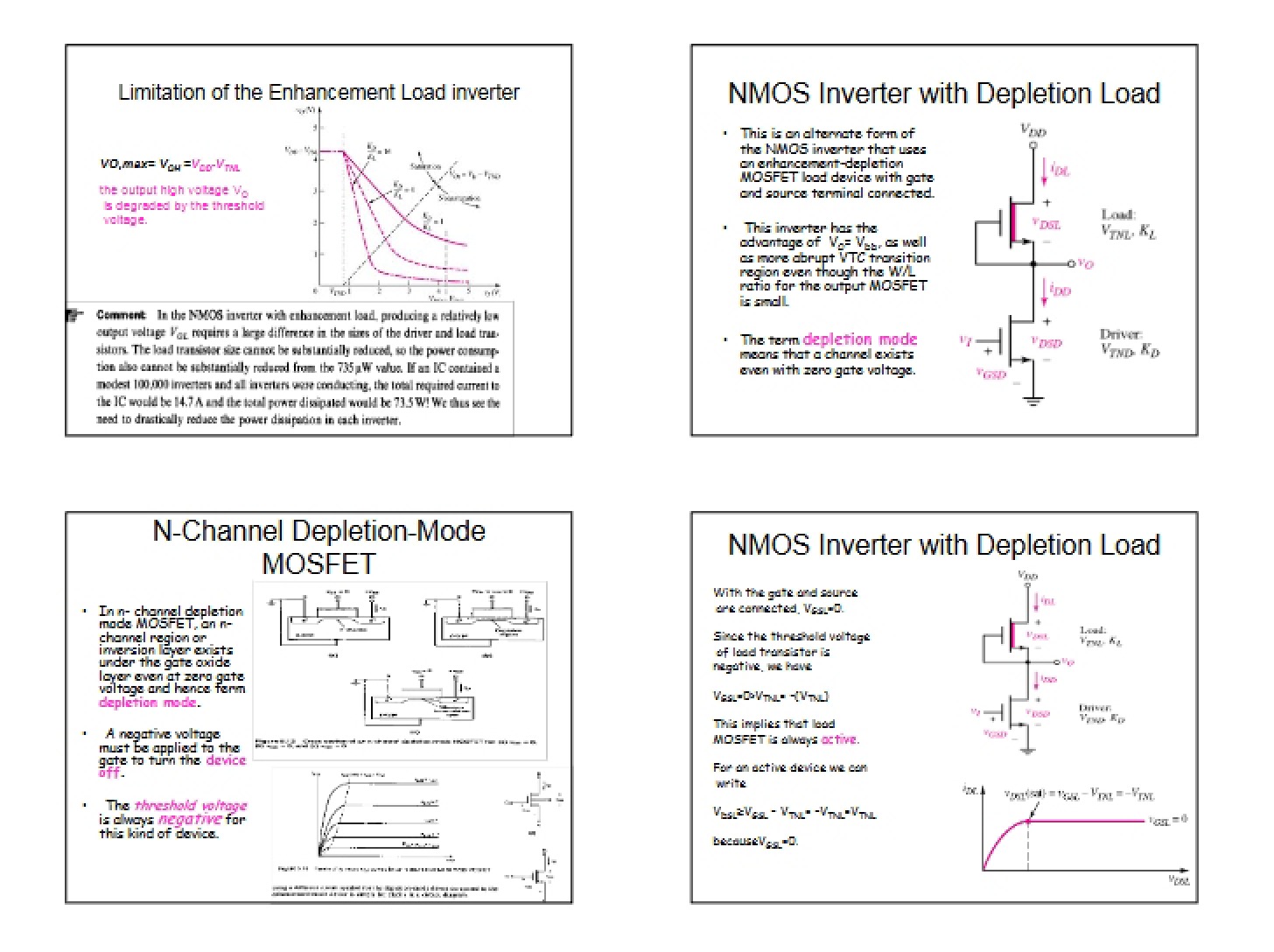
* Analysis of inverter characteristics under different operating regions (saturation, transition, and non-saturation).
* Discussion of the impact of load resistance on inverter performance.
* Exploration of nMOS inverter implementations using both resistive and enhancement-load configurations.
* Insight into the relationship between input and output voltages in nMOS inverters.
* A foundational understanding of how the nMOS inverter serves as a basis for more complex digital logic circuits.