What This Document Is
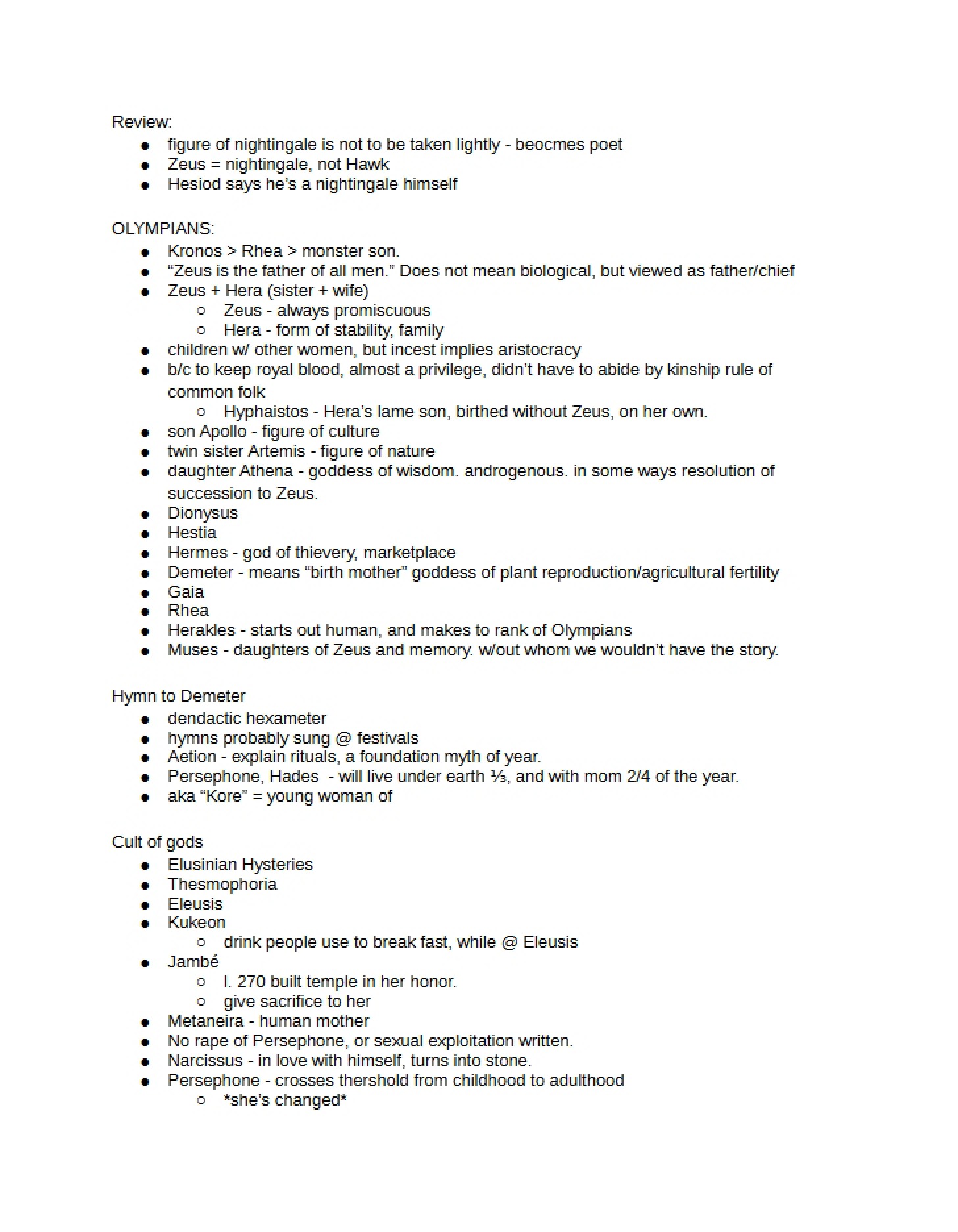
These are lecture notes from CLAS 280, Classical Mythology in Art and Literature, at the University of Southern California, dated January 21, 2016. The notes center around foundational texts in Greek mythology – specifically, Hesiod’s *Works and Days* and *Theogony*. They represent a detailed exploration of early Greek mythological thought and its presentation within these poetic works. The notes delve into the core themes and concepts presented by Hesiod, offering a framework for understanding his worldview and poetic techniques.
Why This Document Matters
This resource is invaluable for students enrolled in CLAS 280, or anyone studying early Greek mythology and literature. It’s particularly helpful when tackling complex poetic texts like those of Hesiod. These notes can serve as a strong foundation for class discussions, essay preparation, and a deeper comprehension of the cultural context surrounding these myths. Utilizing these notes alongside a close reading of the primary texts will significantly enhance your understanding of the course material. They are best used *during* and *after* reading the assigned texts to solidify comprehension.
Common Limitations or Challenges
These notes are a record of a specific lecture and are designed to *supplement* – not replace – direct engagement with Hesiod’s *Works and Days* and *Theogony*. They do not contain a complete translation of the texts themselves, nor do they offer exhaustive coverage of every possible interpretation. The notes are focused on key concepts discussed in class on a particular date and may not encompass the entirety of the course’s exploration of these topics.
What This Document Provides
* Key concepts related to Hesiod’s poetic style and purpose.
* An overview of central themes explored in *Works and Days* and *Theogony*.
* Discussion points regarding the relationship between humans and the gods in Hesiod’s works.
* Exploration of the concept of “etiological” storytelling within Greek myth.
* Analysis of the “Ages of Man” as presented by Hesiod.
* Contextualization of Hesiod’s work within the broader framework of early Greek culture and oral tradition.