What This Document Is
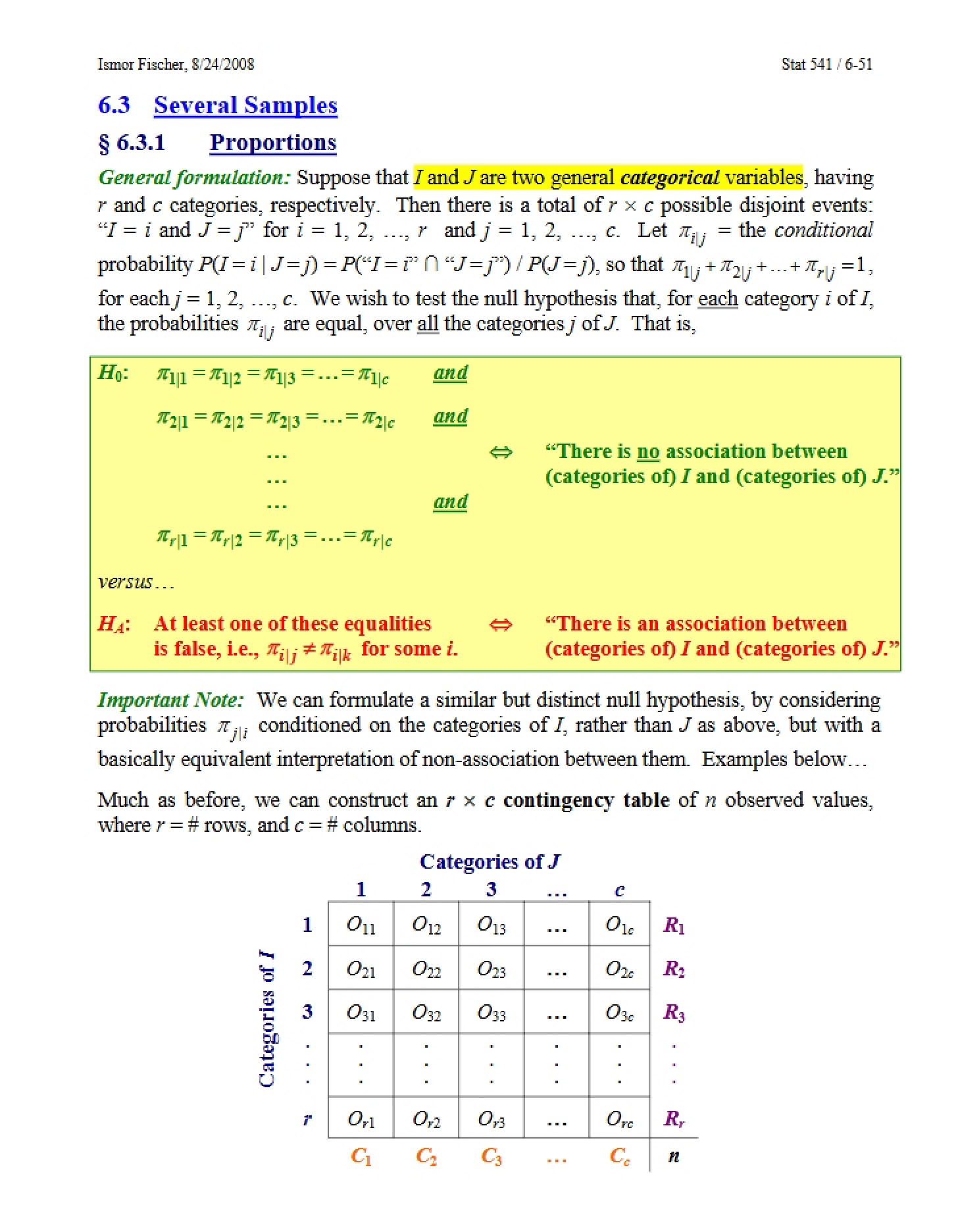
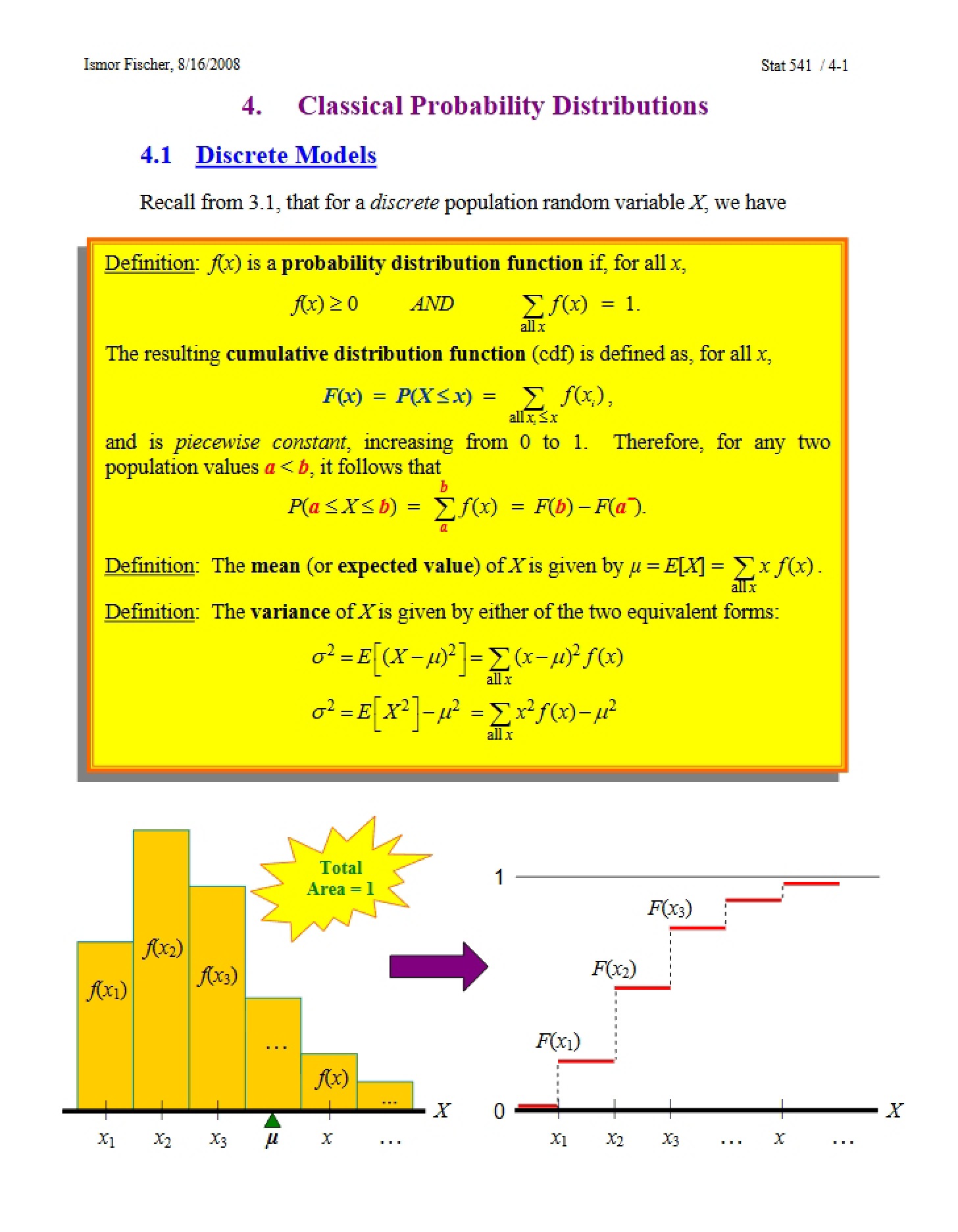
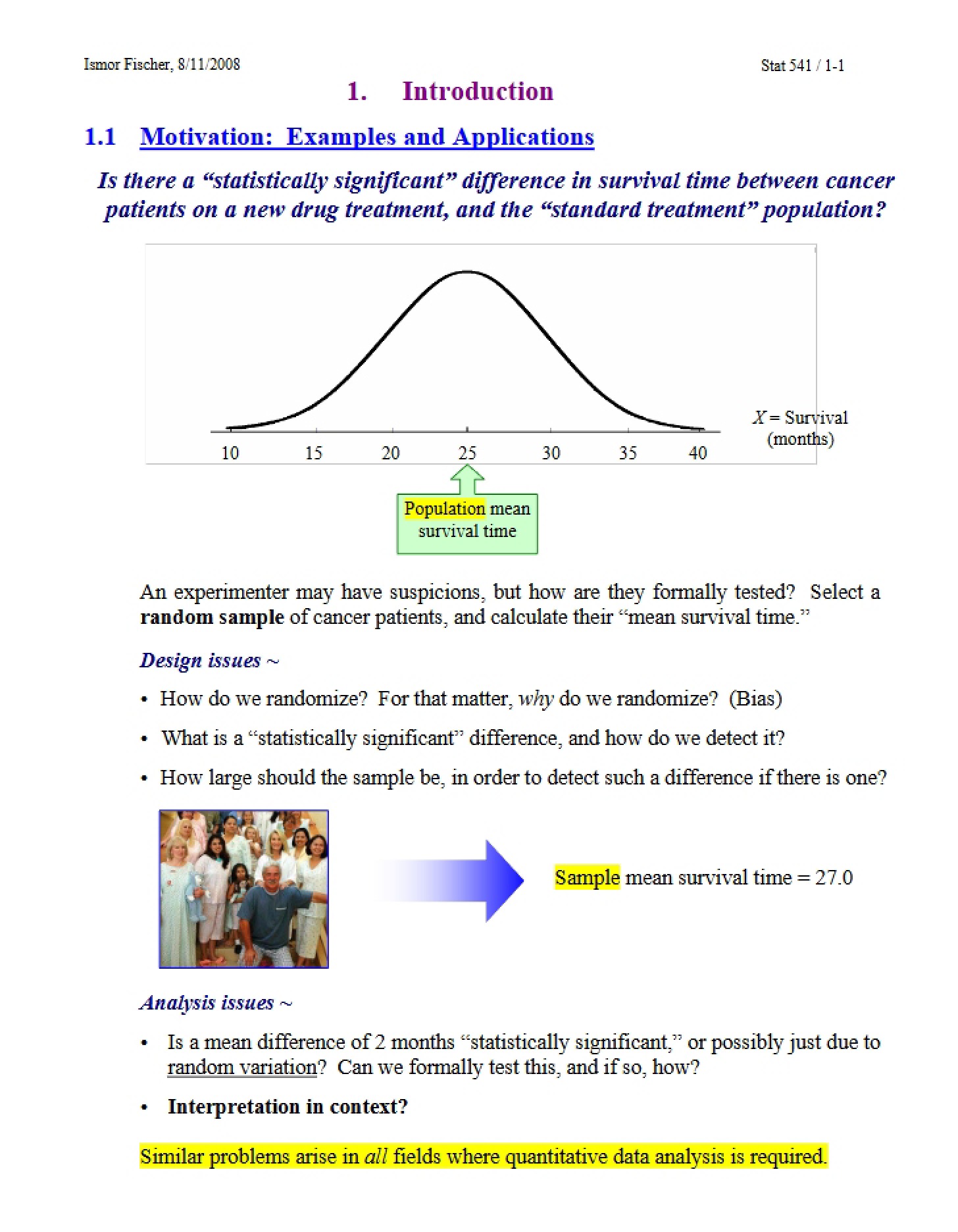
These are lecture notes from STAT 541, Introduction to Biostatistics, at the University of Wisconsin-Madison. The material focuses on foundational concepts related to probability distributions and statistical inference. It delves into the characteristics of both discrete and continuous random variables, and how we move from understanding populations to making estimations based on samples. The notes appear to cover core principles necessary for building a strong base in biostatistical analysis.
Why This Document Matters
Students enrolled in introductory biostatistics courses – or those reviewing fundamental statistical concepts – will find these notes particularly helpful. They are ideal for supplementing textbook readings and clarifying points discussed in lectures. These notes are most valuable when used *during* a course to reinforce learning, or when preparing for more advanced topics that rely on a solid understanding of distributions and estimation. Anyone needing a refresher on the building blocks of statistical analysis will benefit from exploring the concepts presented within.
Common Limitations or Challenges
These notes represent a specific instructor’s presentation of the material and do not substitute for a comprehensive textbook or complete course curriculum. They are not a self-contained learning resource; prior exposure to basic mathematical concepts is assumed. The notes focus on theoretical underpinnings and do not include detailed walkthroughs of calculations or applications to specific biological datasets. Access to the full content is required to fully grasp the nuances and detailed explanations provided.
What This Document Provides
* Definitions of key population parameters, including measures of central tendency and dispersion.
* An exploration of how sample statistics are used to estimate population parameters.
* Discussion of the relationship between population characteristics and their corresponding sample estimators.
* Introduction to a fundamental inequality used for bounding the probability of events within a distribution.
* Conceptual framework for understanding bias in statistical estimation.
* Consideration of how distributional shape impacts probability estimations.