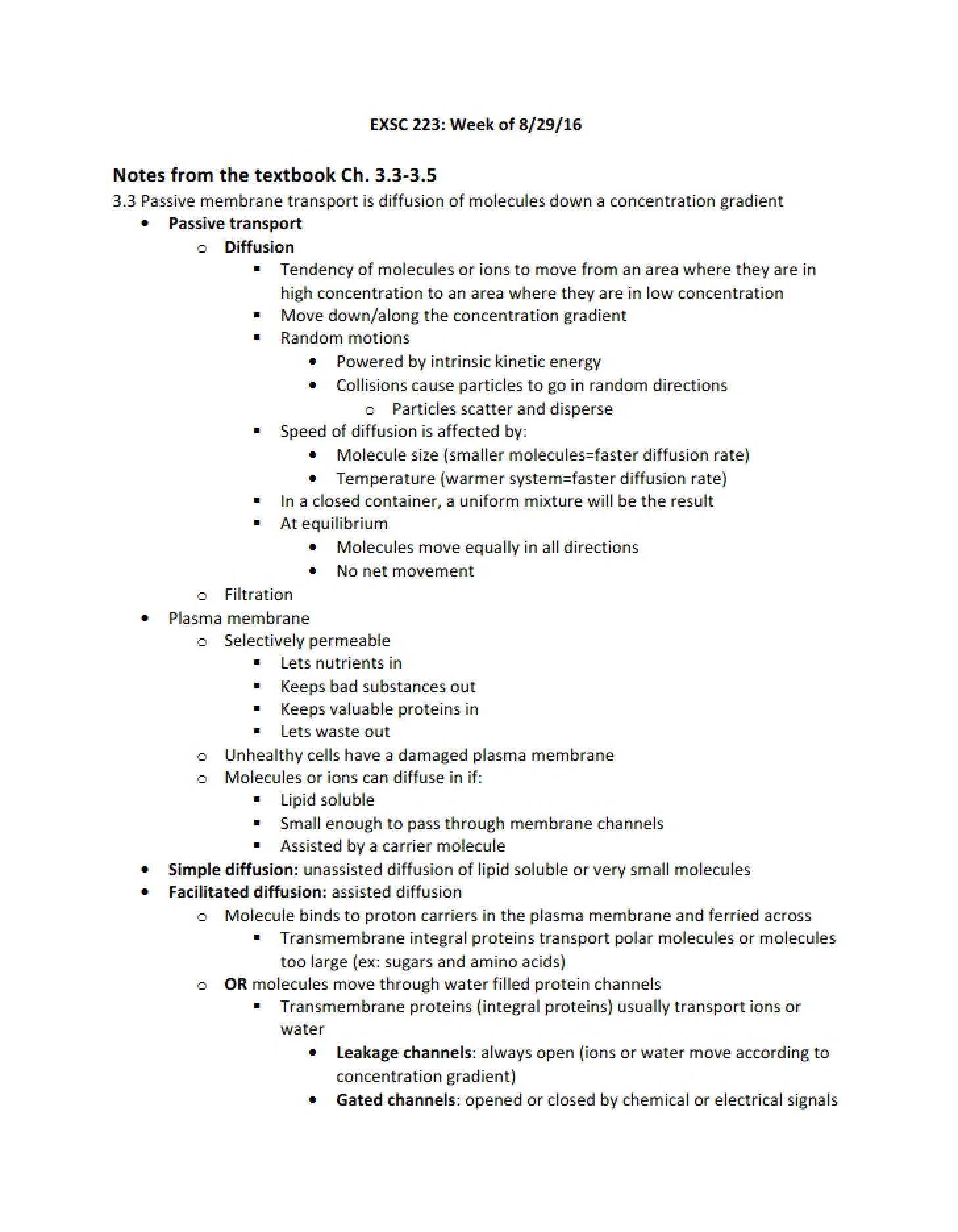
What This Document Is
These are lecture notes from an Anatomy and Physiology I course (EXSC 223) at the University of South Carolina, specifically covering material presented on October 17th. The notes delve into the intricate structural organization of skeletal muscle, moving from the macroscopic view of an entire muscle down to the microscopic components responsible for its function. It builds upon textbook chapter 9.2 and focuses on the hierarchical arrangement of connective tissues and the fundamental units within muscle fibers.
Why This Document Matters
This resource is ideal for students enrolled in introductory Anatomy and Physiology courses, particularly those struggling to visualize the multi-layered structure of skeletal muscle. It’s most beneficial when used *in conjunction with* your textbook and during exam review. Understanding these foundational concepts is crucial for grasping how muscles contract, generate force, and contribute to overall body movement. Students preparing for quizzes or exams on muscular anatomy will find this a valuable study aid.
Common Limitations or Challenges
These notes represent a specific lecture’s content and do not encompass the entirety of skeletal muscle physiology. They focus primarily on structure and organization, and do not detail the biochemical processes of muscle contraction, neurological control, or different muscle fiber types. Furthermore, while diagrams are referenced in the original source, they are not included here. Access to the full notes is required for a complete understanding of the concepts.
What This Document Provides
* A breakdown of the connective tissue layers surrounding skeletal muscle – from the outermost layer to the individual muscle fibers.
* An overview of how nerves and blood vessels supply skeletal muscle tissue.
* Discussion of different attachment methods of skeletal muscles to bones and cartilage.
* Introduction to key structural components within muscle fibers, including myofibrils and sarcomeres.
* Explanation of the arrangement of protein filaments within the sarcomere and how this arrangement contributes to muscle striations.
* Identification of key proteins involved in muscle structure, including actin and myosin.