What This Document Is
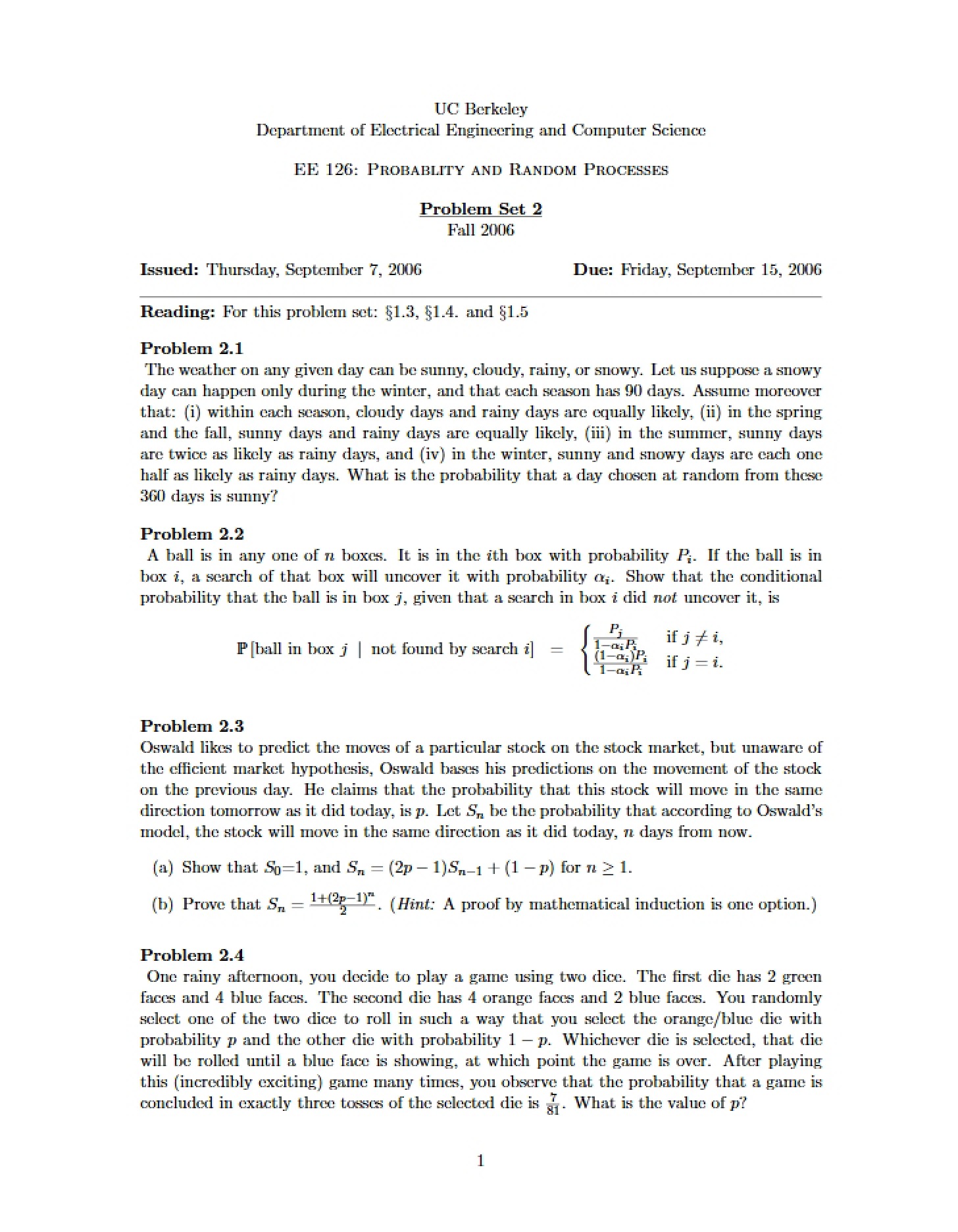
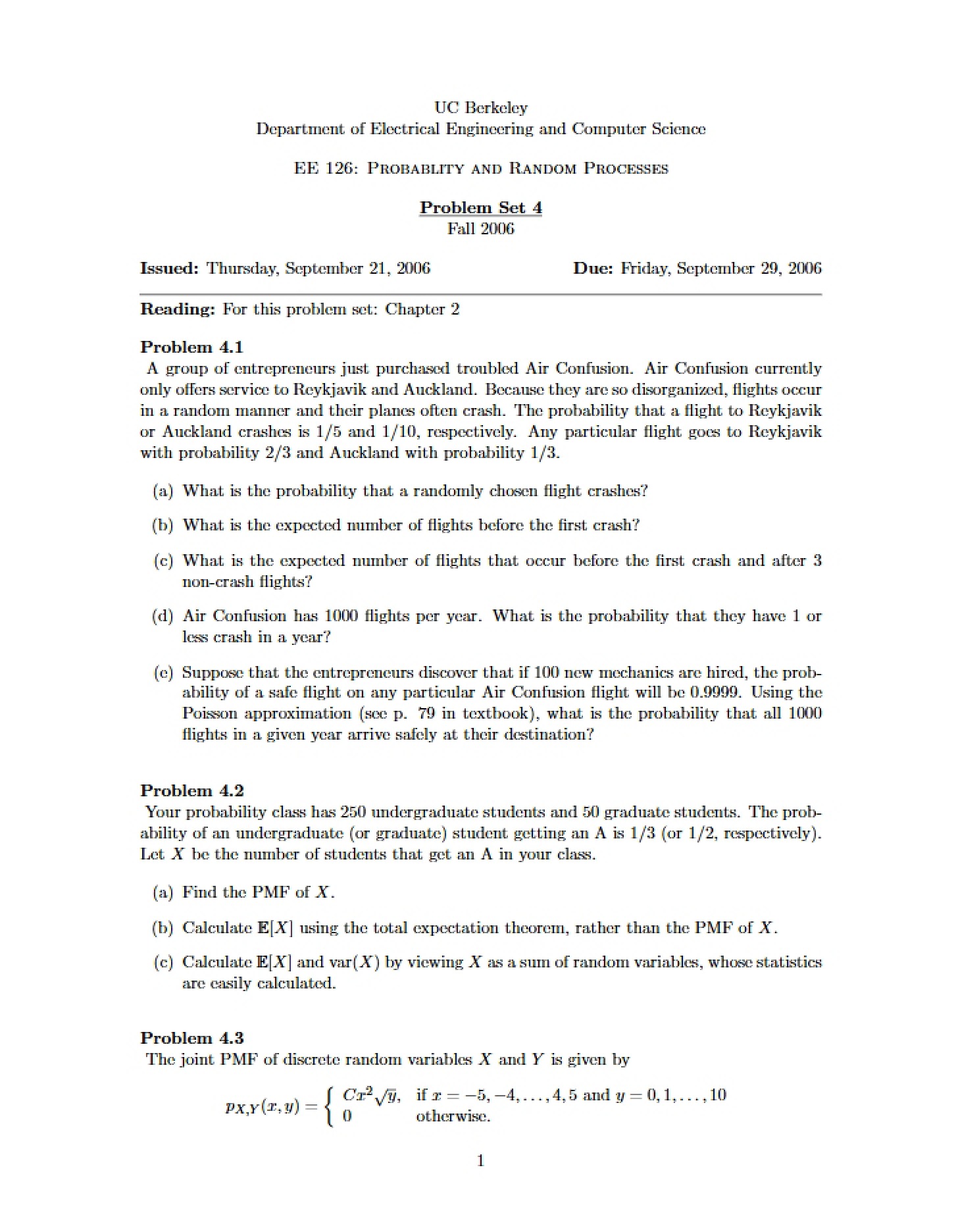
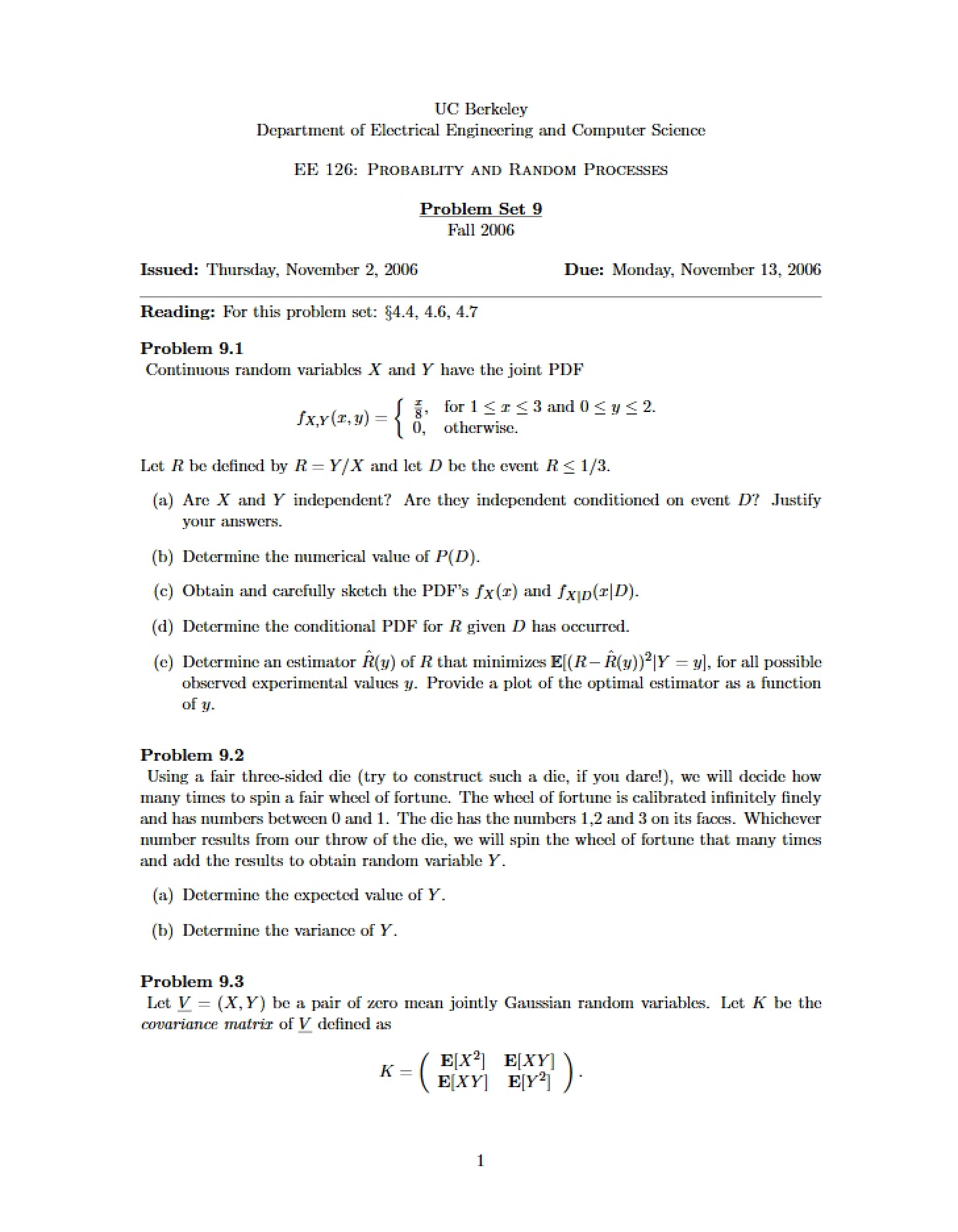
These are detailed discussion notes from a Probability and Random Processes course (EE 126) at the University of California, Berkeley, from Fall 2007. They represent a focused exploration of key concepts covered in the course readings, designed to reinforce understanding through problem-solving and detailed examples. This resource is intended to supplement lectures and the core textbook material.
Why This Document Matters
This study guide is invaluable for students currently enrolled in a similar probability and random processes course, or those reviewing foundational concepts in preparation for more advanced work in electrical engineering, computer science, or related fields. It’s particularly helpful when tackling challenging homework assignments or preparing for exams that require a strong grasp of probabilistic modeling and analysis. Students who benefit most will be those actively seeking to deepen their understanding beyond the core lecture material.
Topics Covered
* Joint and Marginal Probability Mass Functions (PMFs)
* Discrete Random Variables and their properties (Bernoulli, Binomial, Geometric, Poisson)
* Expectation and Variance calculations
* Applications of probability to real-world scenarios (e.g., game theory, reliability)
* Modeling and analysis of stochastic processes
* Utilizing the Total Expectation Theorem
* Poisson Approximation techniques
* Combinatorial probability and counting methods
What This Document Provides
* A series of worked problems, referencing specific sections of the course textbook (Bertsekas & Tsitsiklis).
* Detailed problem statements covering a range of difficulty levels.
* Scenarios involving chess matches, random variables with defined distributions, and student test scores.
* Practical applications of probability, such as analyzing flight safety and predicting outcomes.
* Opportunities to practice applying probabilistic concepts to diverse engineering problems.
* A foundation for understanding more complex random processes and statistical analysis.