What This Document Is
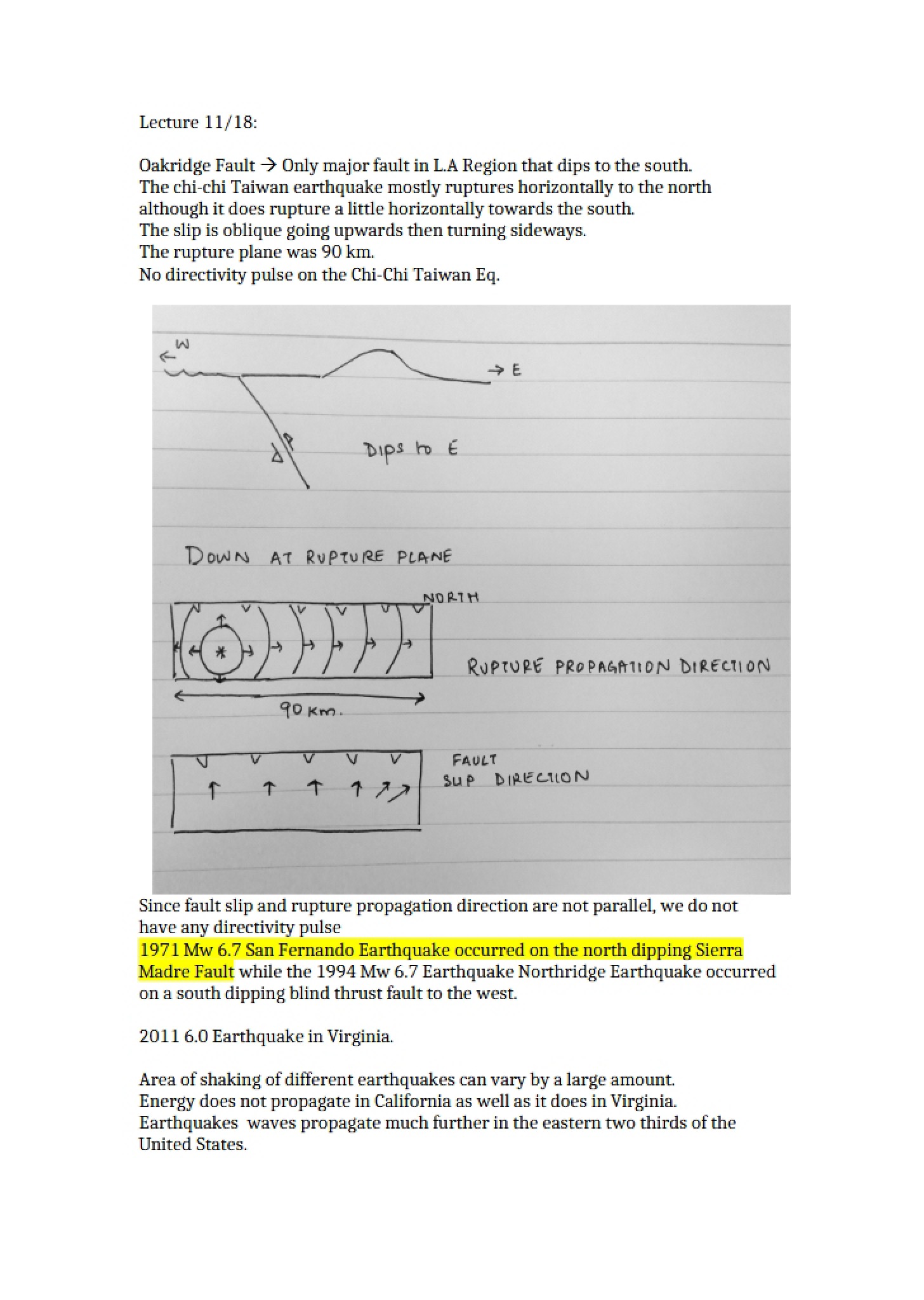
These notes provide a focused overview of the fundamental concepts related to earthquakes, as taught within a university-level geology course. The material appears to cover the mechanics of earthquake generation, methods for pinpointing earthquake locations, and understanding the scales used to measure their impact. Visual aids, potentially diagrams of fault types, are referenced within the notes, suggesting a strong emphasis on visual learning and comprehension of geological structures. The notes are dated, indicating they represent a specific lecture or series of lectures on the topic.
Why This Document Matters
This resource is ideal for students enrolled in introductory geology courses, particularly those focusing on seismology or plate tectonics. It’s beneficial for students who need a concise and organized summary of earthquake-related concepts to supplement textbook readings and classroom lectures. These notes can be particularly helpful when preparing for quizzes or exams that assess understanding of fault types, earthquake location techniques, and the differences between various measurement scales. Students struggling to visualize the processes involved in earthquake generation will likely find the referenced diagrams valuable – *once they gain access*.
Common Limitations or Challenges
These notes are designed as a study aid and do *not* represent a comprehensive textbook on earthquakes. They do not include in-depth derivations of formulas, detailed case studies of specific seismic events, or extensive background information on the history of seismology. The notes focus on core concepts and may require further research and reading to fully grasp the complexities of earthquake science. They also do not offer practice problems or solutions for self-assessment.
What This Document Provides
* An overview of different fault types and their associated movements.
* Discussion of methods used to locate earthquake epicenters and hypocenters.
* Information regarding the use of seismic intensity scales.
* Key terminology related to earthquake characteristics and measurement.
* References to visual aids that illustrate geological structures.