What This Document Is
This resource comprises lecture notes from GEOL 240: Earthquakes, offered at the University of Southern California. These notes focus on the fundamental characteristics of seismic waves and the complexities involved in understanding earthquake rupture processes. The material delves into how energy from earthquakes propagates through the Earth, and how we interpret the resulting signals. It’s designed to supplement in-class learning and provide a structured record of key concepts discussed in the lectures.
Why This Document Matters
Students enrolled in introductory geology courses, particularly those focusing on seismology or earthquake hazards, will find these notes invaluable. They are especially helpful for reinforcing understanding *during* a lecture, or for review *after* a lecture to solidify concepts. Individuals preparing for quizzes or exams on wave behavior, earthquake location, and fault mechanisms will benefit from a detailed, organized record of the material. These notes are most effective when used in conjunction with textbook readings and active participation in class discussions.
Common Limitations or Challenges
These notes represent a specific instructor’s presentation of the material and should not be considered a substitute for comprehensive textbook coverage. They do not include detailed derivations of formulas, extensive diagrams, or practice problems with solutions. The notes are a record of lecture content and assume a base level of understanding of geological principles. Access to these notes alone will not guarantee mastery of the course material; consistent study and engagement with all course resources are essential.
What This Document Provides
* An overview of the differing behaviors of body waves versus surface waves.
* Discussion of how wave energy dissipates with distance from the earthquake source.
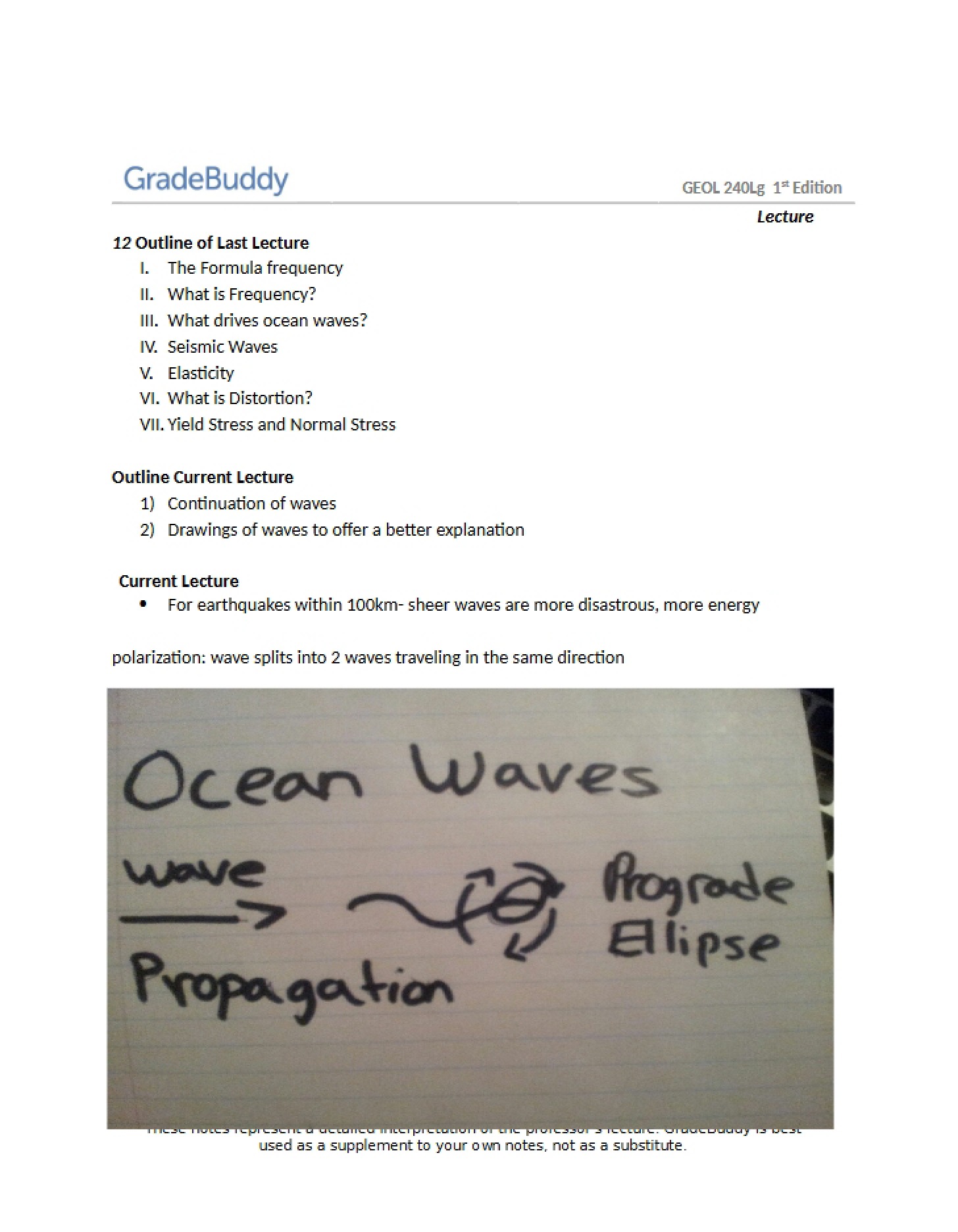
* Key terminology related to earthquake rupture and wave propagation.
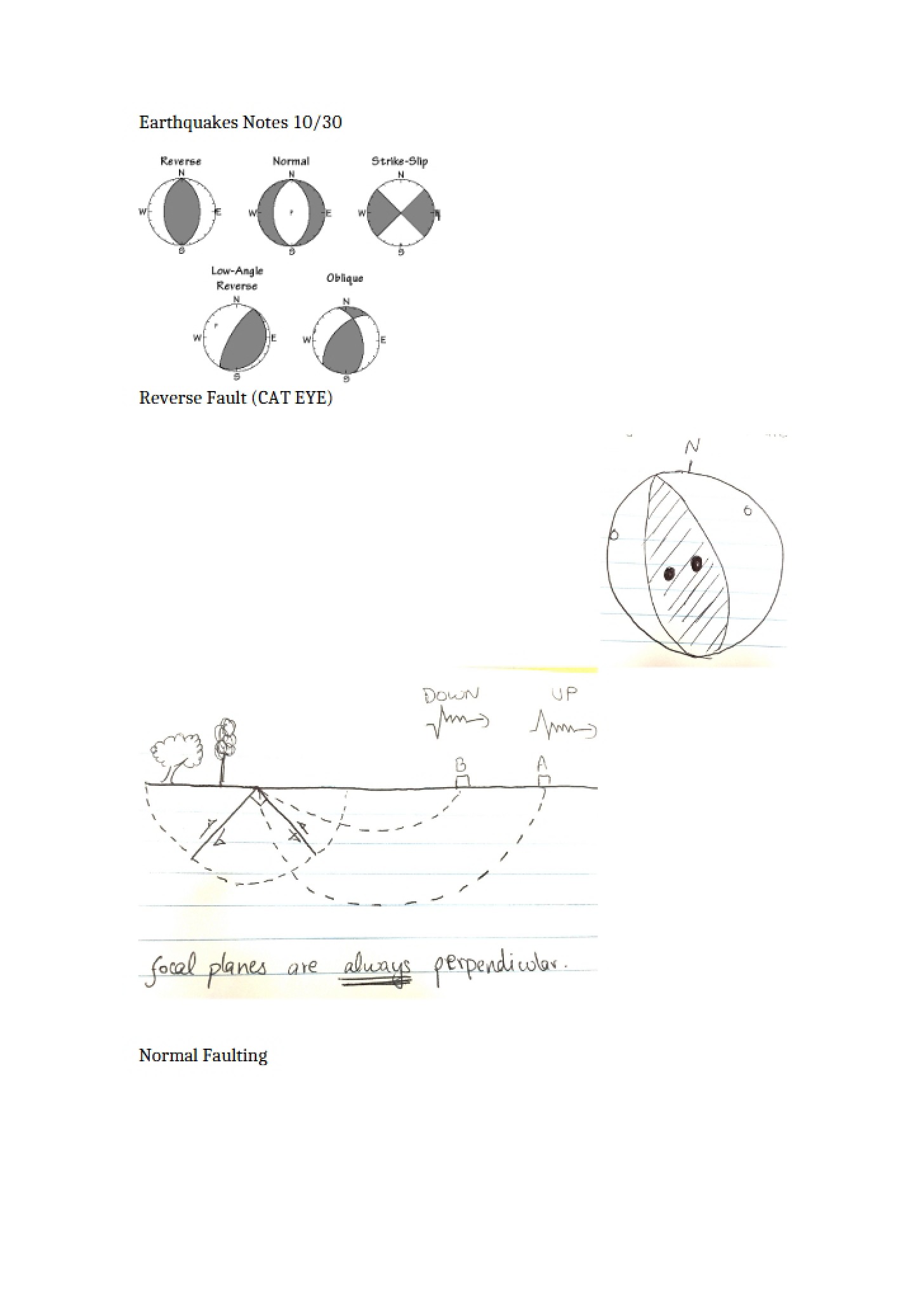
* Conceptual explanations of the relationship between fault plane geometry and observed seismic signals.
* Definitions of important locations related to earthquake events (e.g., hypocenter).