What This Document Is
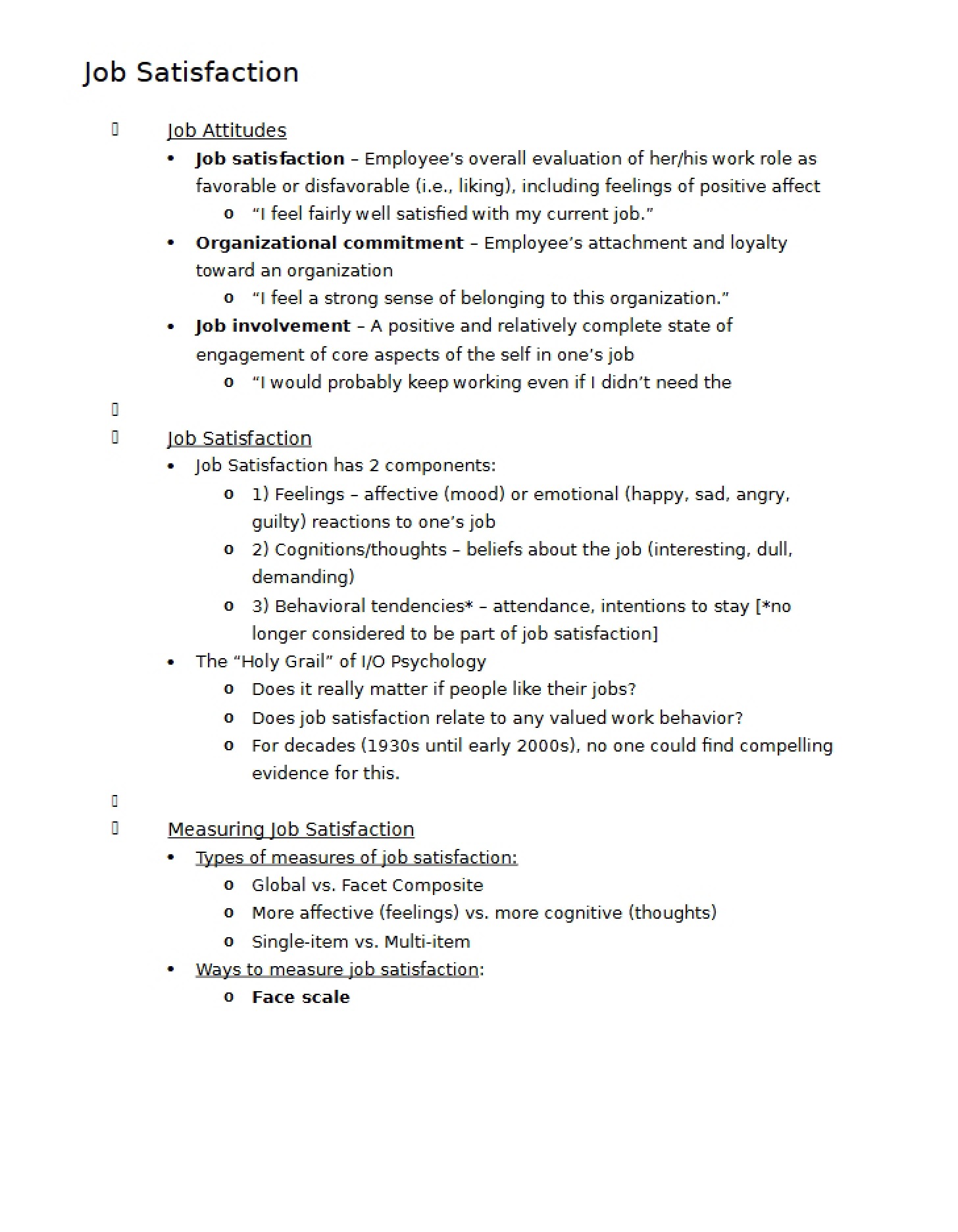
This study guide delves into the critical topic of job satisfaction within the field of Organizational Psychology. It’s a comprehensive exploration of the factors influencing how individuals feel about their work, moving beyond simple “happiness” to examine the cognitive and behavioral components of satisfaction. The material originates from a PSYC 455 course at the University of Illinois at Urbana-Champaign, indicating a rigorous academic approach to the subject.
Why This Document Matters
This resource is invaluable for students studying Organizational Psychology, Industrial/Organizational Psychology, Human Resources, or related fields. It’s particularly helpful when preparing for exams, completing assignments, or seeking a deeper understanding of employee attitudes and their impact on workplace dynamics. Professionals in HR, management, and consulting roles will also find it useful for understanding the theoretical underpinnings of employee engagement and well-being. It’s best utilized *after* initial course lectures or readings to solidify understanding and provide a structured overview of the key concepts.
Common Limitations or Challenges
This guide focuses on established theories and research related to job satisfaction. It does *not* provide practical, step-by-step instructions for improving job satisfaction within an organization. It also doesn’t offer case studies or real-world applications, serving primarily as a foundational knowledge base. While it touches upon predictive factors, it won’t offer definitive solutions for specific workplace challenges. Access to the full material is required for a complete understanding of the nuances and supporting evidence.
What This Document Provides
* A detailed overview of core concepts like job satisfaction, organizational commitment, and job involvement.
* An examination of different approaches to *measuring* job satisfaction, including various scales and their strengths/weaknesses.
* Exploration of the key determinants of job satisfaction, categorized into job characteristics, social influences, and individual disposition.
* Discussion of the longstanding debate regarding the relationship between job satisfaction and actual work performance.
* Insight into the role of personality traits in influencing an individual’s overall job satisfaction levels.