What This Document Is
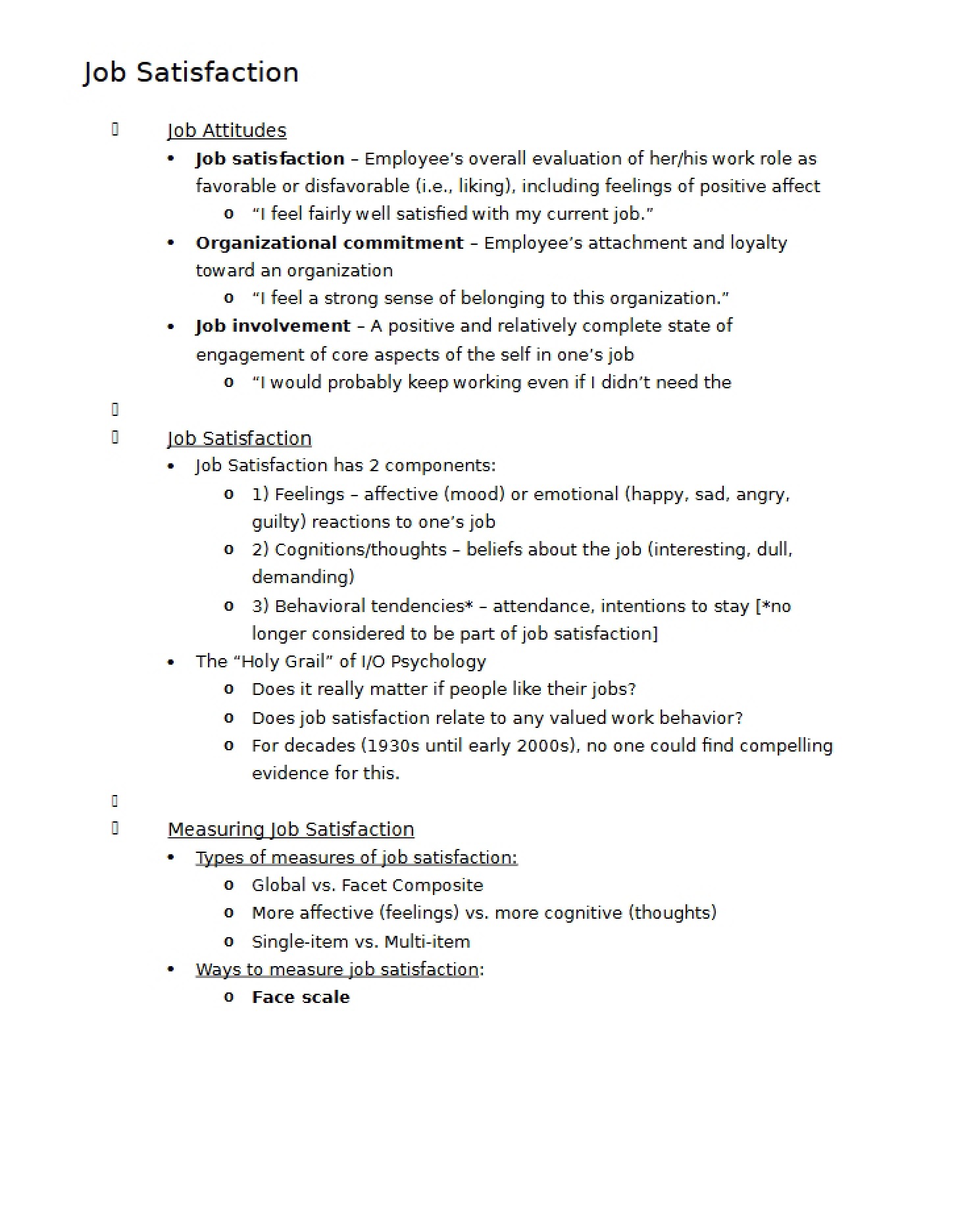
This study guide delves into the critical topic of job satisfaction within the field of Organizational Psychology. It’s a focused exploration of employee attitudes – specifically, how individuals evaluate their roles, their commitment to organizations, and their level of engagement with their work. The material examines the historical debate surrounding the importance of job satisfaction and its relationship to workplace performance. It also provides an overview of various methods used to assess how content employees are with their jobs.
Why This Document Matters
This resource is ideal for students in PSYC 455 at the University of Illinois at Urbana-Champaign, or anyone studying Industrial/Organizational Psychology. It’s particularly helpful when preparing for exams, completing assignments, or seeking a deeper understanding of the factors influencing employee well-being and productivity. Professionals in Human Resources, management, or related fields will also find this a valuable overview of core concepts. Understanding these principles is crucial for creating positive and effective work environments.
Common Limitations or Challenges
This guide presents a theoretical framework and overview of research in job satisfaction. It does *not* offer prescriptive solutions for improving job satisfaction in specific organizational contexts. It also doesn’t include detailed statistical analyses of research findings, nor does it provide case studies illustrating the application of these concepts. It’s designed to build foundational knowledge, not to be a comprehensive “how-to” manual.
What This Document Provides
* An exploration of key definitions related to job satisfaction, organizational commitment, and job involvement.
* A discussion of the components that contribute to overall job satisfaction.
* An overview of different methods and scales used to measure job satisfaction, including their strengths and weaknesses.
* An examination of the major theoretical perspectives on the determinants of job satisfaction – including job characteristics, social influences, and individual disposition.
* Insight into the historical debate regarding the relationship between job satisfaction and work performance.