What This Document Is
This material offers a focused overview of techniques used in building systems capable of logical reasoning. It delves into the core mechanisms that allow computers to process information and draw conclusions, exploring different approaches to knowledge representation and automated reasoning. The session examines how knowledge can be structured and manipulated to solve problems and answer queries. It’s part of a larger course covering the foundations of intelligent systems.
Why This Document Matters
This overview is essential for students seeking a solid grounding in the theoretical underpinnings of intelligent systems. It’s particularly valuable for those interested in knowledge representation, automated reasoning, and the design of expert systems. Individuals preparing for advanced work in areas like machine learning, robotics, or natural language processing will find the concepts presented here foundational. Reviewing this material *before* tackling more complex implementations can significantly improve understanding.
Common Limitations or Challenges
This session provides a high-level exploration of various logical reasoning systems. It does *not* offer detailed code examples or step-by-step implementation guides. The focus is on conceptual understanding rather than practical application. Furthermore, it assumes a pre-existing familiarity with fundamental logic principles and may not be suitable for individuals without that background. It also doesn’t cover the latest advancements in the field, concentrating on established methodologies.
What This Document Provides
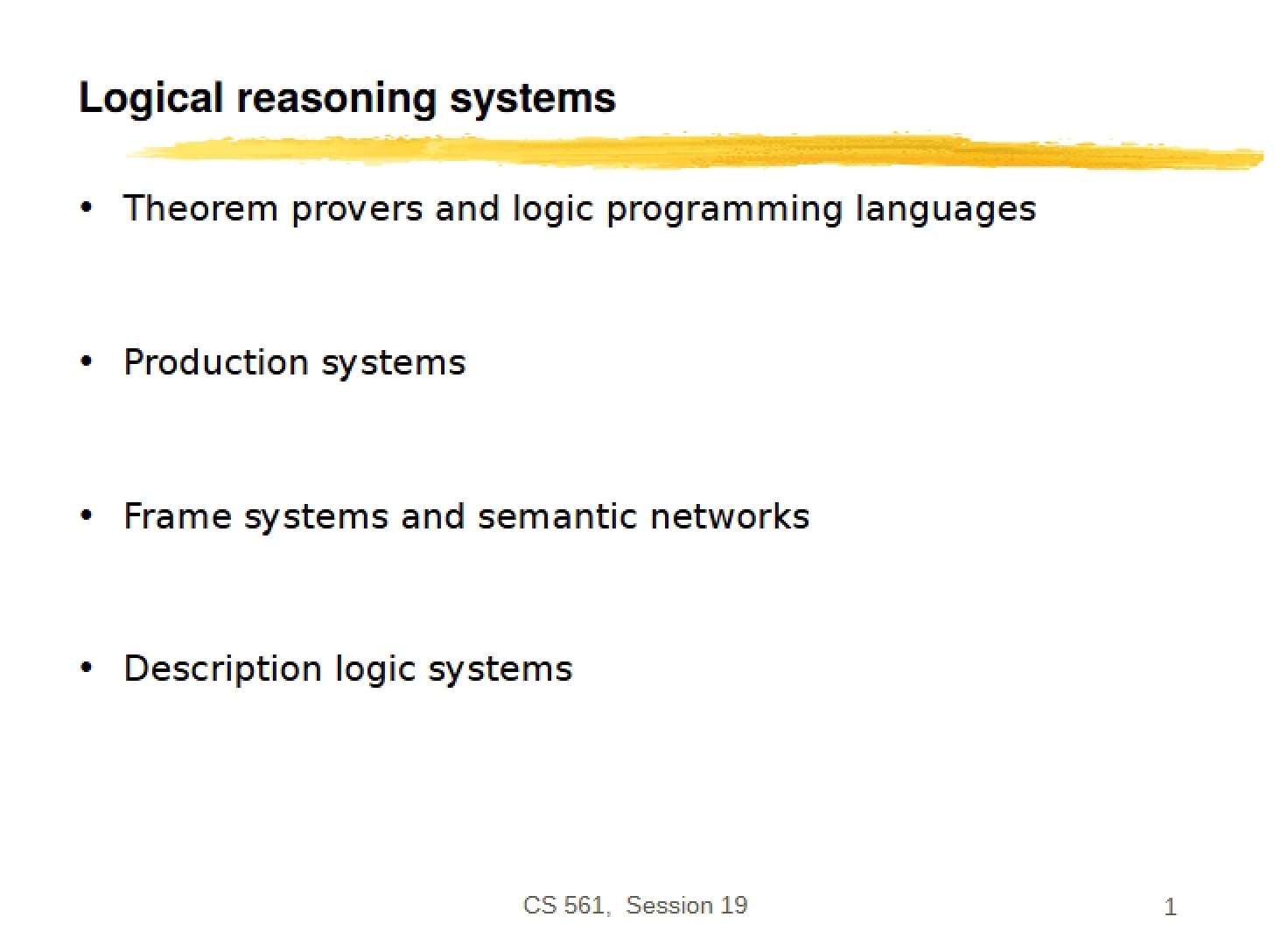
* An examination of different logical reasoning approaches, including theorem proving and production systems.
* A discussion of methods for adding, retrieving, and modifying information within knowledge bases.
* An exploration of indexing techniques designed to improve the efficiency of reasoning processes.
* Considerations regarding the computational complexity associated with various reasoning methods.
* An introduction to the concept of unification and its role in logical inference.
* A brief comparison between traditional programming and logic programming paradigms.