What This Document Is
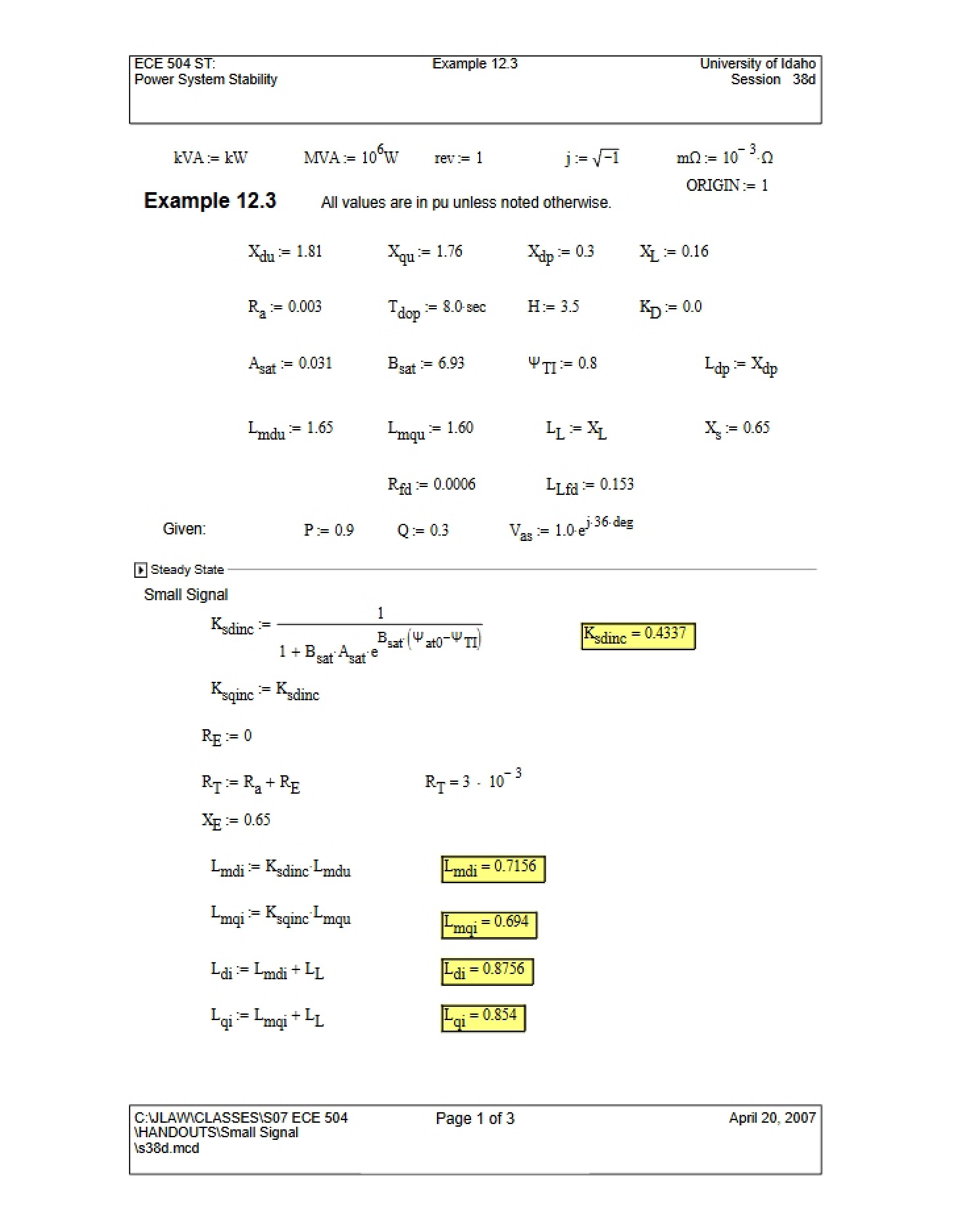
This is Part A of Session 38 for the ECE 504 – Signal & Power Integrity course at the University of Idaho. It’s a focused exploration of classical modeling techniques applied to power systems, specifically utilizing small-signal analysis. This material builds upon foundational power system concepts and delves into methods for assessing system stability and dynamic behavior. The document appears to be based on established power systems literature, referencing a specific example from a key textbook.
Why This Document Matters
This resource is invaluable for electrical engineering students specializing in power systems, signal integrity, or control systems. It’s particularly helpful for those seeking a deeper understanding of how to analyze the dynamic response of power systems to disturbances. Students preparing for advanced coursework or research in power system stability, control, or protection will find this a useful reference. It’s best utilized after gaining a solid foundation in power system fundamentals and linear systems theory.
Topics Covered
* Small-Signal Modeling of Power Systems
* Synchronizing Torque Coefficients
* Damping Coefficients and their impact on system stability
* Eigenvalue Analysis for Stability Assessment
* Participation Factor Analysis
* Time-Domain Response Characteristics
* System Response to Perturbations
What This Document Provides
* A structured approach to applying small-signal analysis to power system models.
* Mathematical formulations related to system stability analysis.
* A framework for understanding the relationship between system parameters and dynamic performance.
* Illustrative components for analyzing system behavior following a disturbance.
* A basis for interpreting the results of stability studies and identifying potential areas for improvement.