What This Document Is
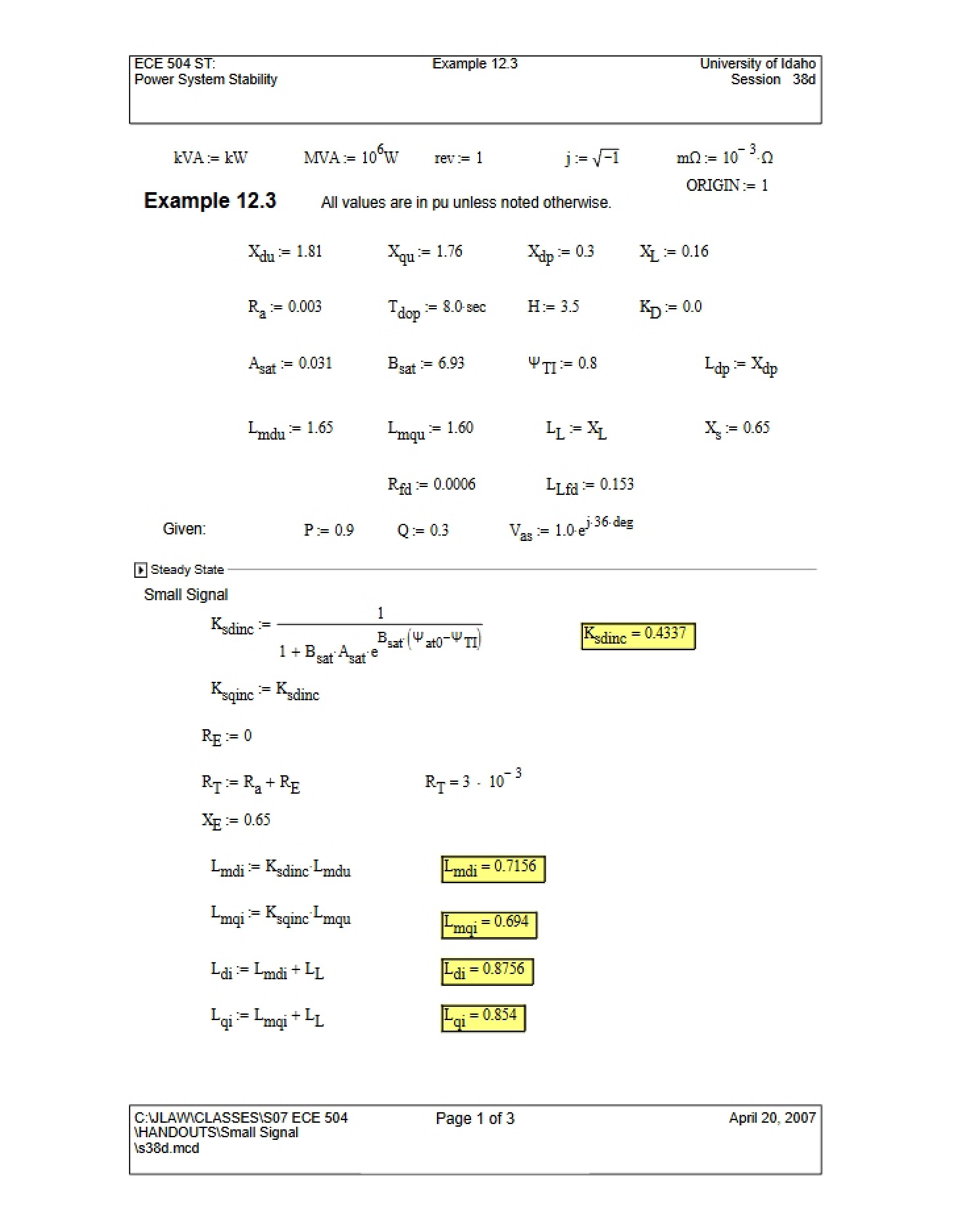
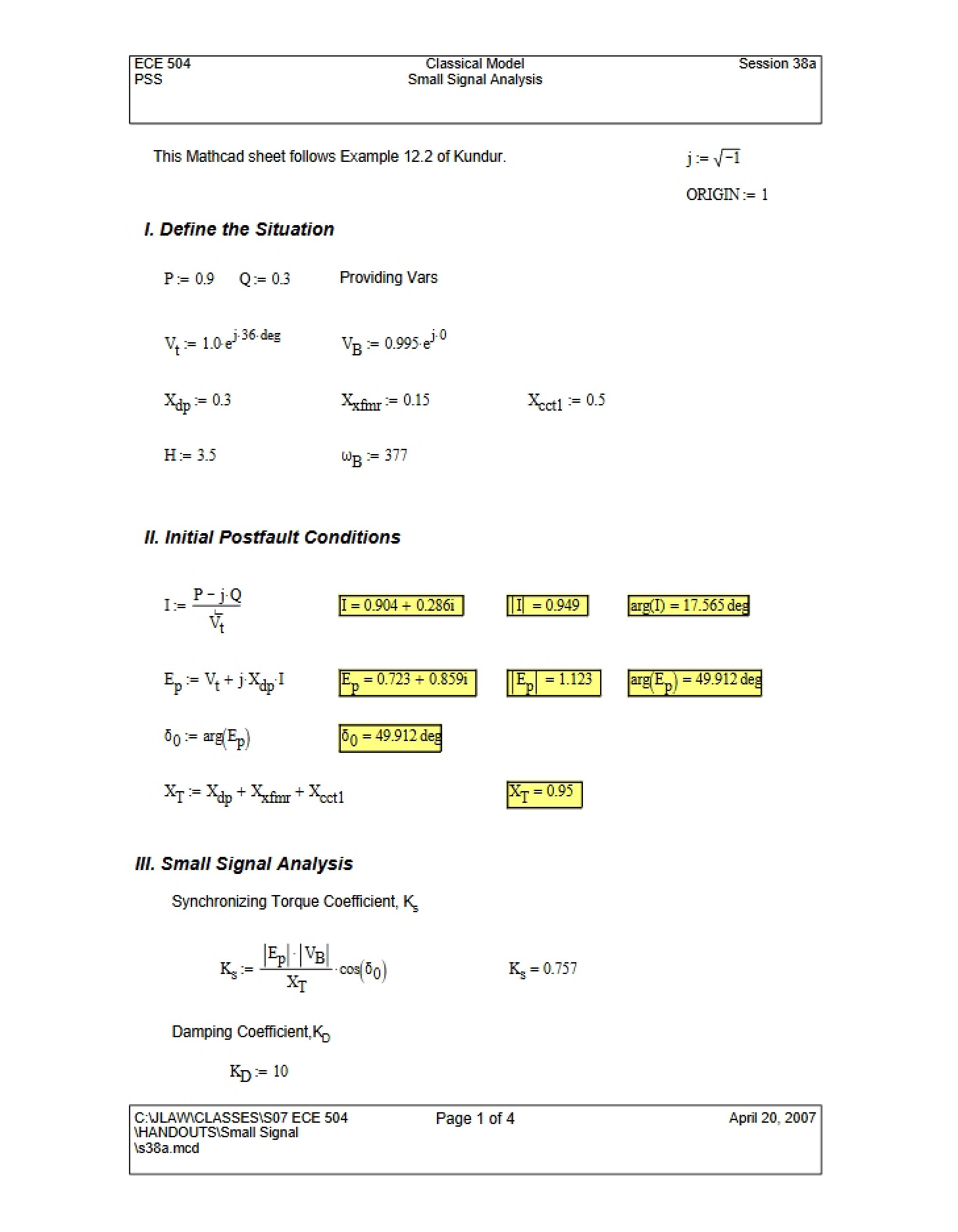
This is Part B of Session 38 for ECE 504: ST-Signal & Power Integrity at the University of Idaho. It’s a focused instructional resource designed to deepen understanding of power system stability analysis, specifically utilizing small-signal modeling techniques. This material builds upon foundational concepts and applies them to a practical scenario, offering a detailed exploration of system behavior under perturbed conditions. It appears to be a Mathcad implementation accompanying a core textbook example.
Why This Document Matters
This resource is invaluable for electrical engineering students enrolled in power systems courses. It’s particularly helpful for those seeking a more concrete understanding of how theoretical concepts translate into practical application using computational tools. Students preparing for exams, working on related assignments, or aiming to solidify their grasp of stability analysis will find this a beneficial study aid. It’s best used *after* familiarizing yourself with the foundational principles discussed in lectures and the assigned textbook.
Topics Covered
* Small-Signal Analysis of Power Systems
* Synchronizing Torque Coefficients
* Damping Coefficients and Stability Margins
* Eigenvalue Analysis & Root Locus Techniques
* Post-Fault System Conditions
* Power System Modeling Parameters (e.g., reactance, admittance)
What This Document Provides
* A structured approach to analyzing power system stability.
* A computational framework (Mathcad) for exploring system responses.
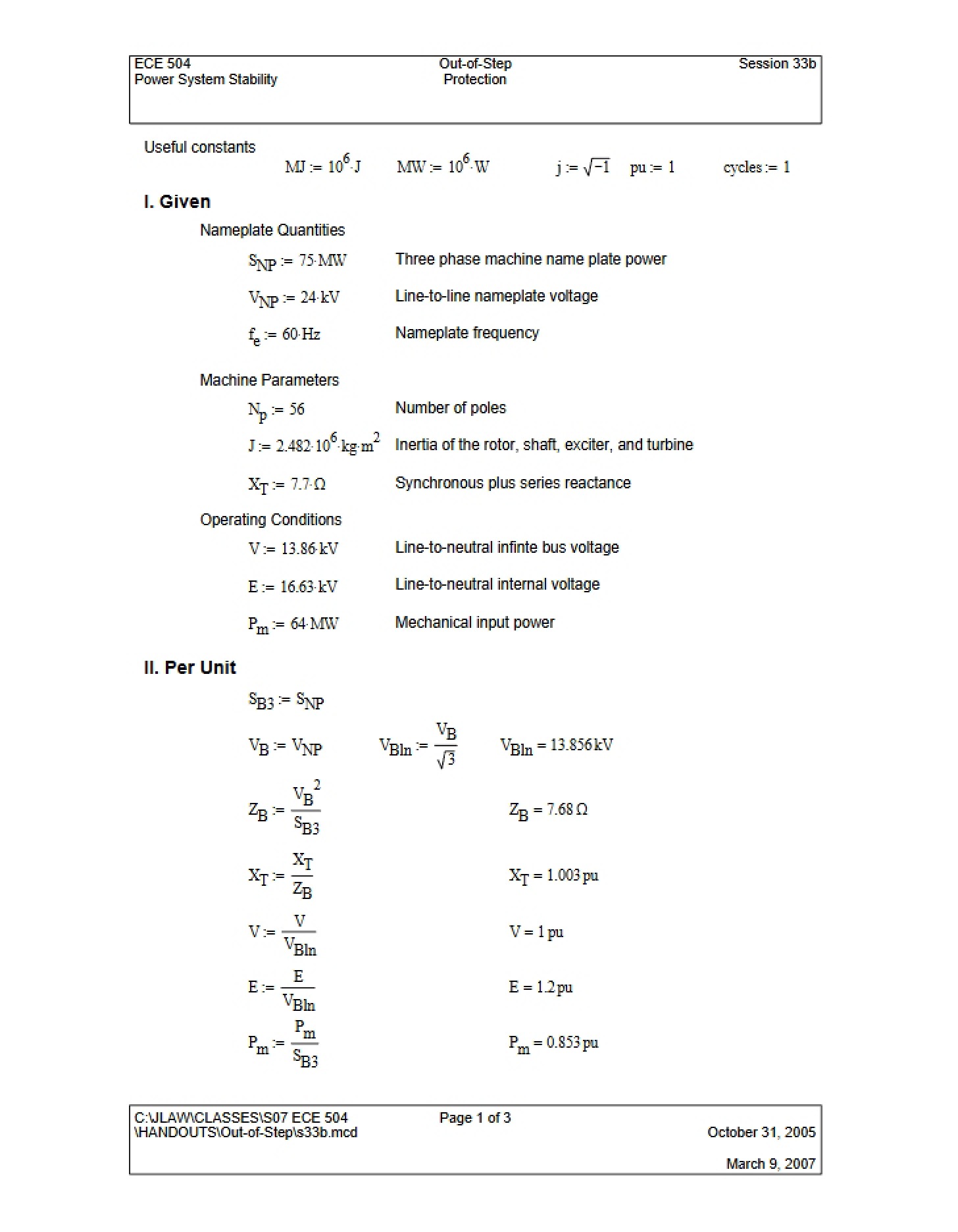
* Illustrative parameters for a specific power system configuration.
* A visual representation of key stability characteristics.
* A detailed breakdown of relevant coefficients used in stability calculations.