What This Document Is
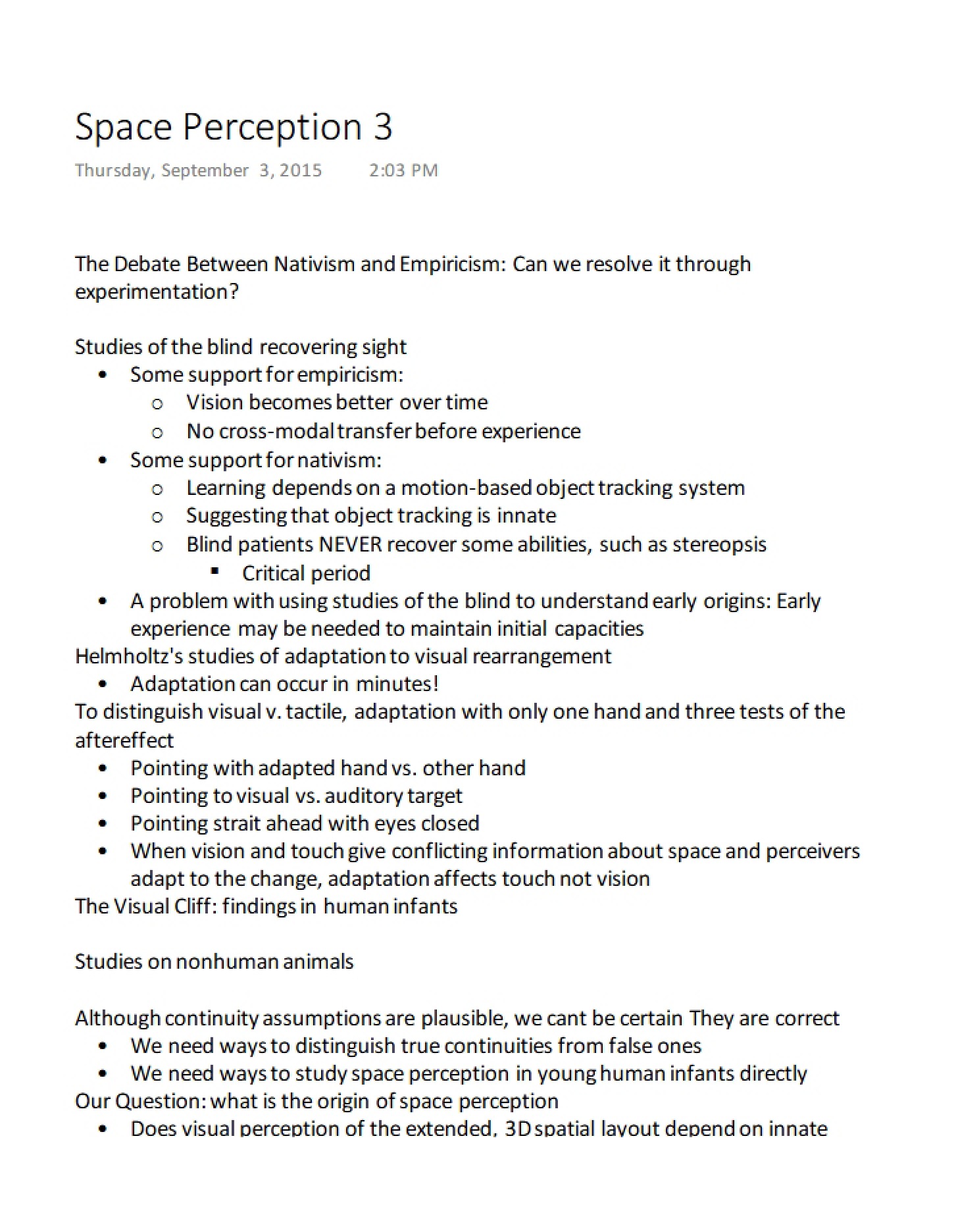
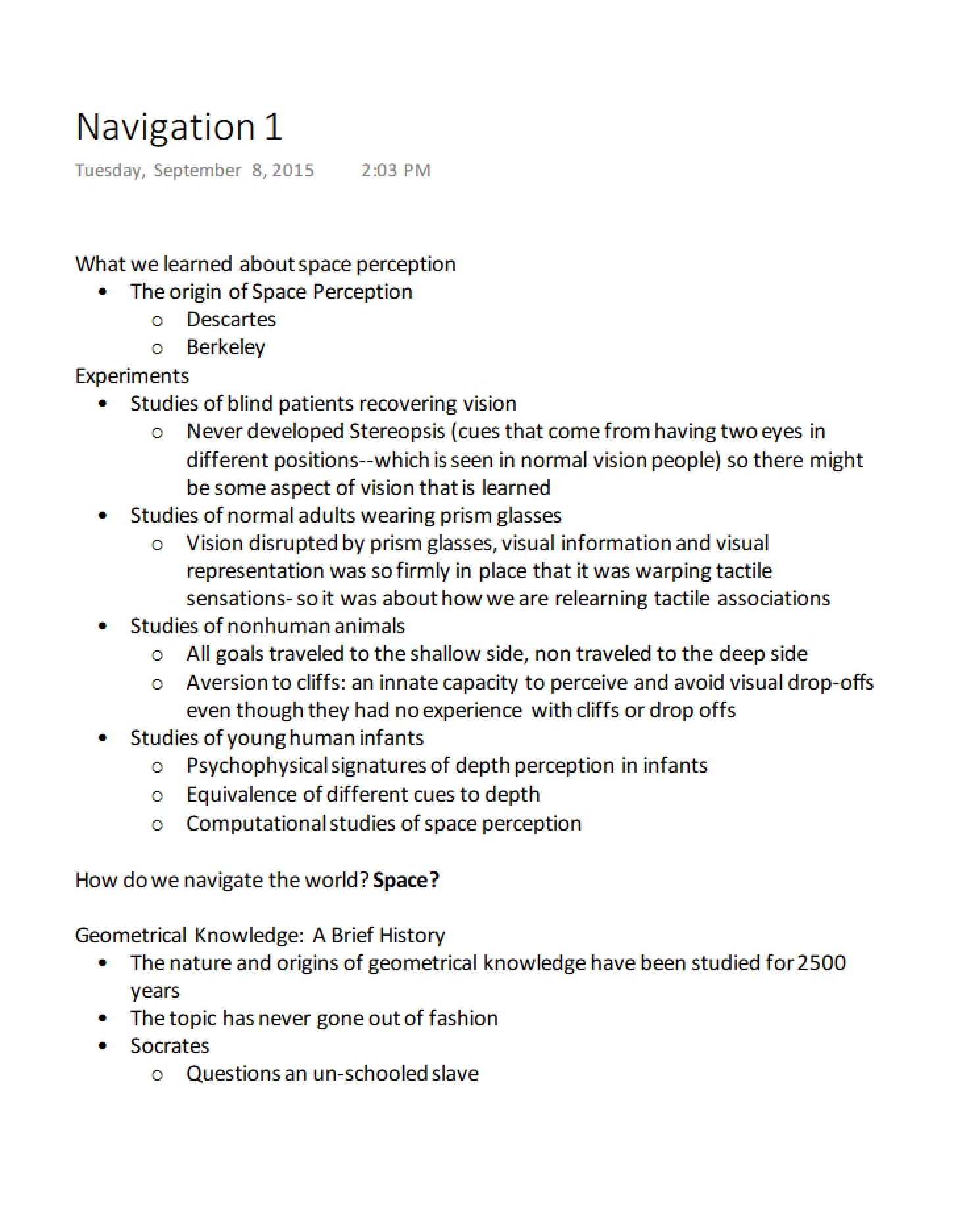
This study guide offers a comprehensive overview of the complexities involved in spatial perception – how we, and potentially other systems, interpret the world around us in terms of depth, size, and motion. It delves into the historical and theoretical foundations of understanding how we perceive space, examining competing viewpoints that attempt to explain this fundamental cognitive process. The material explores the challenges inherent in visual perception and how the brain constructs a three-dimensional understanding from two-dimensional retinal input.
Why This Document Matters
This resource is ideal for students enrolled in courses like Cognitive Psychology, Perception, or Neuroscience, particularly those focusing on the origins of the mind. It’s most beneficial when you’re grappling with the core questions of how we gain spatial awareness and the philosophical debates surrounding innate knowledge versus learned experience. Use this guide to build a strong foundational understanding before tackling more complex research or experimental studies in the field. It’s particularly helpful when preparing for discussions or essays requiring a grasp of the historical context of spatial perception theories.
Common Limitations or Challenges
This overview does *not* provide detailed experimental methodologies or statistical analyses of research findings. It focuses on the conceptual landscape and historical development of ideas, rather than offering step-by-step instructions for conducting experiments. While it references key figures and their theories, it doesn’t include exhaustive biographical details or a complete listing of all relevant research. It’s designed to be a starting point for deeper exploration, not a substitute for comprehensive course readings or independent research.
What This Document Provides
* An exploration of the inherent difficulties in visual spatial perception.
* A comparison of differing perspectives on depth perception, including the roles of various cues.
* A historical overview of key theories regarding spatial perception, tracing the ideas of influential thinkers.
* A discussion of the debate between nativist and empiricist approaches to understanding spatial awareness.
* Consideration of how learning and experience contribute to our perception of space.
* An introduction to classic thought experiments designed to test theories of spatial perception.