What This Document Is
This study guide delves into the fascinating and complex field of space perception, specifically as it relates to the origins of the mind. It’s part of a larger course exploring how we, as humans, construct our understanding of the world around us. This installment, “Perception of Space Part Two,” builds upon foundational concepts and investigates the long-standing debate surrounding the innate versus learned components of spatial awareness. It examines how our brains interpret visual information to create a sense of depth, distance, and spatial relationships.
Why This Document Matters
This resource is ideal for students enrolled in advanced psychology courses, particularly those focusing on cognitive psychology, perceptual psychology, or neuroscience. It’s most valuable when preparing for exams, completing assignments requiring in-depth understanding of spatial perception theories, or seeking to solidify comprehension of complex research studies. Students grappling with the nature vs. nurture debate in cognitive development will find this particularly insightful. It’s designed to enhance your understanding of core concepts, not to replace lectures or required readings.
Common Limitations or Challenges
This guide does *not* offer a comprehensive overview of all spatial perception research. It focuses specifically on the historical and experimental investigations into the origins of our ability to perceive space. It won’t provide step-by-step instructions for conducting experiments, nor does it offer definitive answers to the questions it poses – rather, it presents the complexities of the research and the ongoing debates within the field. It also assumes a foundational understanding of basic psychological research methods.
What This Document Provides
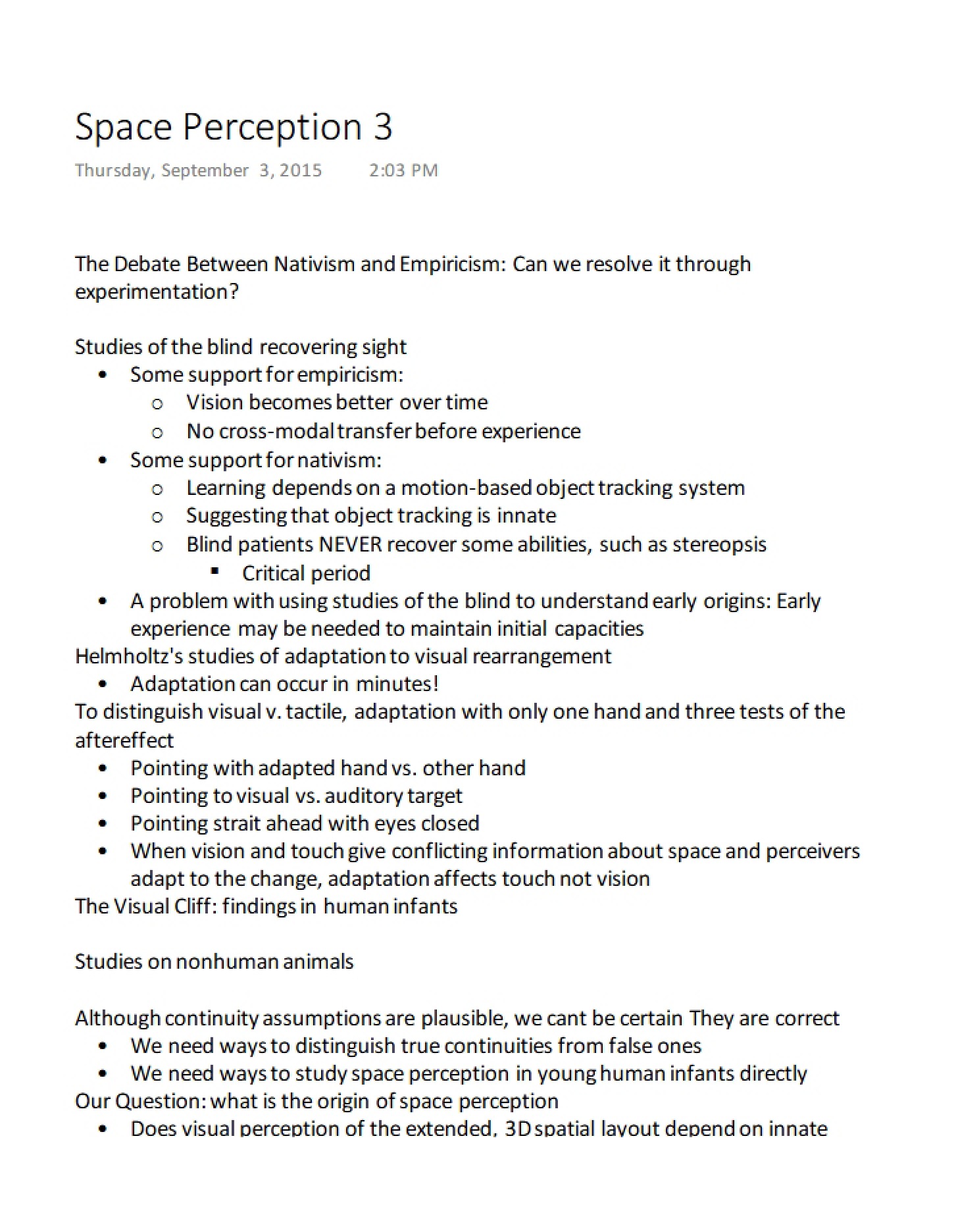
* An exploration of the historical debate between nativist and empiricist perspectives on space perception.
* Discussion of key studies involving individuals who regained sight after prolonged blindness, and the implications for understanding perceptual development.
* Analysis of Helmholtz’s theories on adaptation and the modifiability of space perception.
* Examination of experimental approaches used to investigate the relative contributions of visual and tactile information in spatial awareness.
* Consideration of hypotheses regarding the conscious and unconscious processes involved in perceptual adaptation.