What This Document Is
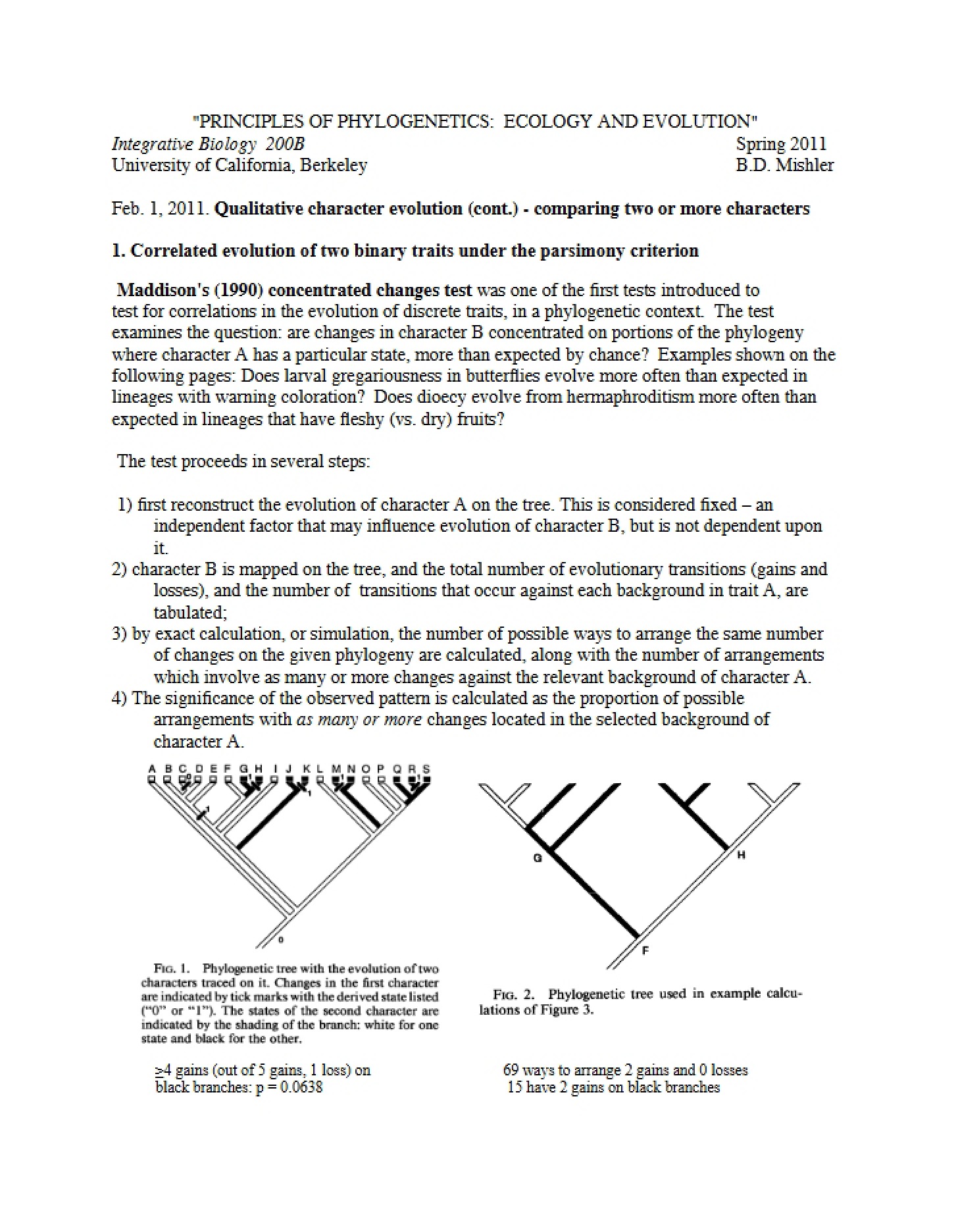
This resource provides a foundational exploration of phylogenetics, the study of evolutionary relationships among organisms. Specifically, it delves into the principles connecting ecological and evolutionary timescales, offering a detailed look at how we reconstruct the history of life. It’s geared towards students in an upper-division biology course focusing on integrative biology, ecology, and evolution. The material bridges theoretical concepts with real-world data derived from the fossil record and molecular analyses.
Why This Document Matters
This material is essential for students seeking a robust understanding of evolutionary biology, paleontology, and biogeography. It’s particularly valuable when tackling assignments requiring the interpretation of phylogenetic trees, the application of dating methods to evolutionary events, or the analysis of patterns in the fossil record. Students preparing for advanced coursework or research in evolutionary biology will find this a crucial building block. Access to the full content will empower you to confidently navigate complex topics in evolutionary studies.
Topics Covered
* The challenges of determining evolutionary rates and timescales.
* Fossilization processes and the factors influencing the preservation of organisms.
* Methods for dating fossils, including radiometric and relative dating techniques.
* The interplay between fossil data and molecular clock analyses.
* Potential biases and limitations in interpreting the fossil record, such as the Signor-Lipps effect.
* The relationship between extinction events and patterns of biodiversity.
What This Document Provides
* An overview of taphonomic processes affecting fossil preservation.
* A comparative look at various dating methods and their associated error ranges.
* Visual representations of data relating to fossil occurrence and extinction.
* Discussion of discrepancies between divergence dates estimated from molecular data versus the fossil record.
* A framework for understanding how ecological and geological factors influence evolutionary patterns.