What This Document Is
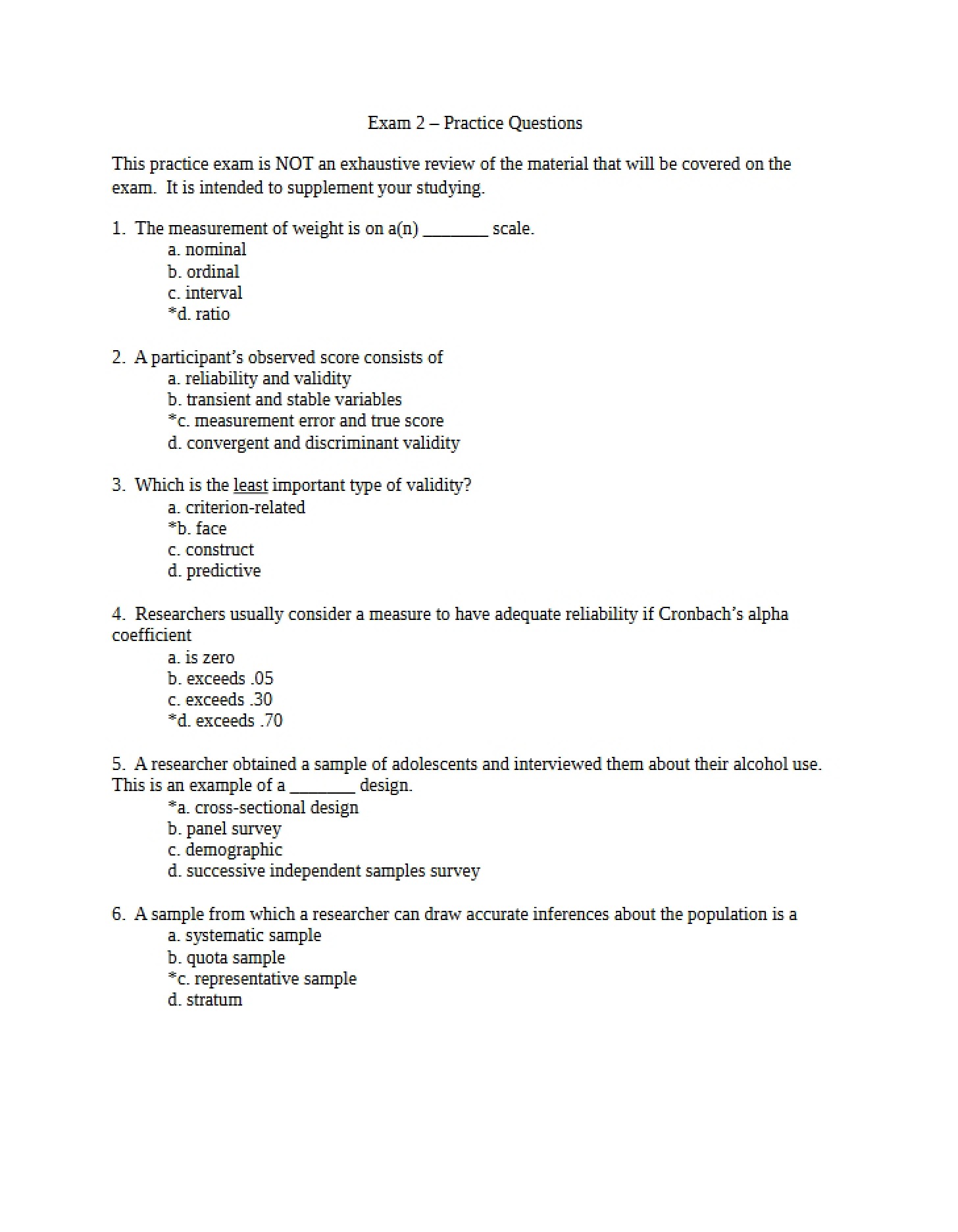
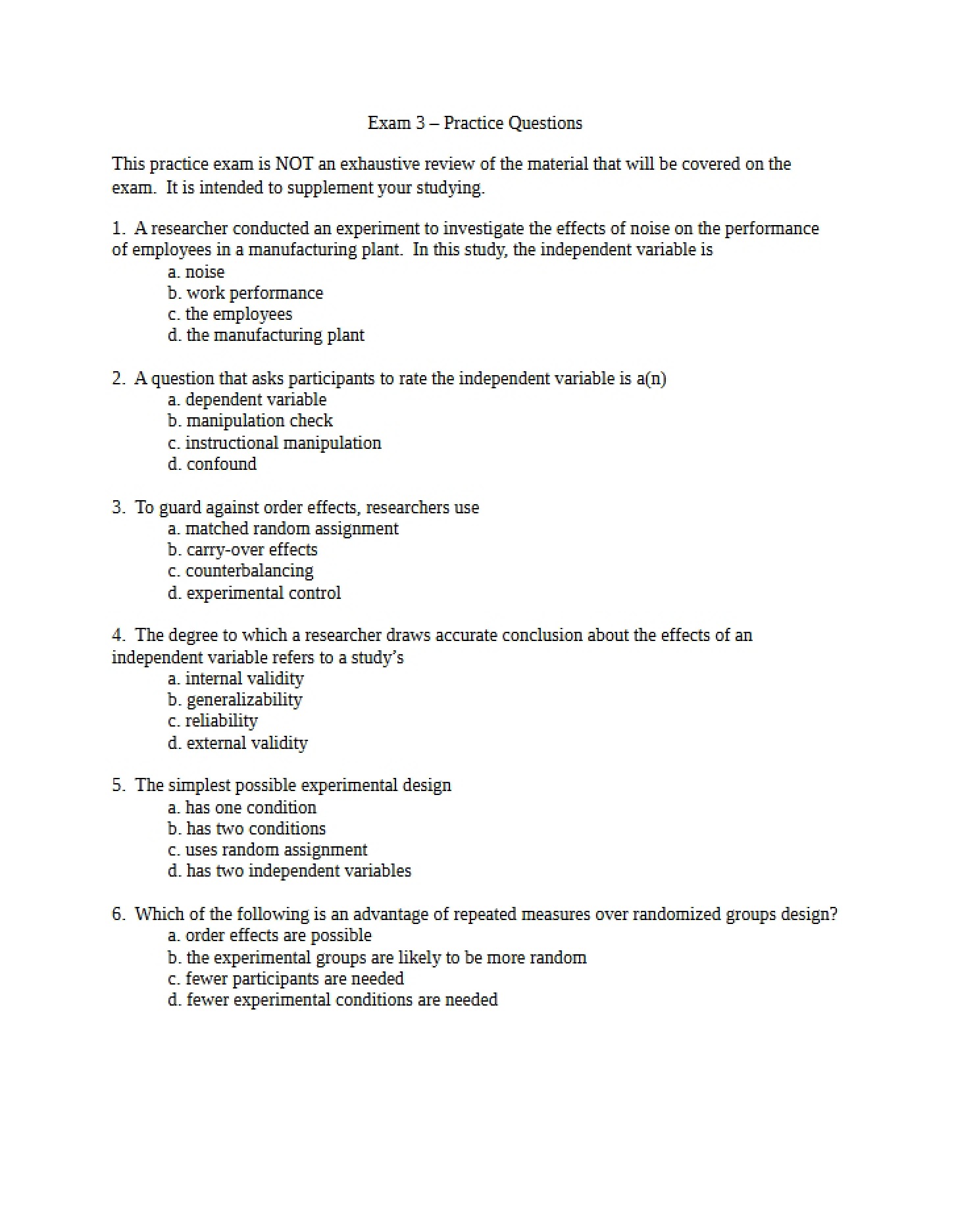
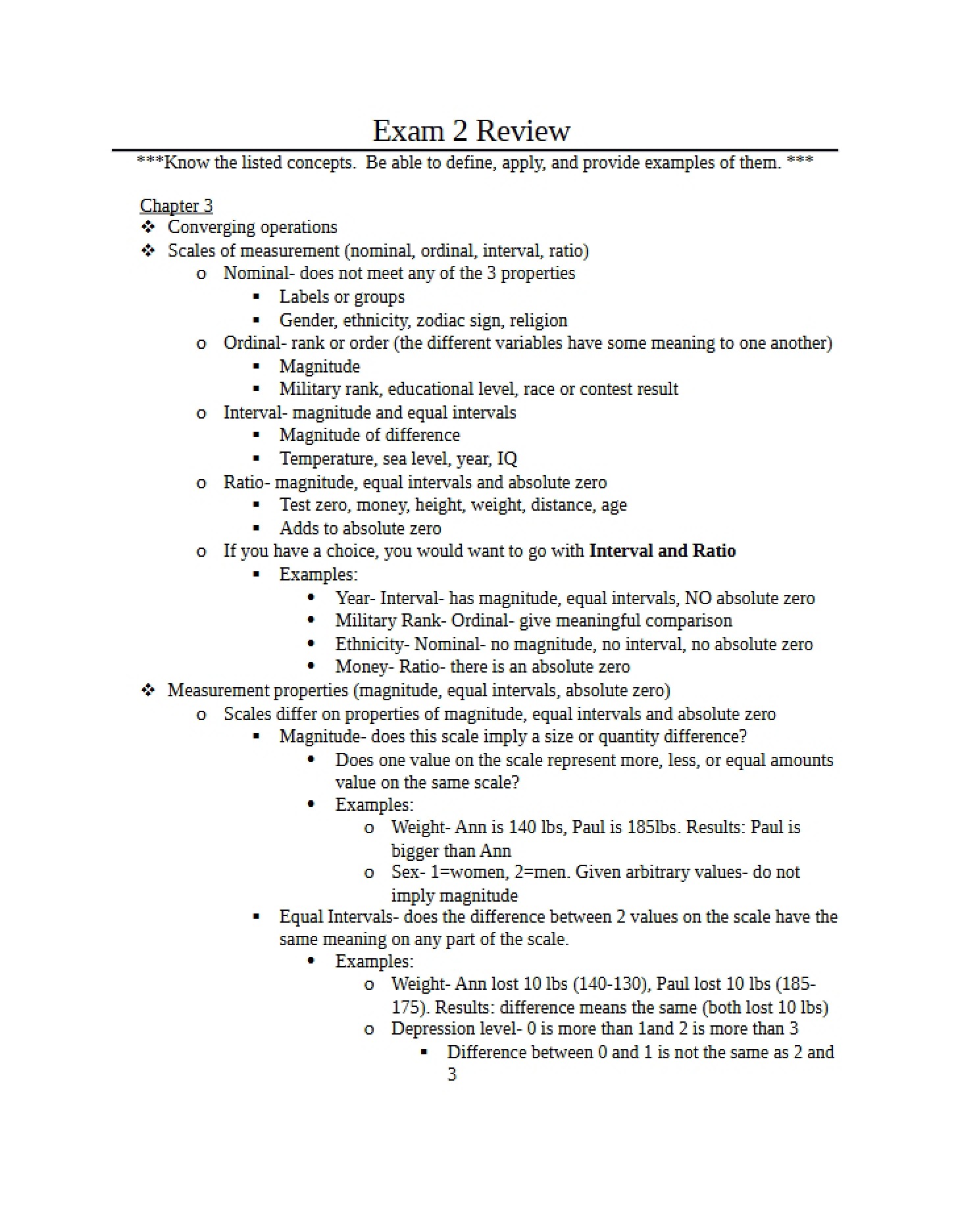
This resource is a practice exam designed for students enrolled in PSYC 202: Research Methods in Psychology at West Virginia University. It’s crafted to help you assess your understanding of core concepts and principles covered in the course, specifically preparing you for the format and style of questions you might encounter on graded assessments. The questions focus on the foundational elements of psychological research, spanning research design, data analysis, and ethical considerations.
Why This Document Matters
If you’re currently taking Research Methods in Psychology, or planning to, this practice exam is a valuable tool for self-evaluation. It’s best utilized *after* you’ve engaged with the course materials – lectures, readings, and assignments – as a way to solidify your knowledge and identify areas where further study is needed. Working through these practice questions under timed conditions can also help build test-taking confidence and reduce anxiety. This is particularly useful as you approach the first major exam in the course.
Common Limitations or Challenges
It’s important to understand that this practice exam is *not* a comprehensive or exhaustive review of everything that will be on the actual exam. It’s designed as a supplemental resource, highlighting key areas but not necessarily covering every single topic in detail. It won’t provide detailed explanations or solutions to the questions – those are reserved for the full resource. Relying solely on this practice exam without engaging with the core course materials will likely be insufficient for exam success.
What This Document Provides
* A series of multiple-choice questions covering fundamental research methods concepts.
* Questions relating to research approaches (basic vs. applied, descriptive vs. experimental).
* Scenarios testing your understanding of operational definitions and scientific criteria.
* Questions assessing your knowledge of statistical concepts like variance, effect sizes, and inferential statistics.
* Items focused on data collection methods, including observation and self-report techniques.
* Questions regarding the dissemination of research findings and components of a research article.
* Practice applying concepts related to measures of central tendency and exploratory research.