What This Document Is
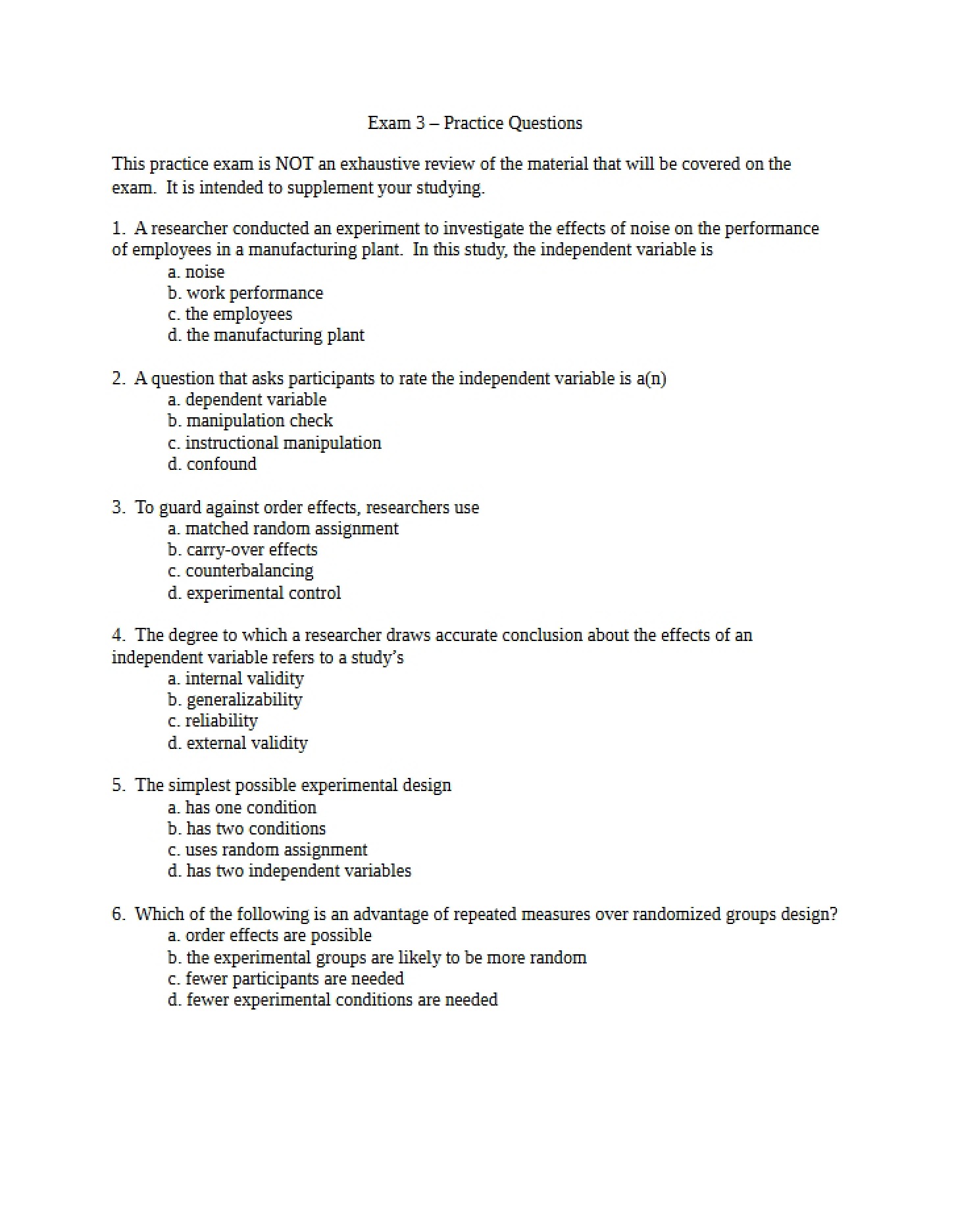
This is a practice exam designed for students enrolled in PSYC 202: Research Methods in Psychology at West Virginia University. It’s crafted to help you assess your understanding of core concepts covered in the course, specifically focusing on areas related to measurement, research designs, and statistical analysis. The questions are formatted similarly to those you might encounter on an actual exam, providing valuable experience with the style and scope of assessment.
Why This Document Matters
This practice exam is an invaluable tool for any student aiming to solidify their grasp of research methodologies. It’s particularly useful as you prepare for upcoming assessments, allowing you to identify areas where your knowledge is strong and pinpoint topics requiring further review. Working through these practice questions under timed conditions can also help build confidence and reduce test anxiety. Students who proactively engage with practice materials often perform better on graded exams.
Common Limitations or Challenges
It’s important to understand that this practice exam is *not* a comprehensive or exhaustive review of all course material. It’s intended as a supplemental resource, not a replacement for lectures, readings, or other study aids. The questions presented here represent a selection of concepts and may not cover every single topic addressed in the course. Furthermore, the difficulty and specific focus of questions on the actual exam may vary.
What This Document Provides
* A series of multiple-choice questions covering key concepts in research methods.
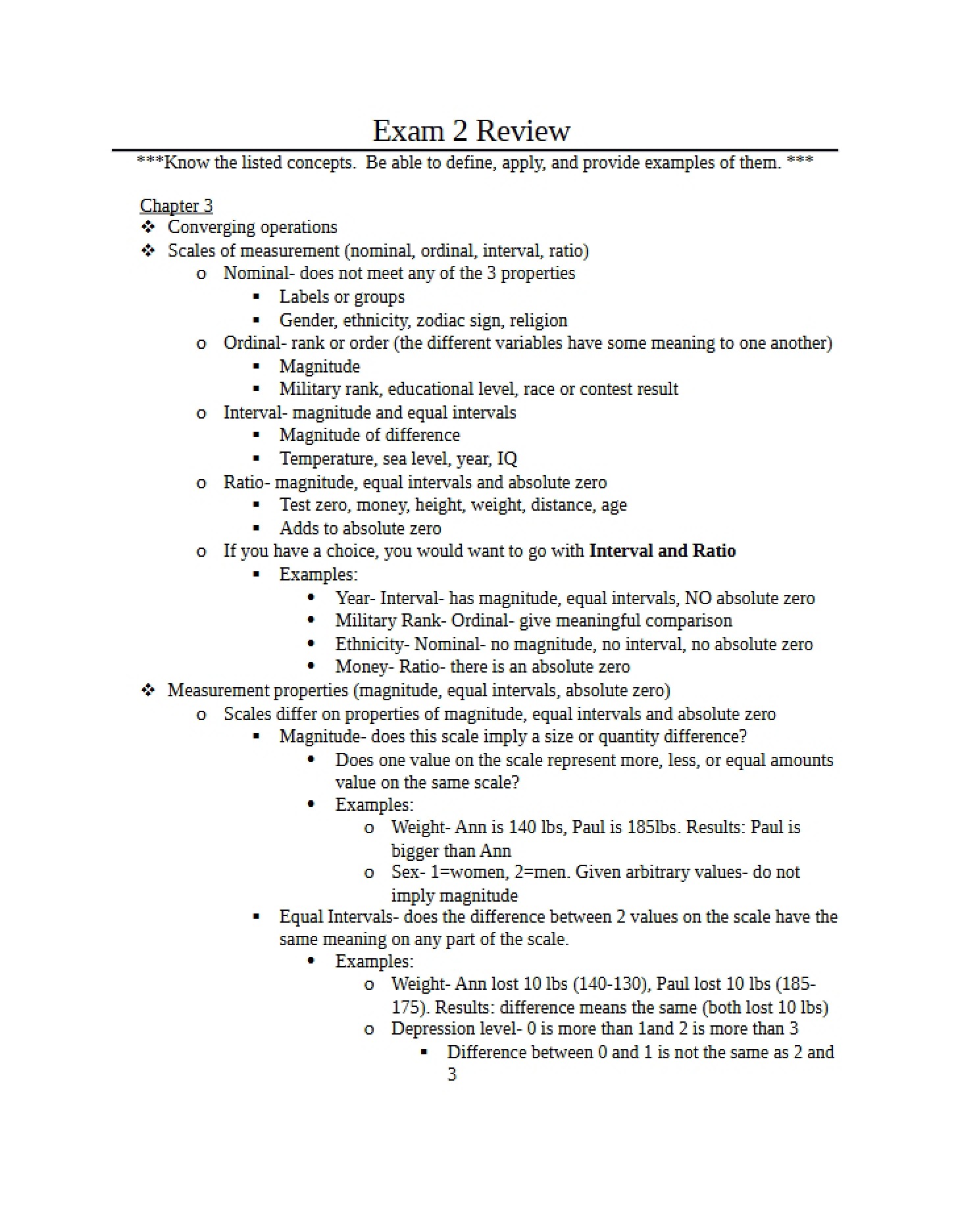
* Questions relating to scales of measurement (nominal, ordinal, interval, ratio).
* Practice applying concepts related to reliability and validity of measurement.
* Questions assessing understanding of different research designs (cross-sectional, surveys).
* Problems involving statistical concepts like correlation coefficients and frequency distributions.
* Scenarios requiring application of sampling techniques.
* Questions designed to test understanding of error variance and true scores.