What This Document Is
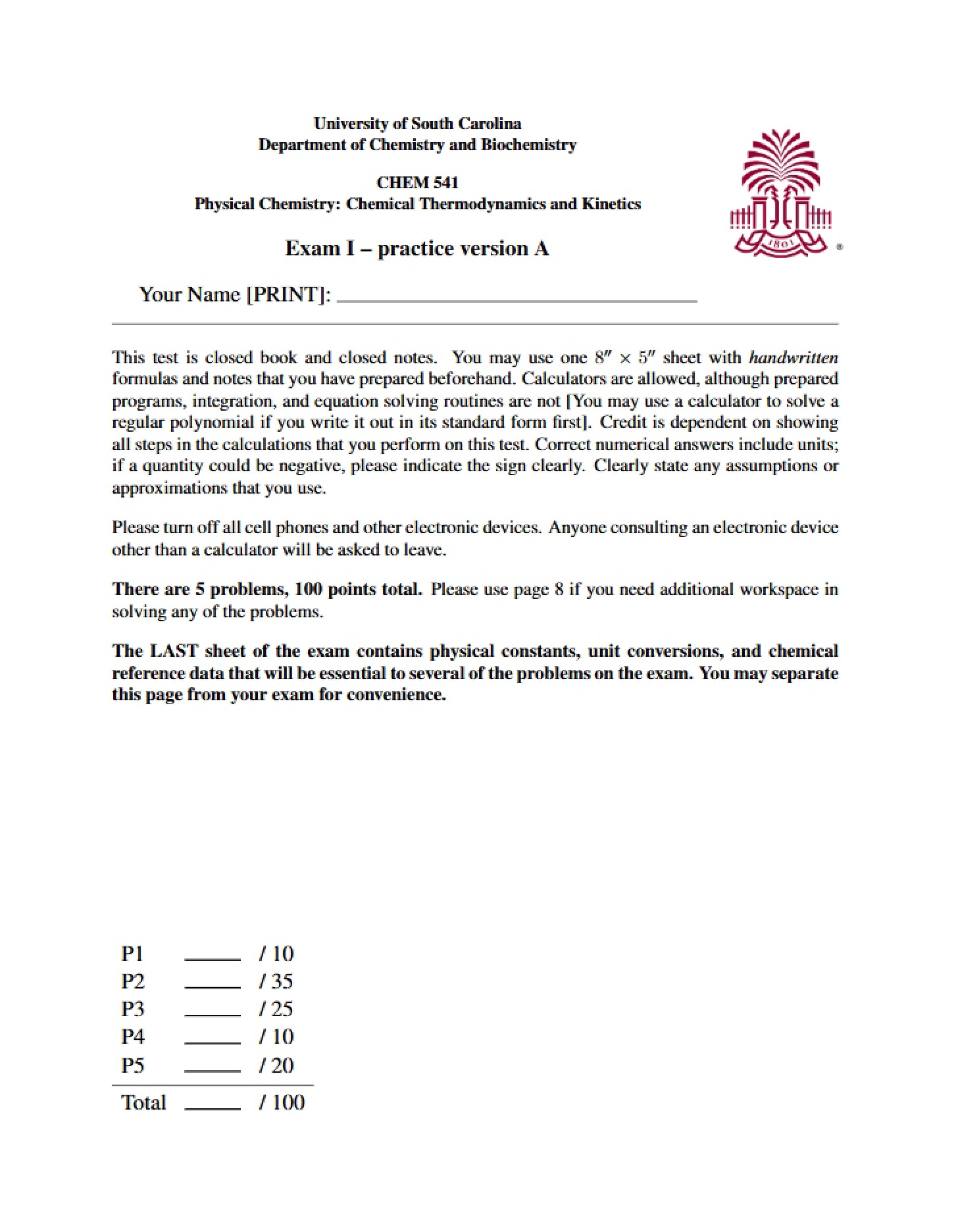
This is a practice exam, specifically version B, for CHEM 541: Physical Chemistry – Chemical Thermodynamics and Kinetics, offered at the University of South Carolina. It’s designed to assess your understanding of core principles related to chemical thermodynamics, phase equilibria, and chemical kinetics. The practice exam mirrors the format and difficulty level of an actual exam, providing a realistic testing experience. It is a closed-book, closed-notes assessment, allowing only a single sheet of handwritten notes and a calculator (with limitations on programmed functions).
Why This Document Matters
This resource is invaluable for students currently enrolled in a physical chemistry course, particularly those focusing on thermodynamics and kinetics. It’s best utilized as a self-assessment tool *after* completing relevant coursework and problem sets. Working through this practice exam will help you identify areas where your understanding is strong and pinpoint concepts requiring further review. It’s an excellent way to prepare for high-stakes exams by simulating the testing environment and building confidence in your problem-solving abilities. Students aiming for a strong grasp of equilibrium, phase transitions, and reaction rates will find this particularly beneficial.
Common Limitations or Challenges
This practice exam does not include detailed explanations or step-by-step solutions. It’s intended to be a self-directed assessment, meaning you’ll need to rely on your existing knowledge and course materials to work through the problems. While a data sheet with essential constants and reference information is included, it doesn’t offer guidance on *how* to apply those values. It also doesn’t cover every single topic within the broader scope of physical chemistry; it focuses on a specific subset of concepts likely to be tested.
What This Document Provides
* Five comprehensive problems covering key concepts in chemical thermodynamics and kinetics.
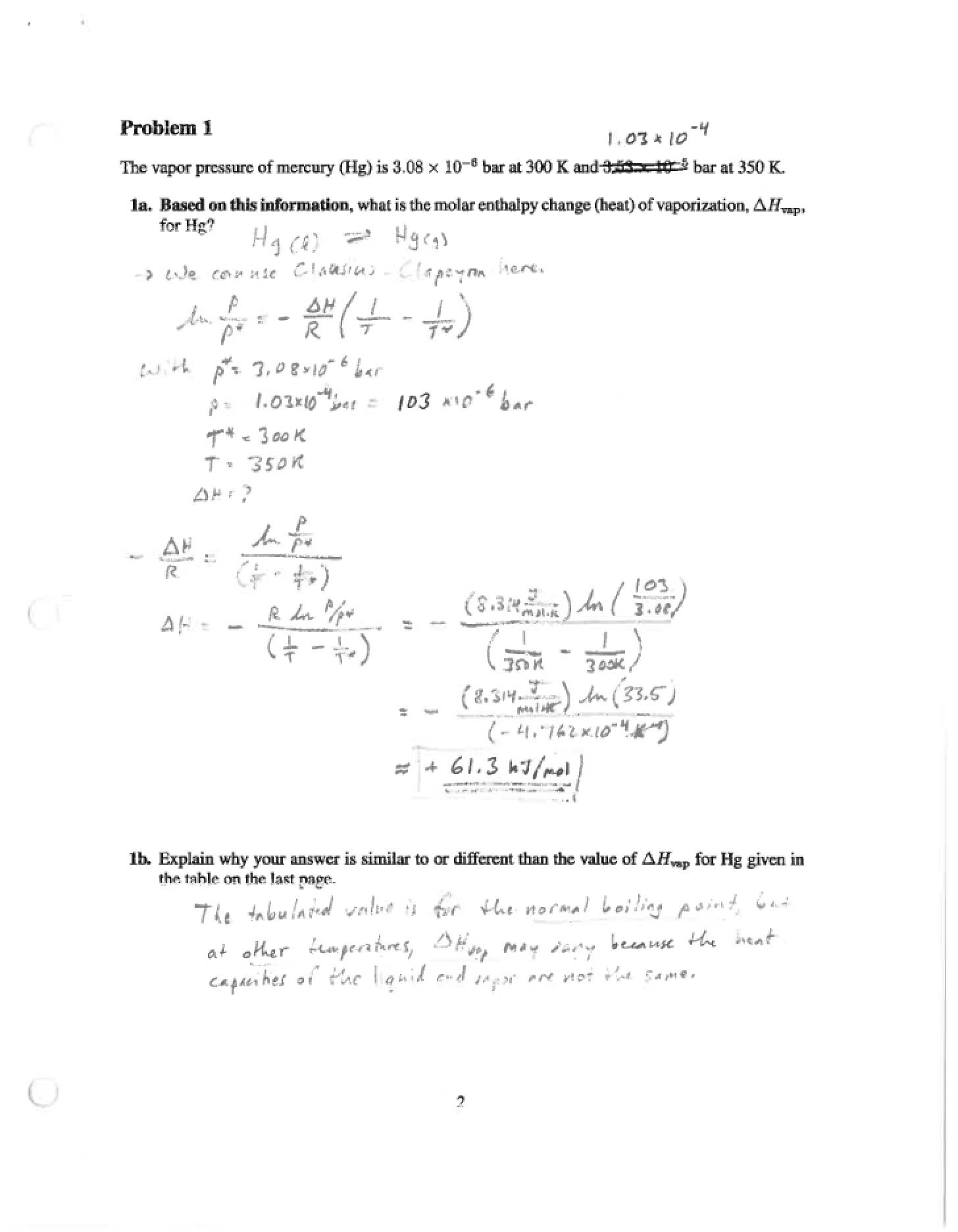
* Problems relating to phase equilibria and boiling point determination.
* Scenarios involving ideal gas mixtures and vapor pressure calculations.
* Questions focused on solutions, colligative properties, and chemical potential.
* A problem centered on the equilibrium of a chemical reaction and the calculation of equilibrium constants.
* A point breakdown for each problem, indicating its relative weight on the overall exam score.
* A dedicated section containing physical constants, unit conversions, and chemical reference data.