What This Document Is
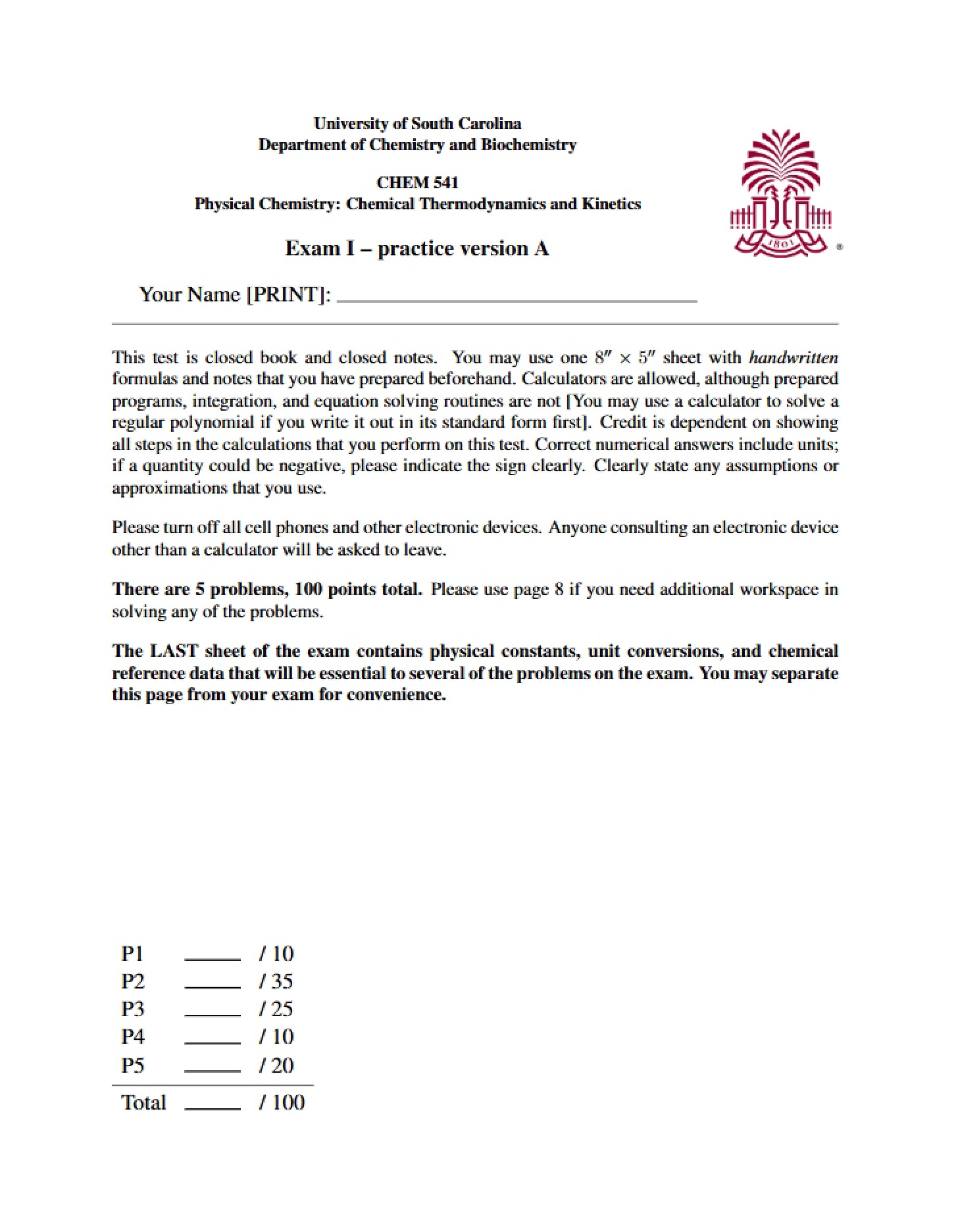
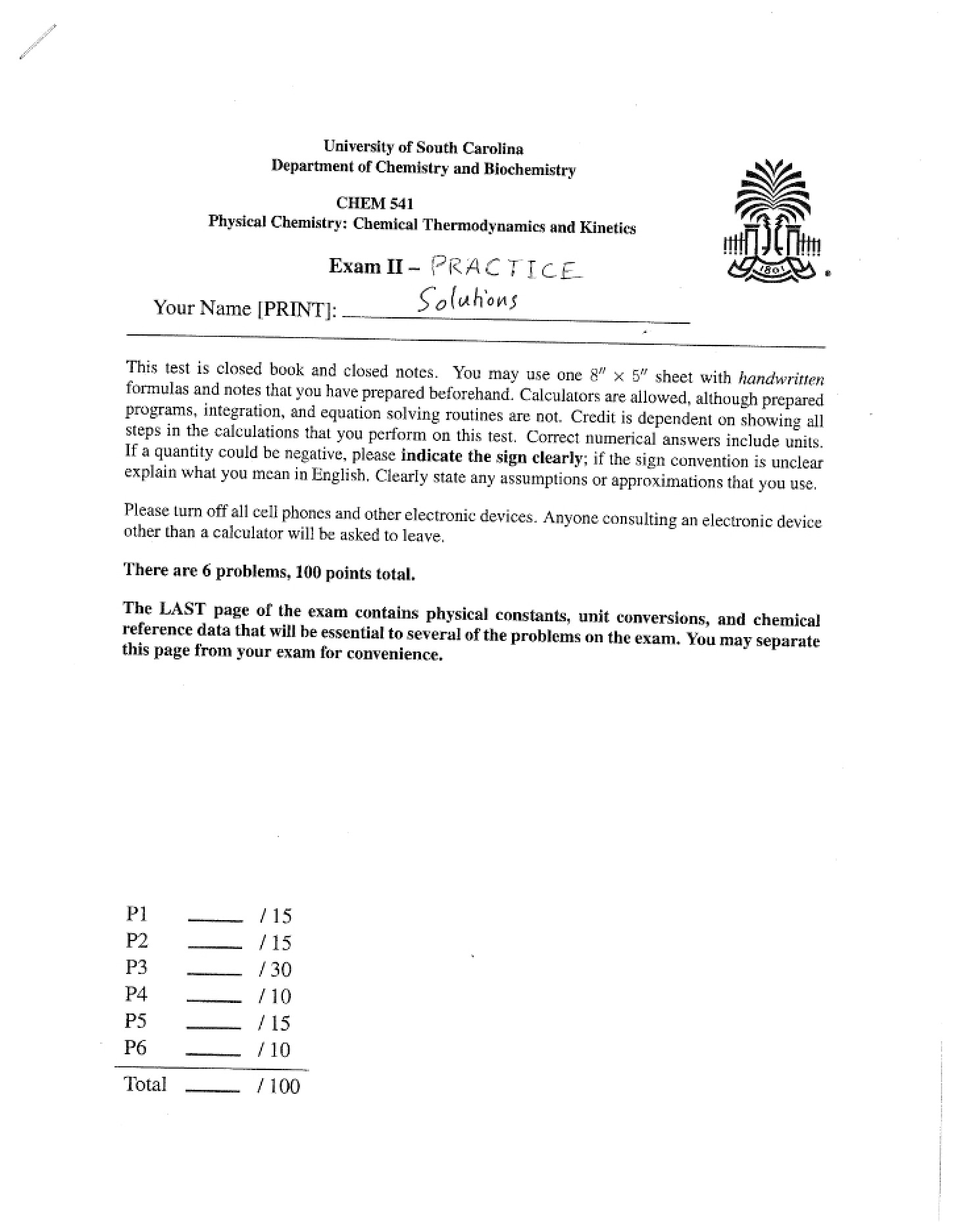
This is a practice examination for CHEM 541, Physical Chemistry, offered at the University of South Carolina. Specifically, it’s designed to simulate a final exam environment, testing comprehensive understanding of core principles covered throughout the course. The document is formatted as a closed-book, closed-notes assessment, mirroring the conditions of the actual final exam. It includes a point breakdown for each problem and section to help students gauge the relative weight of different topics.
Why This Document Matters
This practice exam is an invaluable resource for students preparing for their final assessment in Physical Chemistry. It’s ideal for self-evaluation, identifying knowledge gaps, and building confidence before the official exam. Students who utilize this resource will gain experience applying theoretical concepts to problem-solving under timed conditions, similar to the real exam. It’s particularly useful for students who want to refine their exam technique and ensure they can effectively manage their time during the assessment. Working through this practice exam will highlight areas needing further review and study.
Common Limitations or Challenges
This document is a practice tool and does not represent the *exact* questions that will appear on the final exam. It focuses on assessing understanding of key concepts and problem-solving skills, but the specific scenarios and numerical values will differ in the actual exam. It also assumes a foundational understanding of the course material; it does not provide detailed explanations of fundamental principles. Access to supplemental materials like a formula sheet is permitted during the actual exam, and this practice exam reflects that.
What This Document Provides
* A full-length practice exam mirroring the format and structure of the CHEM 541 final.
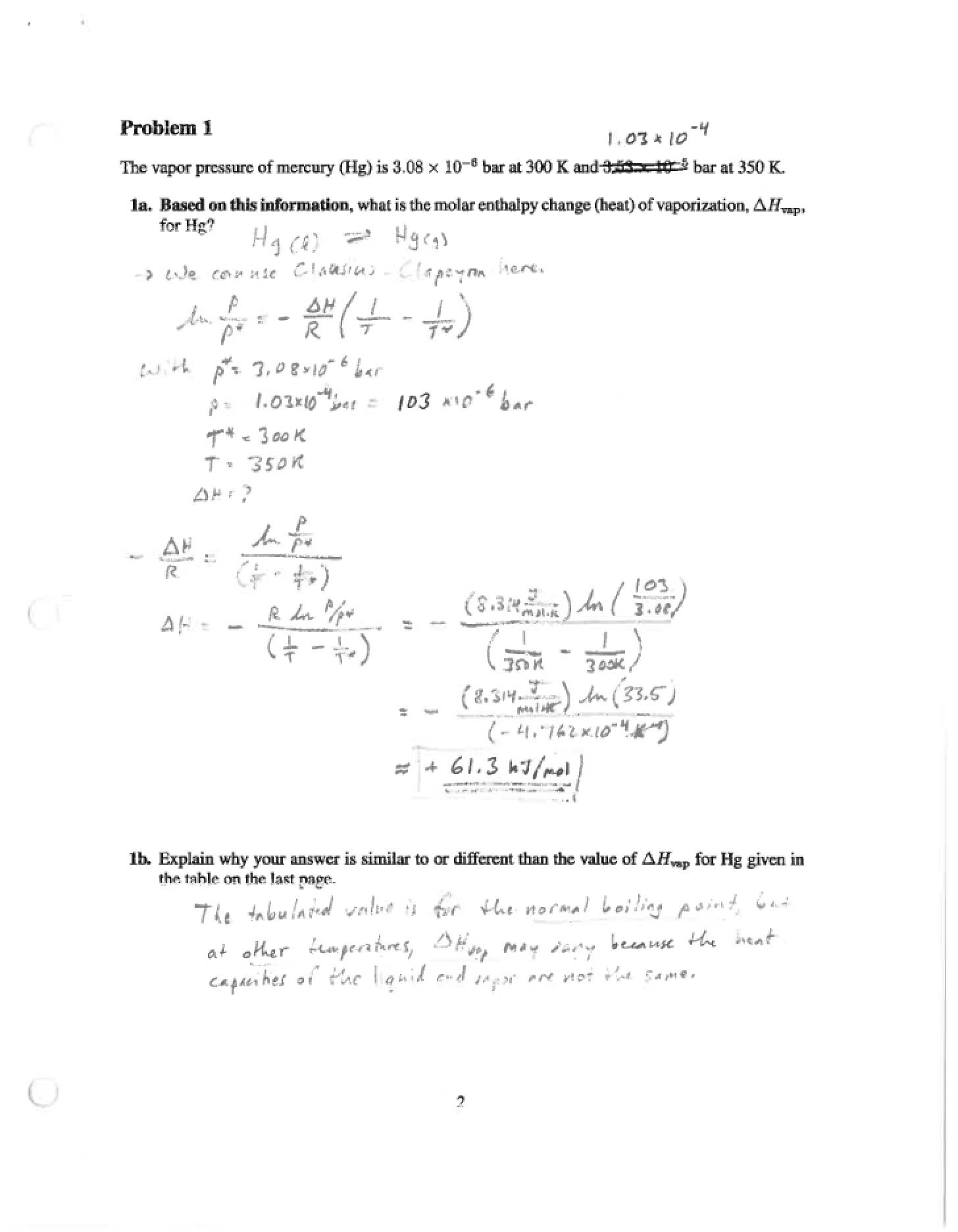
* A variety of problems covering key topics in physical chemistry, including thermodynamics, gas laws, and entropy.
* Point values assigned to each problem, indicating relative difficulty and importance.
* Problems requiring application of concepts to quantitative calculations.
* A section dedicated to assessing understanding of relationships between thermodynamic functions and reaction conditions.
* A reference section containing essential data and information needed for problem-solving (available separately).