What This Document Is
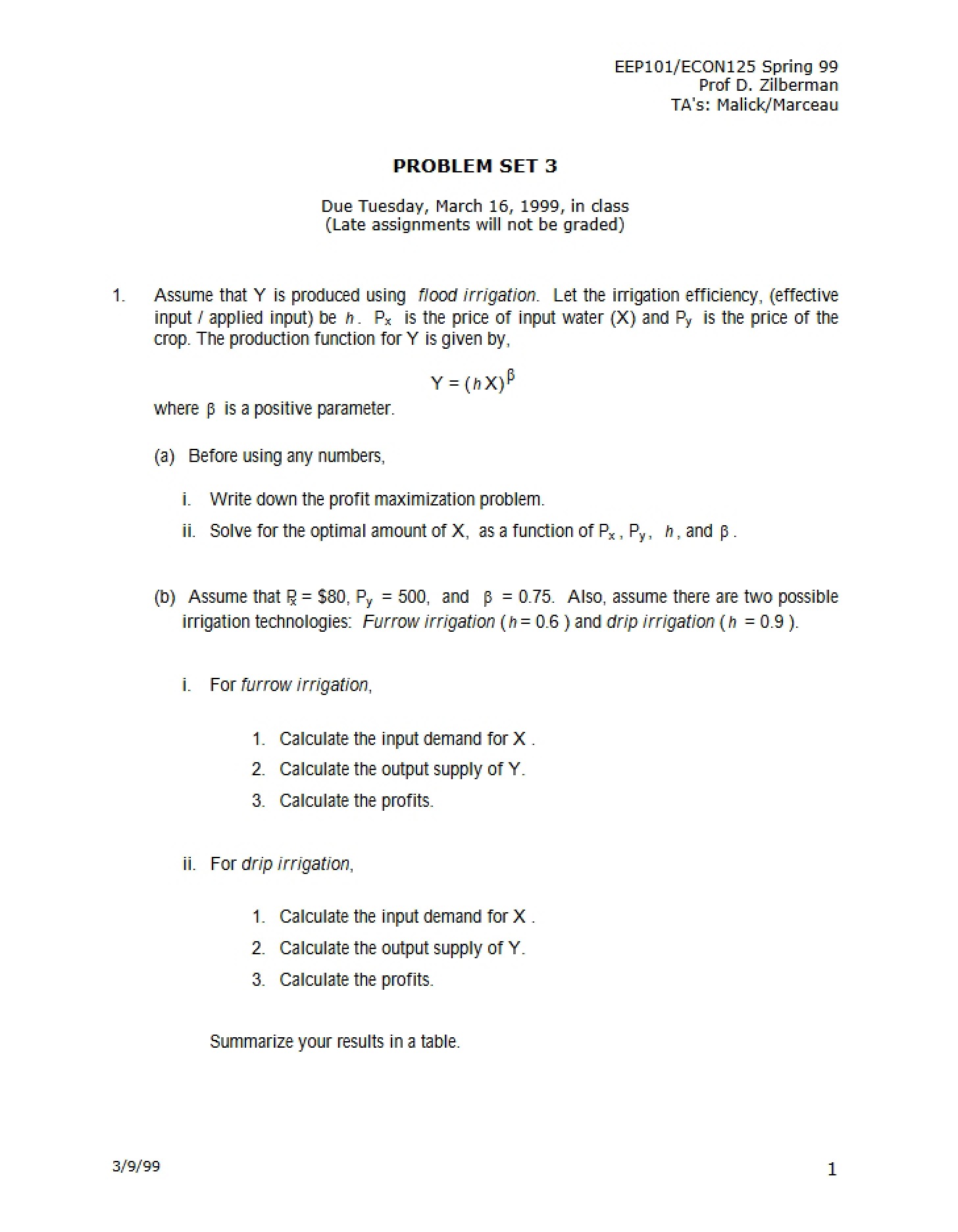
This is a problem set designed for students enrolled in Environmental Economics (EEP 101) at the University of California, Berkeley. It’s a practical exercise intended to reinforce key concepts discussed in the course through analytical problem-solving. This assignment focuses on applying economic principles to environmental issues, requiring students to demonstrate their understanding of theoretical frameworks in a quantitative setting.
Why This Document Matters
This problem set is essential for students aiming to solidify their grasp of environmental economics. It’s particularly valuable for those preparing for exams, seeking to improve their analytical skills, or wanting to test their ability to apply economic models to real-world environmental challenges. Working through these problems will build confidence and provide a deeper understanding of the course material. It’s best utilized after covering the relevant lecture topics and readings.
Topics Covered
* Pollution Control & Regulation
* Taxation vs. Standards for Environmental Policy
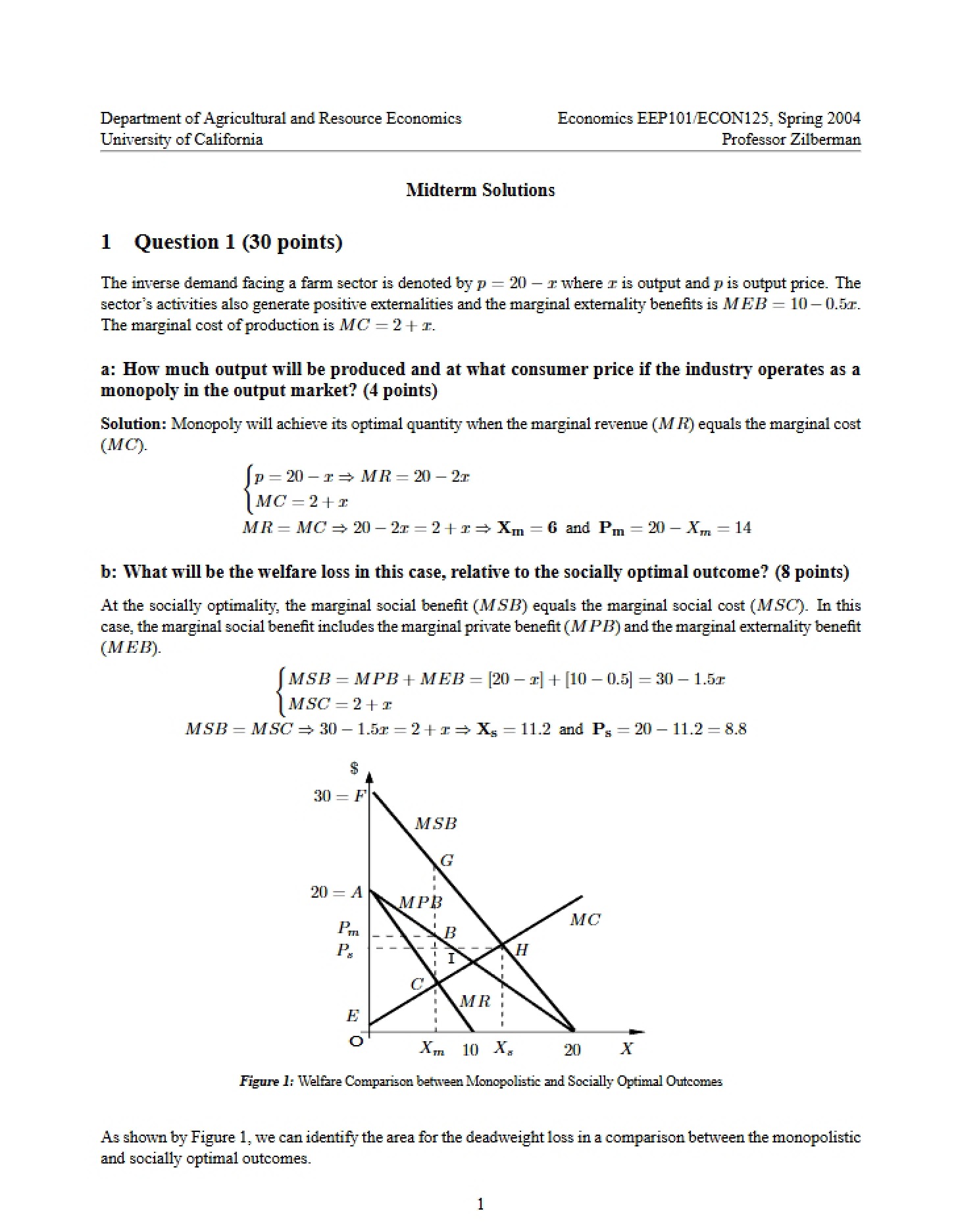
* Marginal Benefit and Marginal Social Cost Analysis
* Firm Behavior and Pollution Abatement
* Efficiency and Cost-Effectiveness of Environmental Policies
* Production Technology and Pollution Levels
* Impact of Input Price Changes on Firm Competitiveness
What This Document Provides
* A series of analytical problems requiring economic reasoning.
* Scenarios involving multiple firms and their pollution emissions.
* Opportunities to apply concepts of optimal pollution levels and policy instruments.
* Exercises involving calculations of costs, benefits, and firm-level responses to environmental regulations.
* A framework for comparing and contrasting the effectiveness of different environmental policy approaches.
* Data tables presenting firm-specific production and pollution information.