What This Document Is
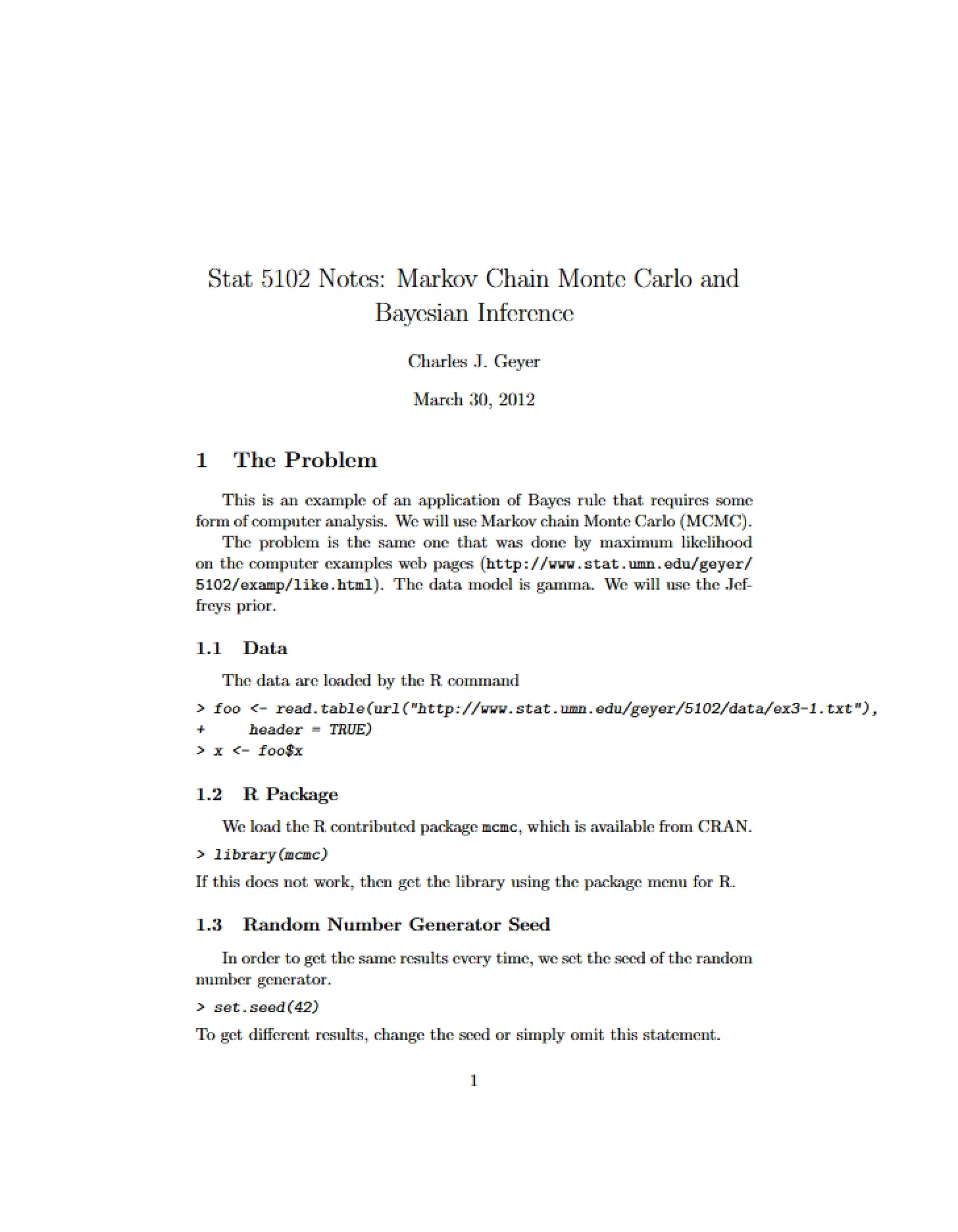
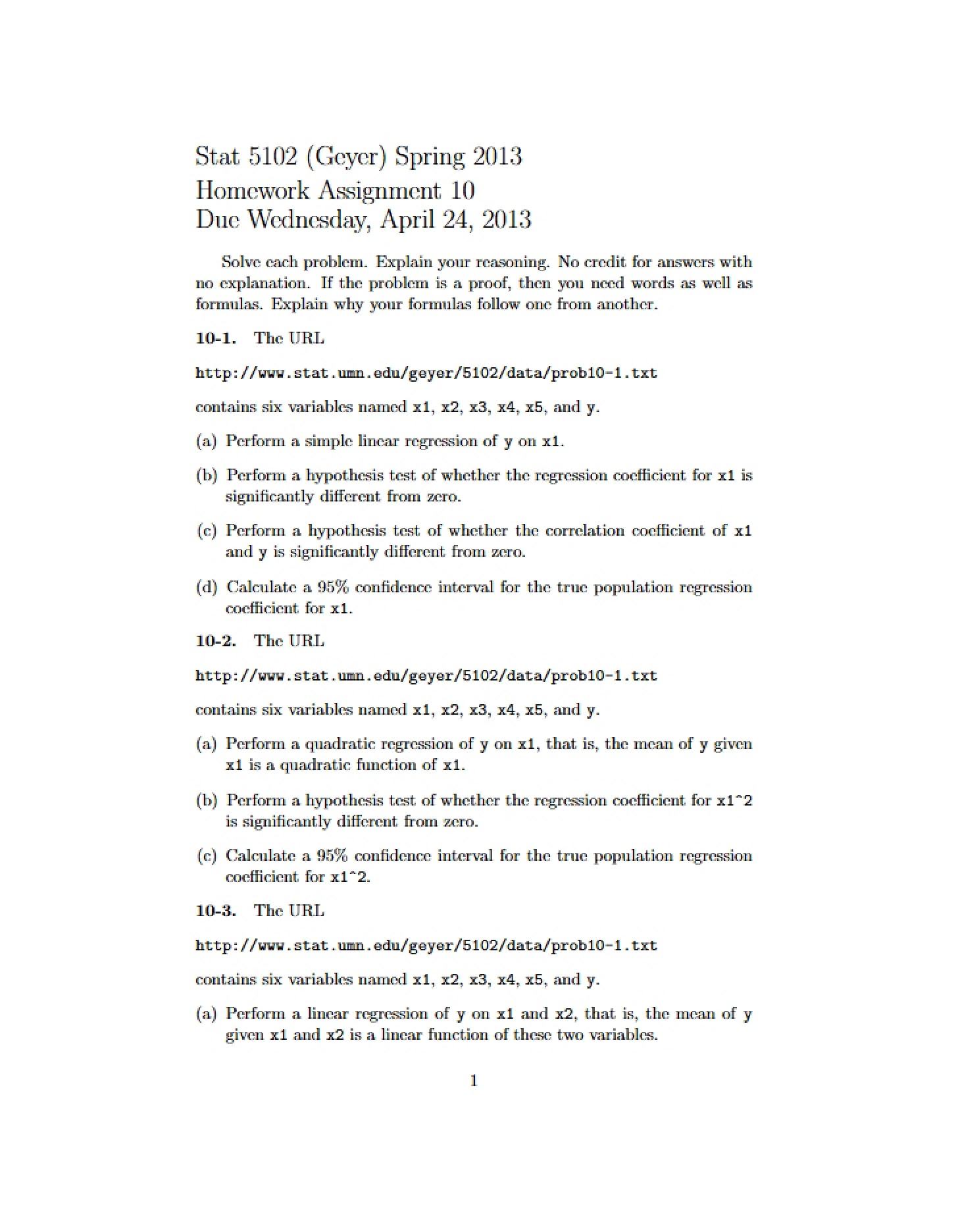
This document consists of a collection of supplementary problems designed to reinforce and expand upon the concepts covered in STAT 5102: Theory of Statistics II at the University of Minnesota Twin Cities. It’s intended as a practice resource for students seeking a deeper understanding of advanced statistical theory, moving beyond core lecture material. The problems focus on applying theoretical knowledge to practical scenarios, requiring analytical and computational skills.
Why This Document Matters
This resource is invaluable for students preparing for exams, quizzes, or larger projects within the course. It’s particularly helpful for those who learn best by doing, and who want to test their grasp of challenging statistical concepts. Students who are aiming for a comprehensive understanding of statistical inference, estimation, and hypothesis testing will find these problems beneficial. Working through these exercises can help solidify understanding and identify areas needing further review before assessments. It’s best used *after* familiarizing yourself with the core course materials and lecture notes.
Common Limitations or Challenges
This document does *not* provide step-by-step solutions or fully worked-out examples. It presents problems that require independent thought and application of the statistical principles learned in the course. It also assumes a solid foundation in the prerequisite knowledge for STAT 5102. The problems build upon concepts presented in associated handouts, so access to those materials is also necessary for successful completion. This is a practice resource, not a replacement for attending lectures or reading the course textbook.
What This Document Provides
* A series of challenging problems covering topics such as maximum likelihood estimation, confidence interval construction, and asymptotic distributions.
* Exercises relating to specific probability distributions, including the Cauchy and double exponential distributions.
* Problems involving the application of the delta method.
* Practice with parameter estimation for distributions like the exponential, Poisson, and Geometric distributions.
* Opportunities to apply methods for finding confidence intervals using Fisher information.
* Problems referencing specific sections and equations from course handouts, encouraging a focused review of key materials.
* Links to datasets for practical application of the methods.