What This Document Is
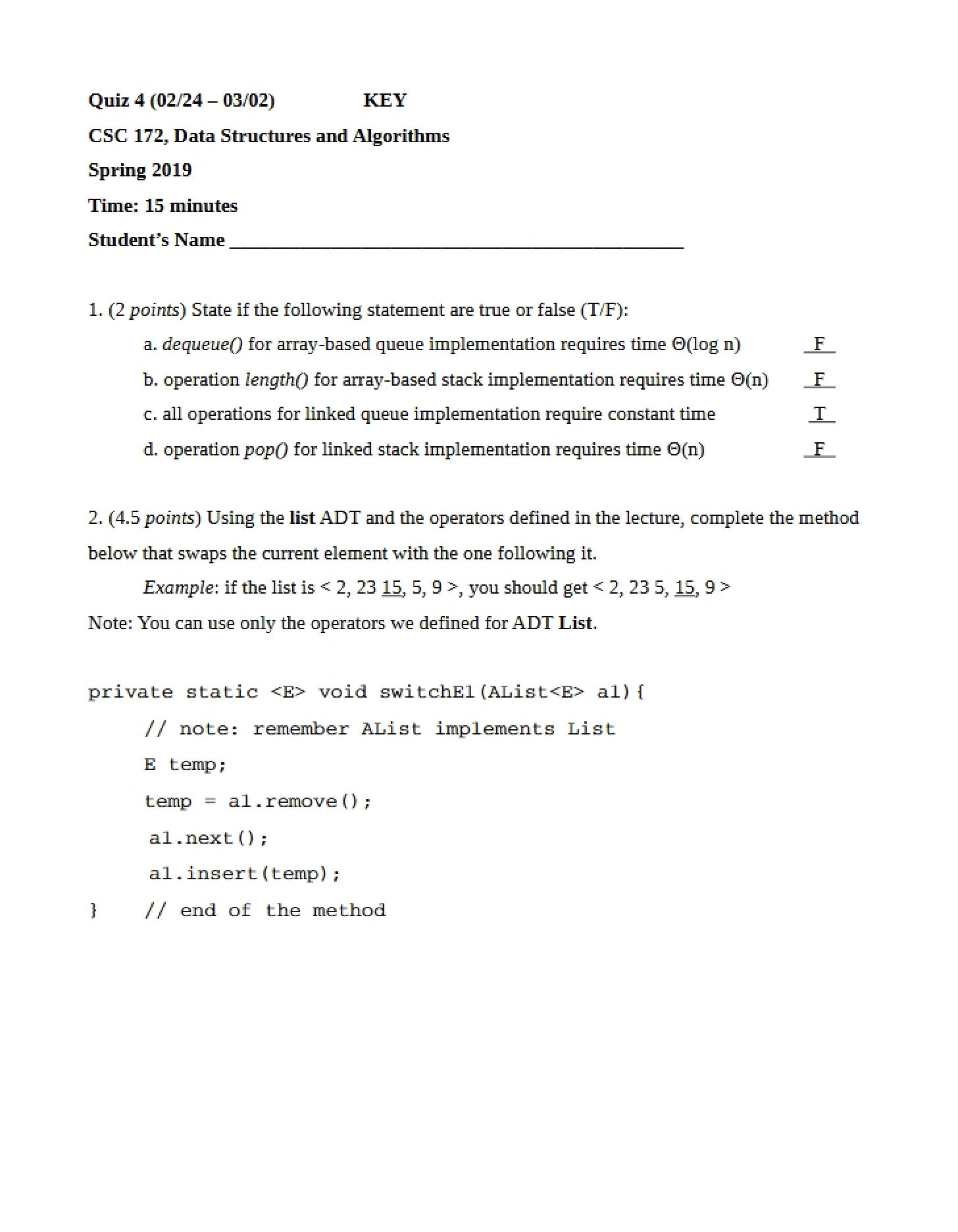
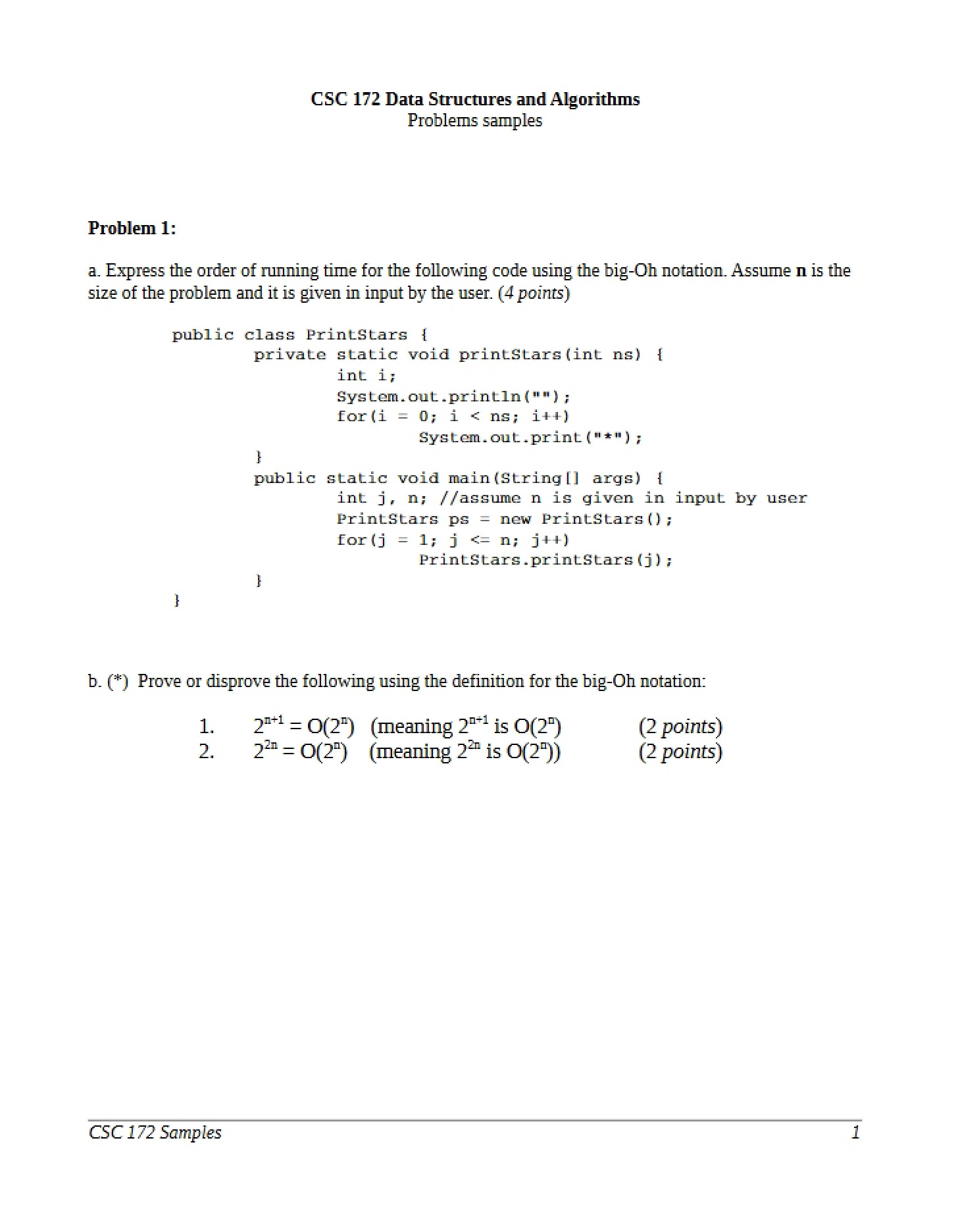
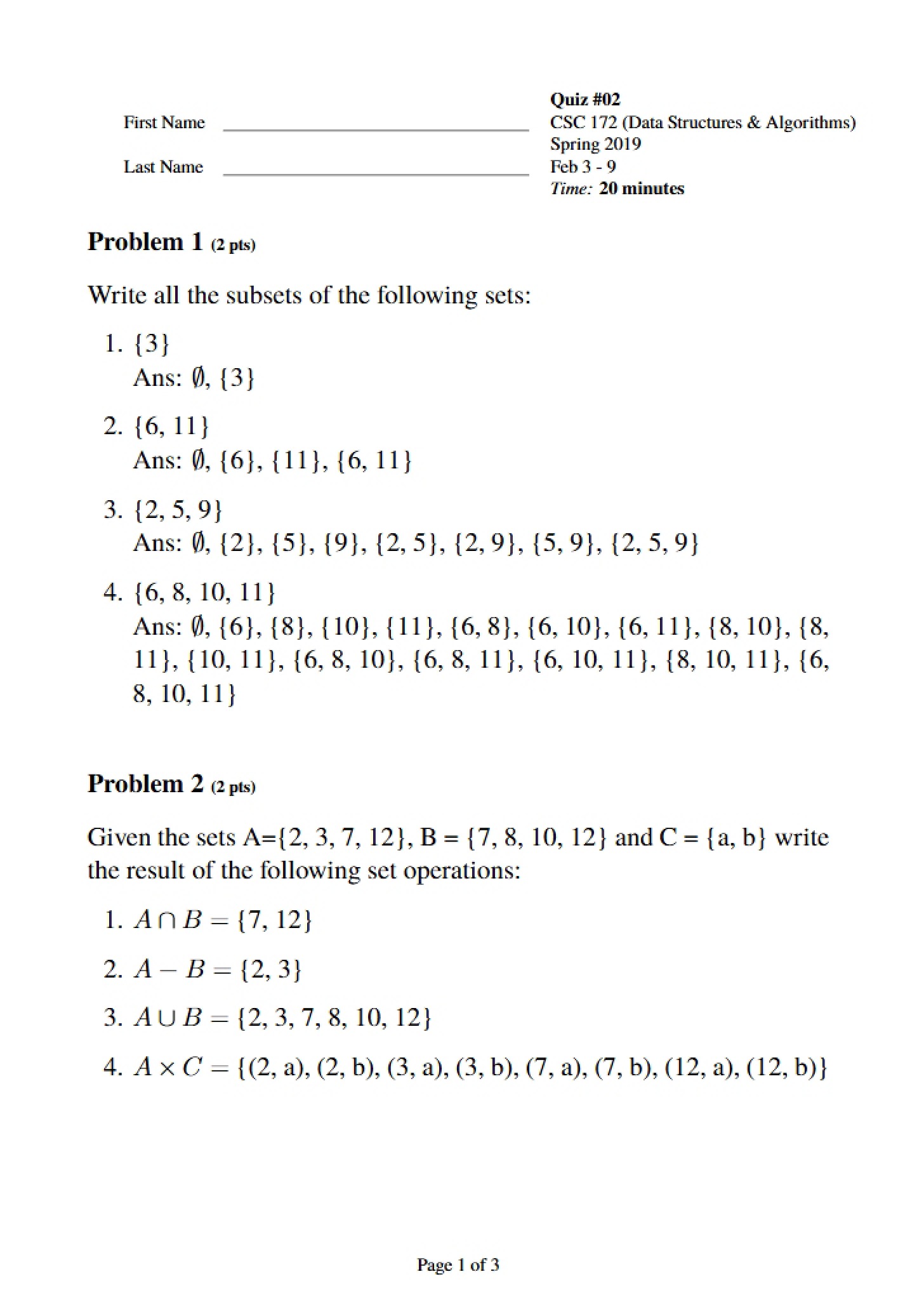
This is a quiz for CSC 172, Data Structures & Algorithms, offered at the University of Rochester. Specifically, it’s a short assessment – designed to be completed in 15 minutes – covering fundamental concepts related to algorithm analysis and recursion. The quiz focuses on applying theoretical knowledge to practical scenarios, testing your understanding of how algorithms perform as input size grows. It’s formatted as a traditional quiz with a mix of problem types requiring both identification and ordering of algorithmic complexities.
Why This Document Matters
This quiz is an excellent resource for students currently enrolled in a Data Structures & Algorithms course. It’s particularly useful for self-assessment and identifying areas where further study is needed. Working through similar problems will help solidify your understanding of Big-O notation, recurrence relations, and the impact of different terms on algorithm runtime. It’s best utilized *after* you’ve engaged with course lectures and readings on these topics, as a way to gauge your preparedness for larger exams or assignments. Students preparing for interviews involving algorithmic problem-solving will also find the concepts tested here valuable.
Common Limitations or Challenges
This quiz represents a snapshot of specific concepts covered during a particular week of the course (Feb 10-16, 2019). It does not encompass the entirety of the Data Structures & Algorithms curriculum. Furthermore, while the quiz problems are representative, they do not provide detailed step-by-step solutions or explanations. Access to the full document is required to understand the reasoning behind the correct approaches and to fully benefit from the learning opportunity. It's designed to *test* knowledge, not to teach it from scratch.
What This Document Provides
* Problems focused on determining the dominant terms in algorithmic running time expressions.
* A coding problem involving a recursive function and predicting its output.
* Exercises requiring the ordering of functions based on their asymptotic growth rates.
* A task involving the visualization of a recurrence relation through a recursion tree.
* A timed assessment format to simulate exam conditions.