What This Document Is
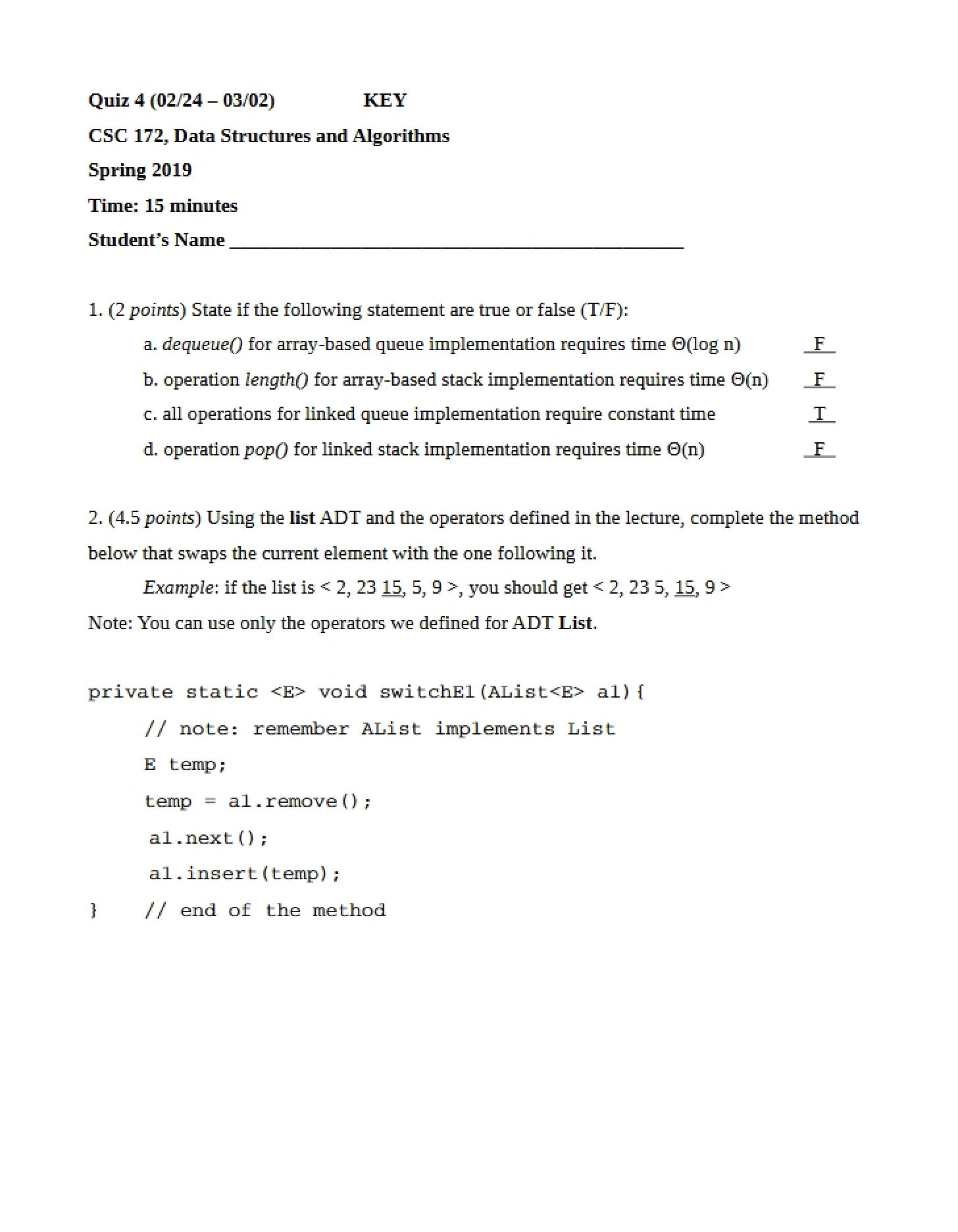
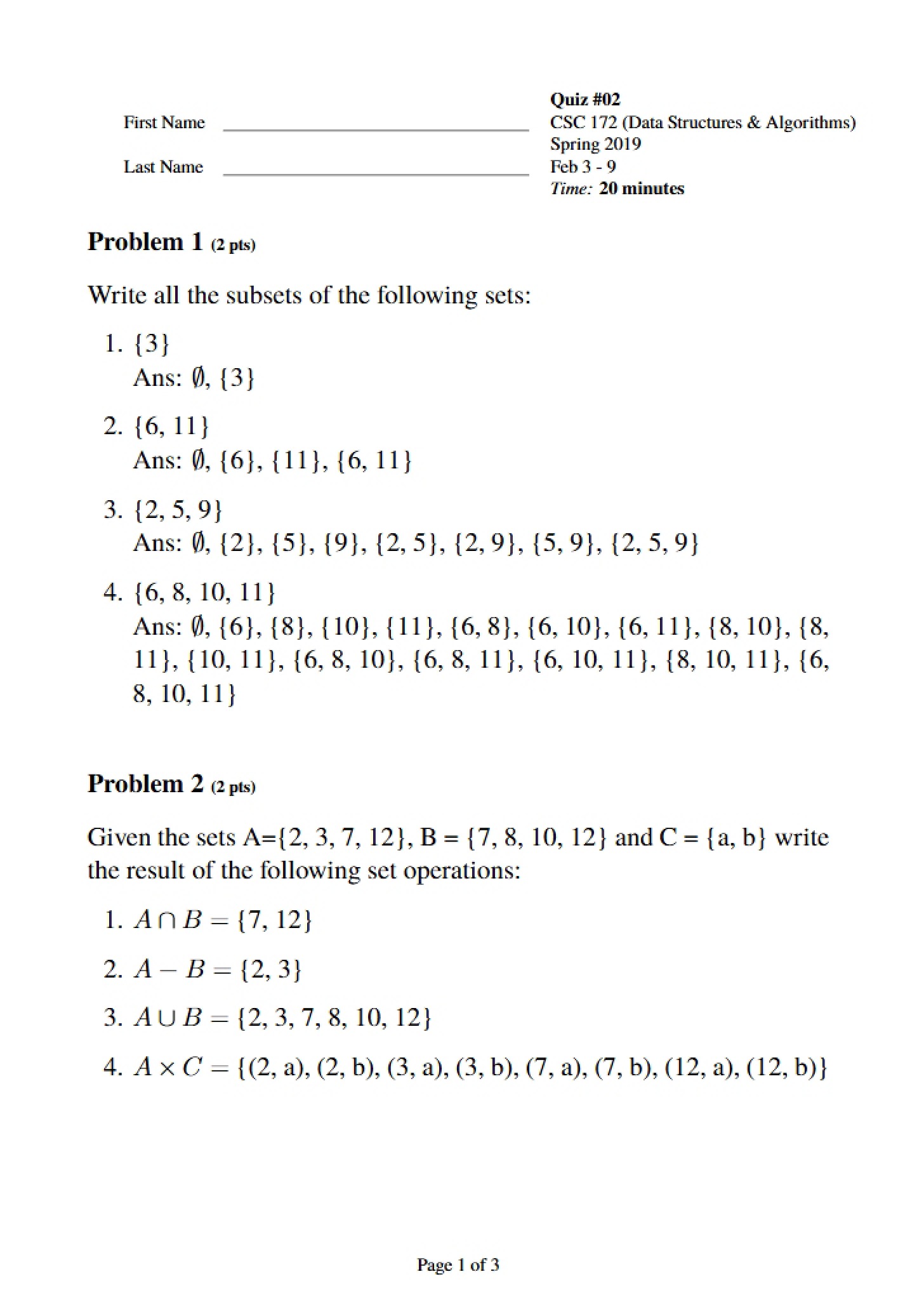
This document contains a collection of sample problems designed to test your understanding of core concepts in Data Structures and Algorithms (CSC 172) at the University of Rochester. It’s structured as a practice set, mirroring the types of questions and challenges you can expect to encounter in assessments for this course. The problems cover fundamental topics within the field, requiring application of theoretical knowledge to practical scenarios.
Why This Document Matters
This resource is invaluable for students actively enrolled in CSC 172, or those preparing for similar courses. It’s best utilized *after* you’ve engaged with the core course materials – lectures, readings, and assignments – as a way to solidify your understanding and identify areas where further study is needed. Working through these problems will help you build confidence and refine your problem-solving skills, crucial for success in data structures and algorithms. It’s particularly helpful when preparing for quizzes, midterms, or the final exam.
Common Limitations or Challenges
This set of sample problems is not a substitute for a comprehensive review of all course material. It focuses on specific problem types and does not cover every single topic within Data Structures and Algorithms. Furthermore, while representative of the course’s difficulty, these problems may not perfectly mirror the format or specific nuances of all assessment questions. It does not include detailed explanations or step-by-step solutions; it’s designed to be a self-assessment tool.
What This Document Provides
* Problems relating to algorithmic efficiency and Big-O notation.
* Exercises focused on the implementation and manipulation of abstract data types, specifically lists.
* Questions centered around Binary Search Tree (BST) operations and traversals.
* Practice with heap data structures, including insertion algorithms.
* A format designed to simulate exam-like conditions.
* Opportunities to apply theoretical knowledge to practical coding-related scenarios.