What This Document Is
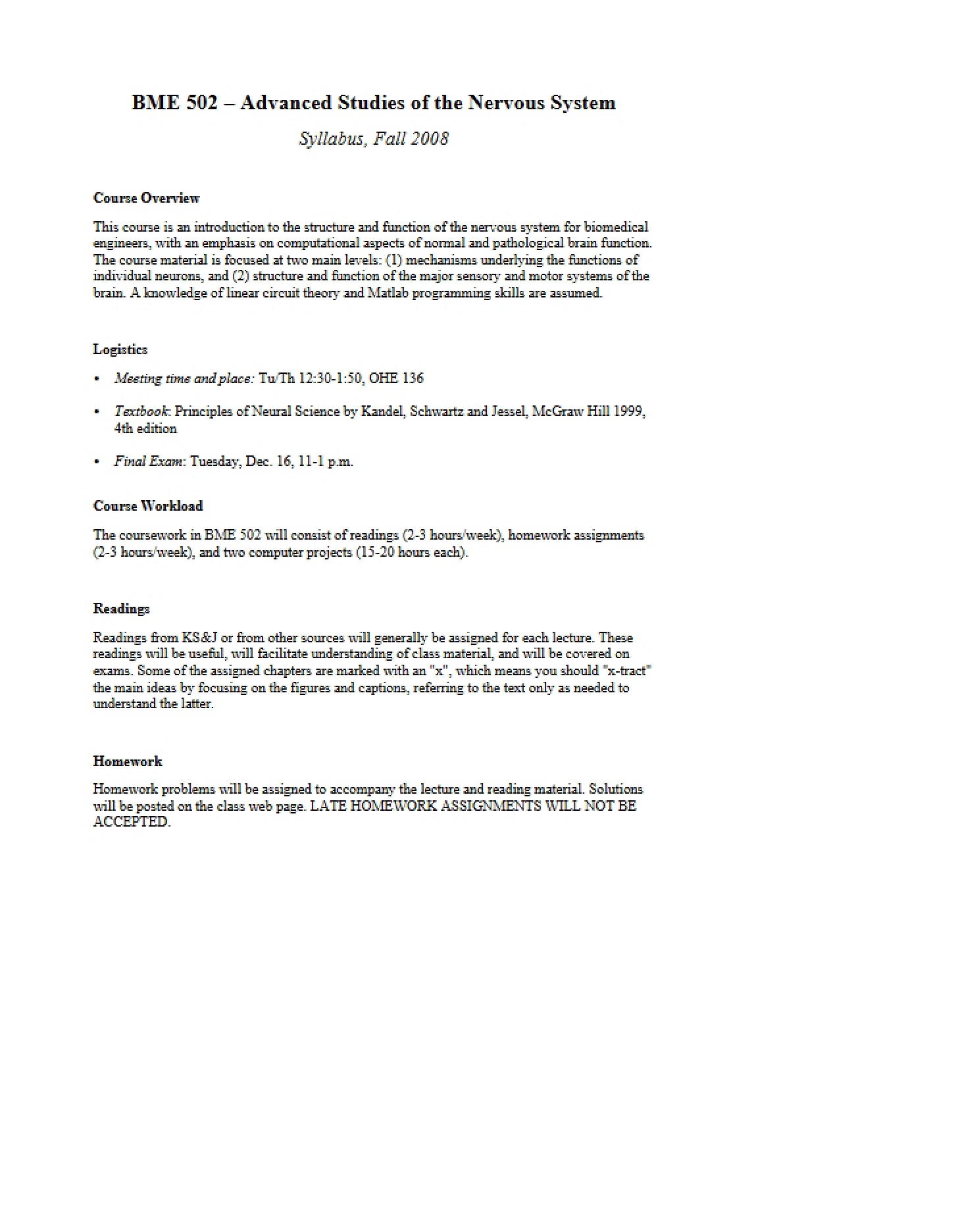
This resource is a sample problem set designed to prepare students for an exam in BME 502: Advanced Studies of the Nervous System at the University of Southern California. It focuses on core concepts within neuroanatomy and neurophysiology, testing understanding of fundamental principles governing nervous system function. The material covers a broad range of topics, from foundational anatomical structures to complex sensory and motor pathways. It’s structured to mimic the format of an actual exam, utilizing true/false and short-answer question types.
Why This Document Matters
This sample set is invaluable for students seeking to assess their comprehension of key course material and identify areas needing further review. It’s particularly useful for students enrolled in advanced neuroscience or biomedical engineering programs with a neuro focus. Utilizing this resource *before* an exam can help refine study strategies and build confidence. It’s best used after completing assigned readings and lectures, as a self-assessment tool to gauge preparedness. Students who proactively engage with practice questions often perform better on high-stakes evaluations.
Common Limitations or Challenges
This is a *sample* set of problems and does not represent the exhaustive scope of all potential exam questions. It is intended to illustrate the *style* and *difficulty* of questions, not to provide a complete predictive model of the exam’s content. It does not include detailed explanations or worked solutions; those are provided separately within the course. Furthermore, it represents a snapshot from a specific semester (Fall 2011) and may not perfectly align with the current course curriculum.
What This Document Provides
* Questions covering general anatomy and foundational principles of the nervous system.
* Problem sets focused on motor systems, including the principles governing muscle recruitment.
* Questions relating to somatosensory pathways and spinal cord organization.
* Content related to the vestibular, auditory, and visual systems.
* Questions requiring descriptions of sensory transduction processes.
* Opportunities to demonstrate understanding of neuroanatomical structures through diagrammatic representation.
* A glimpse into the expected format of exam questions (True/False, short answer, drawing).