What This Document Is
This resource is a focused exploration of stratified random sampling, a powerful technique within the broader field of survey methodology and statistical inference. It delves into the theoretical underpinnings of this method, explaining how dividing a population into subgroups – or strata – can lead to more precise and reliable estimates. The material is geared towards students and researchers seeking a deeper understanding of sampling techniques beyond simple random sampling. It builds upon foundational statistical concepts and introduces related ideas like post-stratification.
Why This Document Matters
Students enrolled in courses on sampling theory, survey design, or advanced statistical methods will find this particularly valuable. Researchers planning to conduct surveys or analyze stratified data will also benefit from a solid grasp of the principles outlined here. Understanding stratified sampling is crucial when dealing with heterogeneous populations where characteristics within subgroups are more similar than across the entire population. This resource is ideal for those looking to improve the efficiency and accuracy of their data collection and analysis efforts.
Common Limitations or Challenges
This material focuses specifically on the *theory* and *application* of stratified sampling. It does not provide a comprehensive overview of all possible sampling methods, nor does it offer detailed guidance on software implementation or specific data analysis procedures. It assumes a foundational understanding of basic statistical concepts like variance, means, and estimators. While examples are used to illustrate concepts, it doesn’t cover every possible real-world scenario or provide step-by-step calculations for complex datasets.
What This Document Provides
* A clear explanation of the stratification principle and its impact on estimator variability.
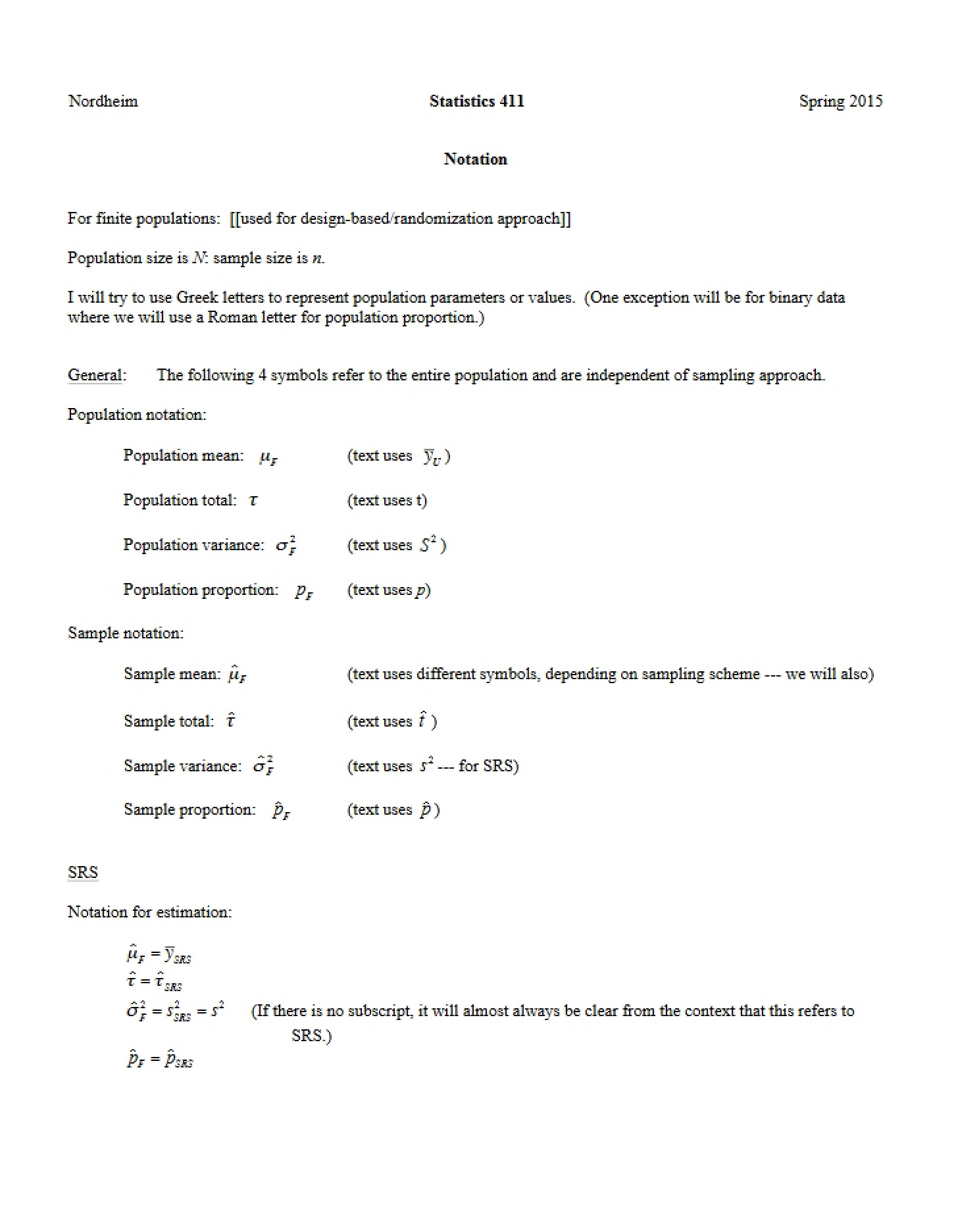
* A formal notation system for representing population sizes, sample sizes, and stratum-specific values.
* Discussion of how to estimate population totals and means using stratified sampling.
* An exploration of the variance of estimators derived from stratified samples.
* Consideration of different sampling plans *within* each stratum.
* A comparison of stratified sampling to simpler random sampling techniques.