What This Document Is
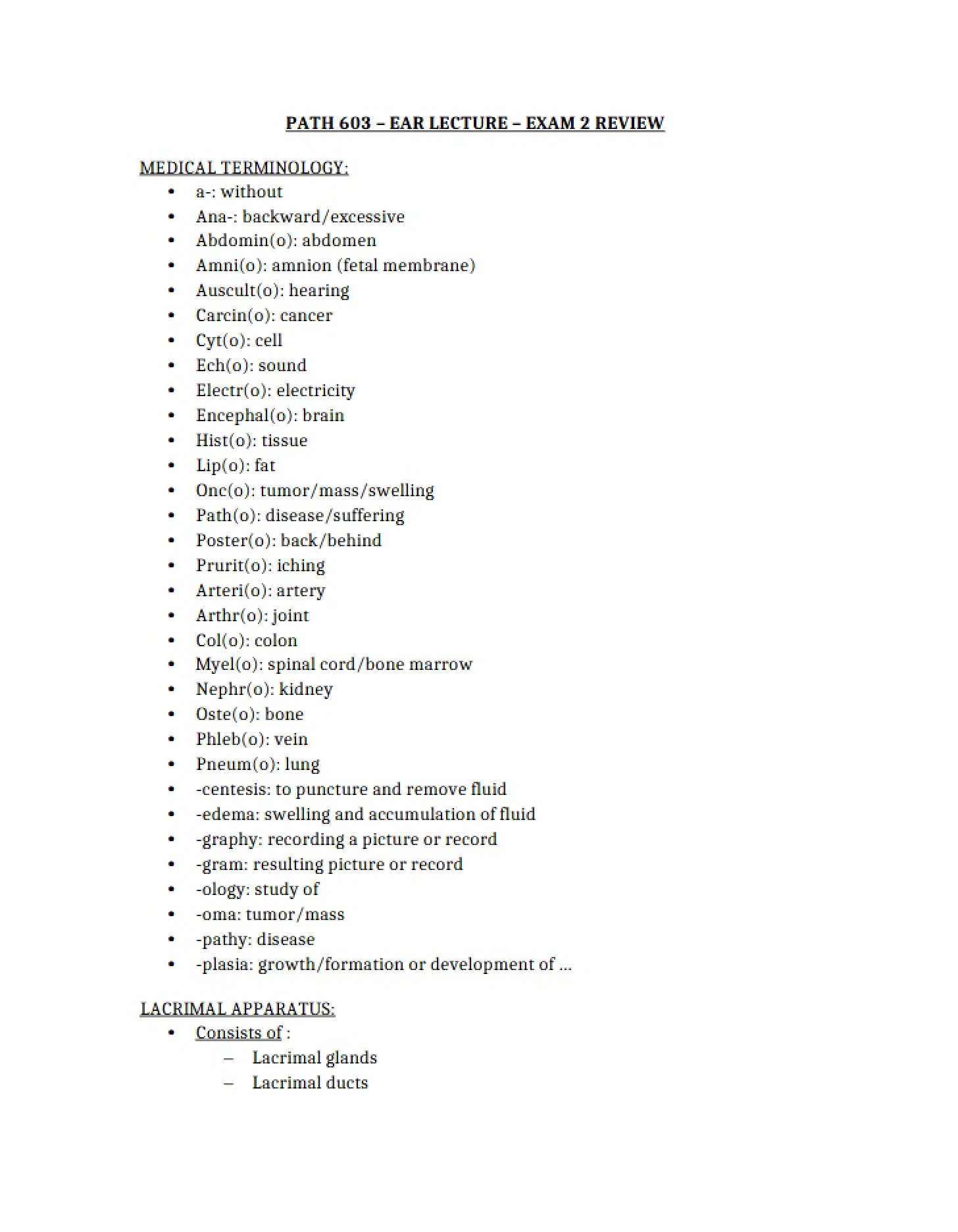
This document is a focused review resource designed to prepare students for an exam covering the anatomy and pathology of the eye and larynx. It’s structured as a lecture-style outline, likely derived from course materials presented in PATH 603 at West Virginia University. The content appears to be a compilation of key terminology and anatomical structures related to these body systems, presented in a format conducive to memorization and understanding of medical language.
Why This Document Matters
This resource is particularly valuable for students currently enrolled in a Pathology & Anatomy course, specifically those preparing for a second exam focusing on the eye and larynx. It’s ideal for reinforcing lecture notes, identifying areas needing further study, and building a strong foundation in relevant medical terminology. Students who benefit most will be those actively seeking to connect anatomical structures with associated pathological conditions and their corresponding medical terms. Utilizing this resource *before* an exam can help solidify understanding and improve recall.
Common Limitations or Challenges
This document is intended as a concentrated review and does *not* provide comprehensive coverage of all topics within eye and laryngeal pathology and anatomy. It will not include detailed case studies, diagnostic imaging examples, or in-depth explanations of complex physiological processes. It also doesn’t offer practice questions or self-assessment tools. Access to the full resource is required for a complete understanding of the subject matter.
What This Document Provides
* A glossary of key medical terminology related to bone, ear, nose, and throat conditions.
* An overview of the anatomical structure of the eye, categorized by tunic (fibrous, vascular, nervous).
* Identification of important structures within each tunic of the eye.
* Details regarding the composition and function of ocular humors.
* Anatomical references connecting the sclera to the dura mater of the brain.
* Information regarding potential pathological conditions affecting the eye, such as glaucoma and astigmatism.