What This Document Is
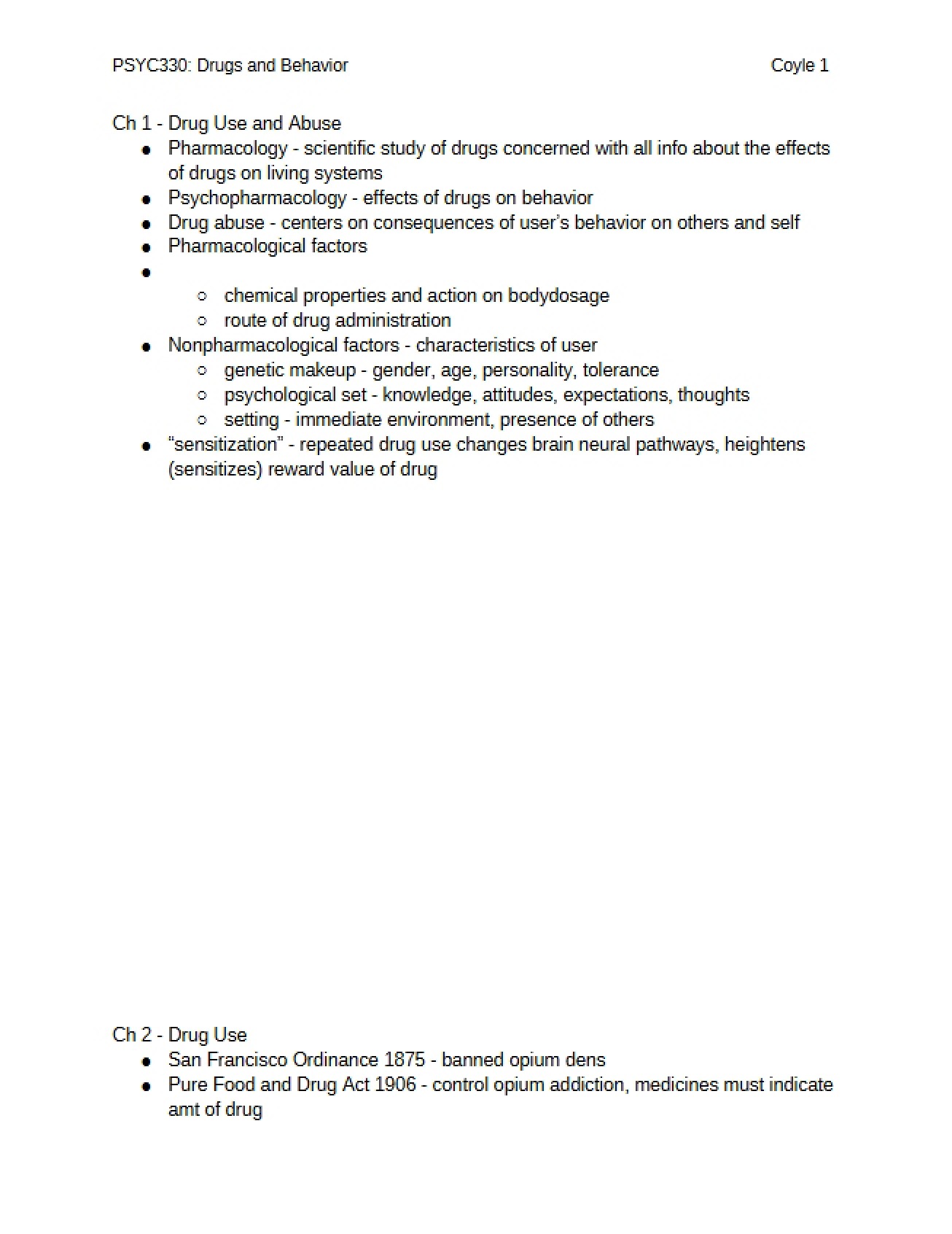
These are lecture notes from PSYC 330: Drugs and Behavior at Binghamton University, specifically covering the second exam material. The notes focus on pharmacology, detailing how drugs interact with the body – a field known as pharmacodynamics. It also touches upon psychopharmacology and individual factors influencing drug response.
Why This Document Matters
This study guide is essential for students enrolled in PSYC 330 preparing for their second exam. It consolidates key lecture content, providing a focused review of drug mechanisms, potency, efficacy, and interactions. Understanding these concepts is crucial for anyone studying the biological basis of behavior and the effects of psychoactive substances. It’s most useful during exam review and for clarifying complex pharmacological principles.
Common Limitations or Challenges
This document is a condensed record of lectures and does not replace attending class or consulting the course textbook. It provides a framework for understanding the material but doesn’t offer in-depth explanations or practice problems. It’s a study *aid*, not a comprehensive course replacement.
What This Document Provides
The notes cover:
* Pharmacodynamics: including mechanism of action, dose-effect curves, efficacy, and potency.
* Therapeutic window and drug interactions (additive, antagonistic, synergistic effects).
* Drug action at receptors: agonists, partial agonists, antagonists, inverse agonists, and positive allosteric modulators.
* Psychopharmacology: genetic factors, gender differences, and weight considerations in drug response.
This preview *does not* include detailed explanations of specific drug classes, clinical applications, or practice exam questions – those are found in the complete document.