What This Document Is
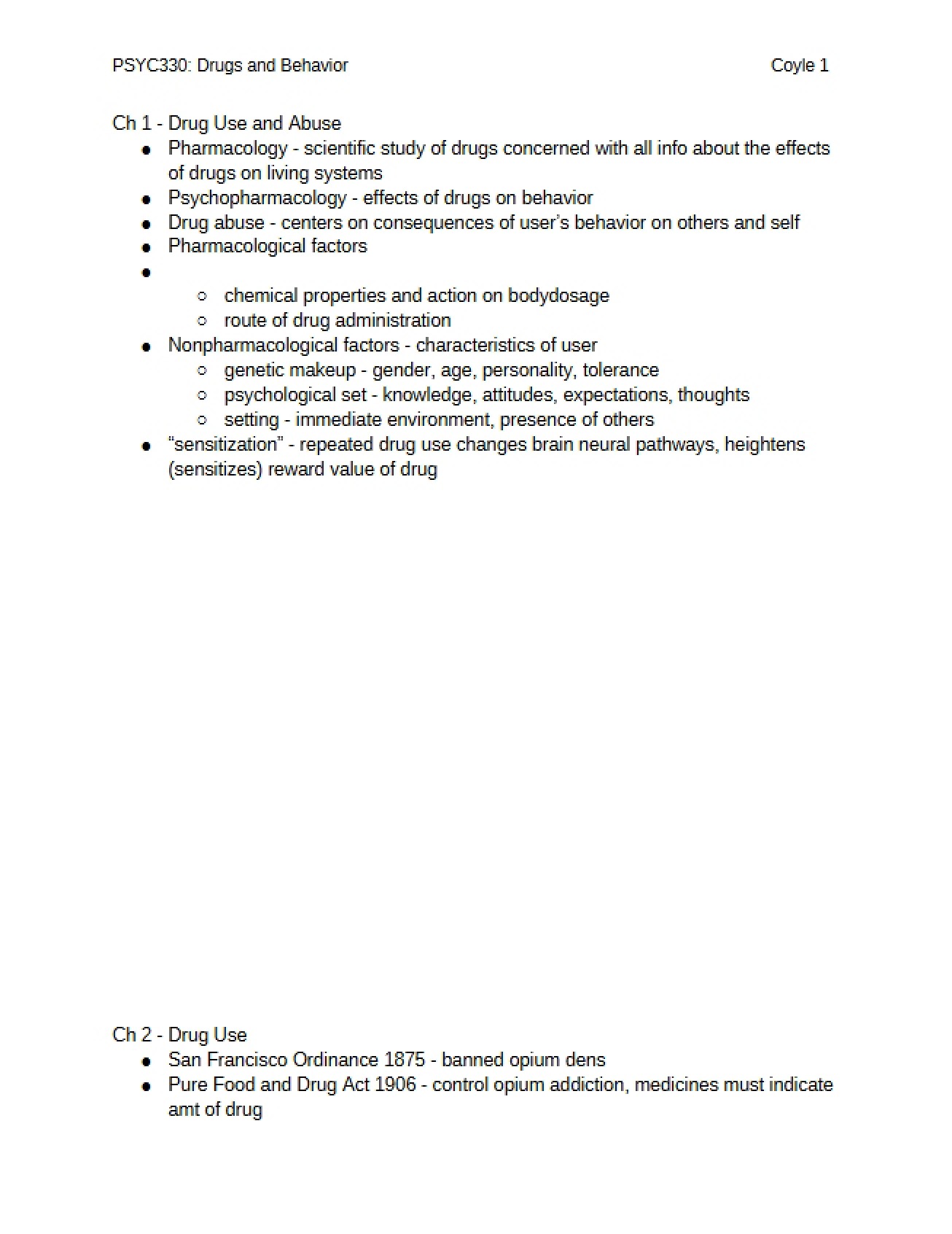
These are lecture notes taken during the third exam review session for PSYC 330: Drugs and Behavior at Binghamton University. The notes cover material from Chapters 9, 11, and 13 of the course textbook, focusing on sedatives, hypnotics, anxiolytics, and related anxiety disorders. The notes are presented in a condensed, point-form style, likely intended for quick review before an exam.
Why This Document Matters
These notes are essential for students enrolled in PSYC 330 preparing for their third exam. They consolidate key concepts and terminology discussed in lectures related to drugs affecting the central nervous system and their impact on anxiety and sleep. They are most useful when used *in conjunction with* the textbook and original lecture materials. This resource helps students efficiently identify and recall important information for exam preparation.
Common Limitations or Challenges
These notes are a *supplement* to the course material, not a replacement. They lack the full context and detailed explanations found in the textbook and lectures. The notes are also incomplete, representing only the content covered during the review session. Students should not rely solely on these notes to fully understand the material.
What This Document Provides
This document includes:
* A historical overview of sedatives and anxiolytics, including barbiturates, Miltown, and benzodiazepines.
* A discussion of different anxiety disorders, including phobias, panic disorder, agoraphobia, and PTSD.
* Details on the mechanisms of action of benzodiazepines, specifically their interaction with GABAa receptors.
* Pharmacokinetic and pharmacodynamic comparisons between different sedative-hypnotic drugs.
* Key terminology related to drug effects, such as therapeutic window and allosteric modulation.
This preview *does not* include: detailed explanations of complex pharmacological processes, practice exam questions, or a comprehensive summary of all course readings. It also does not include information on treatment options beyond the drugs discussed.