What This Document Is
This is a practice midterm exam for MATH 1271 Calculus I, offered at the University of Minnesota Twin Cities. It’s designed to assess your understanding of core calculus concepts covered in the course up to a specific point in the Fall 2011 semester. The exam focuses on applying theoretical knowledge to problem-solving, mirroring the format and difficulty level of actual course assessments. It’s a closed-book, closed-notes exam, emphasizing independent problem-solving skills.
Why This Document Matters
This resource is invaluable for students currently enrolled in Calculus I or those preparing to take a similar course. It’s particularly useful for self-assessment, identifying knowledge gaps, and building confidence before a high-stakes exam. Working through problems similar to those presented here can significantly improve your test-taking strategy and ability to perform under timed conditions. It’s best utilized *after* you’ve thoroughly reviewed lecture notes, textbook readings, and completed assigned homework.
Common Limitations or Challenges
This document represents a single assessment from a specific semester. While representative of the course material, it doesn’t encompass *every* possible topic or question type that might appear on your exam. It also doesn’t provide detailed explanations or step-by-step solutions – it’s designed to test your existing knowledge, not teach you new concepts. Access to the full document is required to view the complete questions and evaluate your understanding.
What This Document Provides
* A selection of multiple-choice questions testing foundational calculus principles.
* True/False statements designed to assess conceptual understanding.
* Problems requiring detailed computational work, demonstrating your ability to apply calculus techniques.
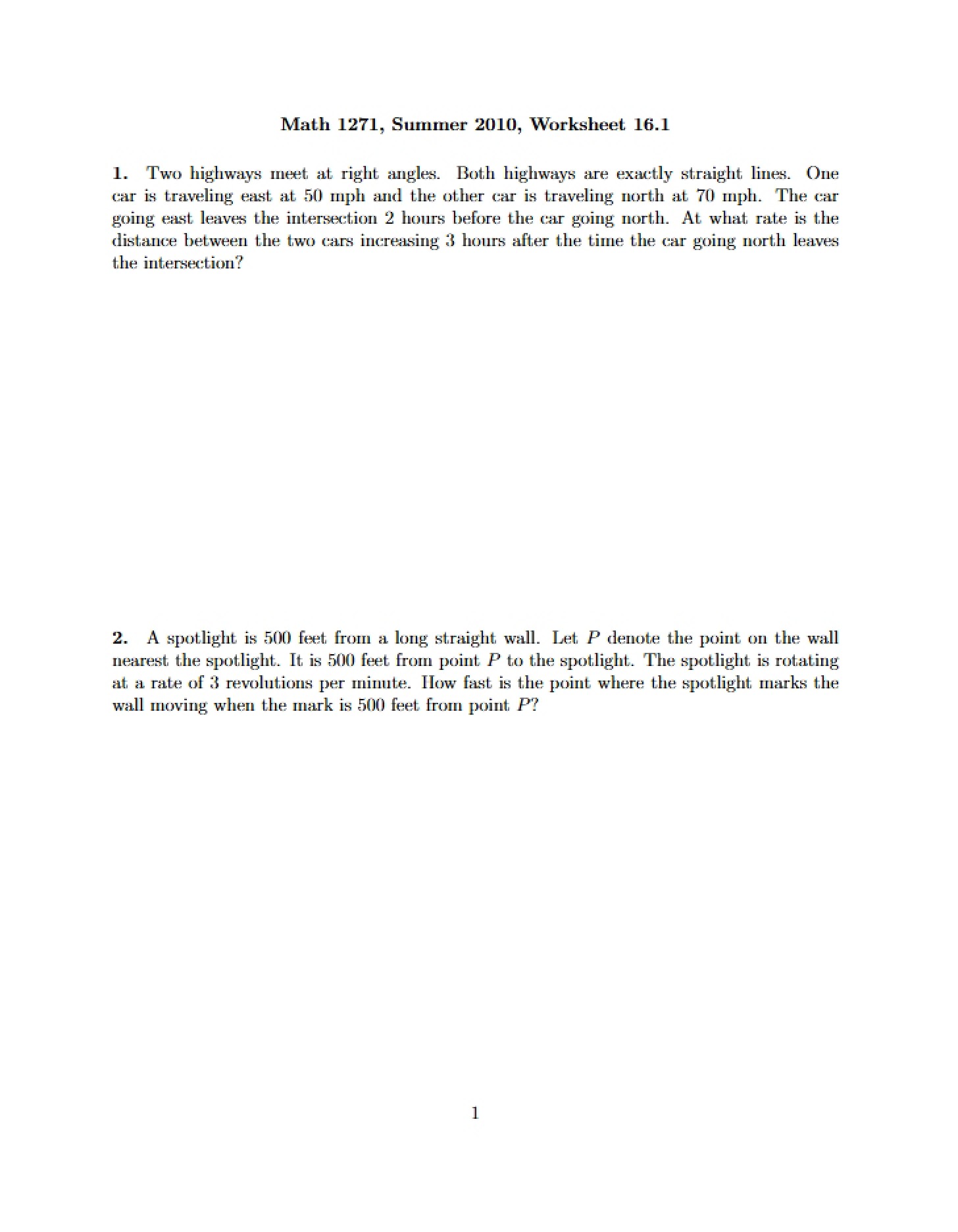
* Questions covering topics such as logarithmic differentiation and related rates.
* Problems focused on analyzing function behavior, including intervals of increase and decrease, and extrema.
* Exercises involving implicit differentiation and inverse functions.
* A focus on applying derivative rules and concepts.