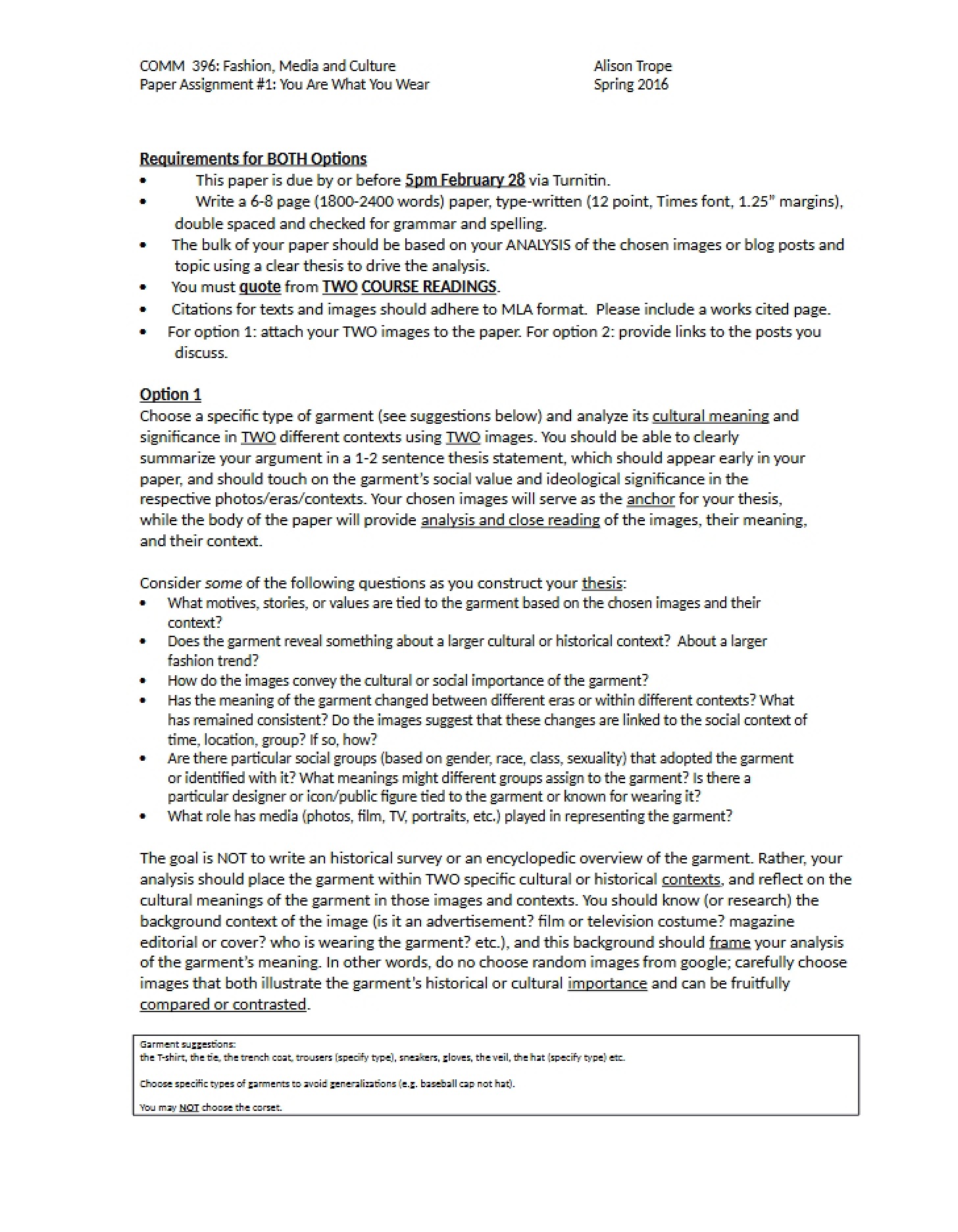
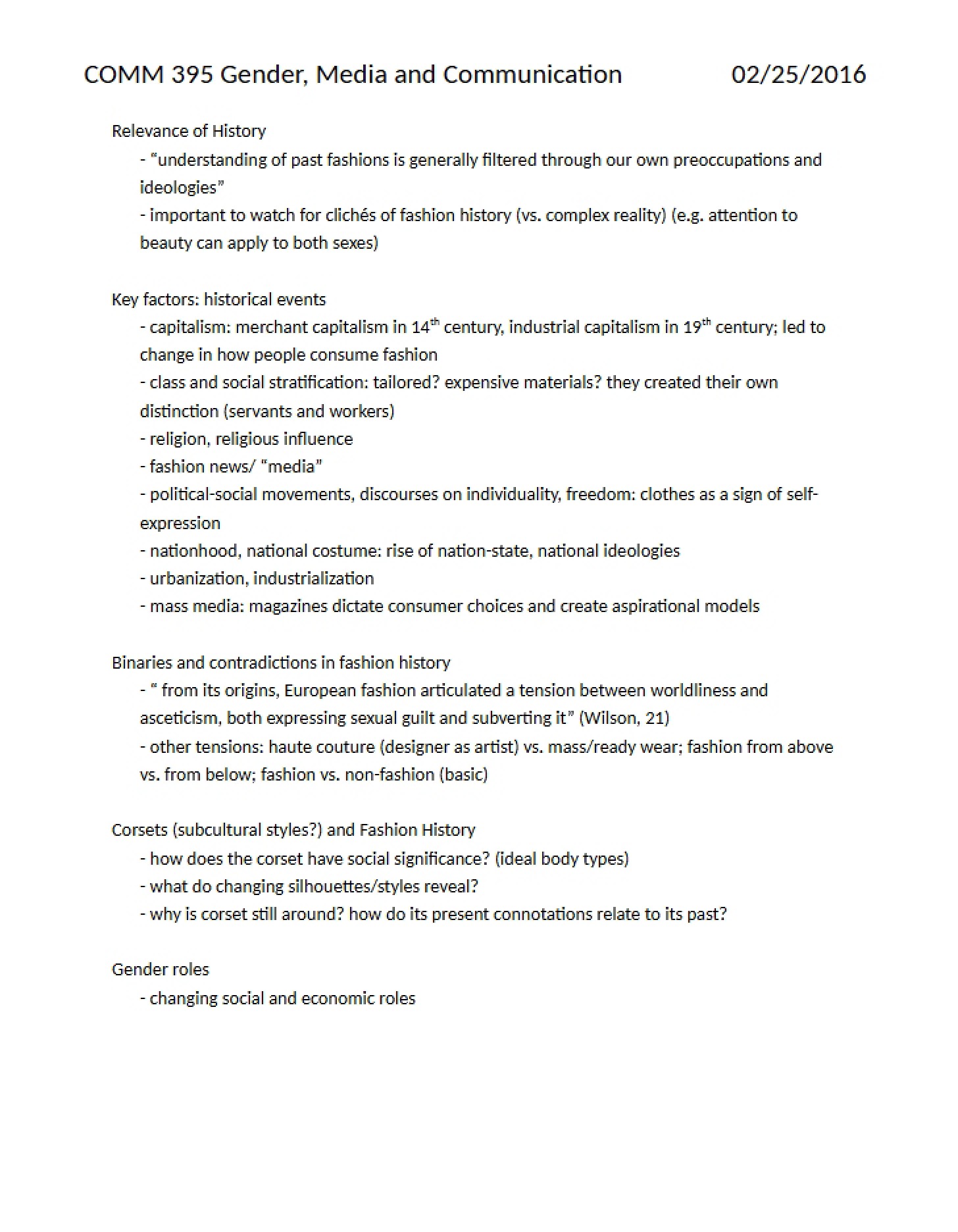
What This Document Is
This material represents session notes from COMM 396: Fashion, Media and Culture at the University of Southern California. It delves into the foundational concepts surrounding fashion, moving beyond simple definitions of clothing to explore its complex relationship with society, identity, and historical context. The session examines fashion not merely as aesthetic choice, but as a powerful system of communication and social regulation. It’s a core component of understanding the course’s broader exploration of how fashion intersects with media and cultural forces.
Why This Document Matters
Students enrolled in COMM 396 will find this session particularly valuable for building a strong theoretical base. It’s ideal for reviewing *before* engaging with more specific case studies or media analyses discussed later in the course. Those struggling to grasp the underlying principles of fashion as a cultural phenomenon, or needing a refresher on key terminology, will benefit greatly. It’s also helpful for anyone preparing to discuss the historical and social forces that shape our perceptions of style and dress.
Common Limitations or Challenges
This session provides a conceptual overview and does not offer detailed analyses of specific designers, brands, or media campaigns. It doesn’t include practical applications like trend forecasting or styling advice. Furthermore, it focuses on establishing a theoretical framework and doesn’t present conclusive answers or definitive interpretations – the course encourages critical thinking and independent analysis. It’s a starting point for deeper exploration, not a comprehensive guide.
What This Document Provides
* An exploration of differing perspectives on the definition of “fashion” itself.
* Discussion of the key players and systems involved in shaping consumer tastes.
* Consideration of the relationship between fashion, the body, and social expectations.
* An overview of the historical development of the fashion system.
* Distinctions between fashion, non-fashion, and anti-fashion as cultural statements.