What This Document Is
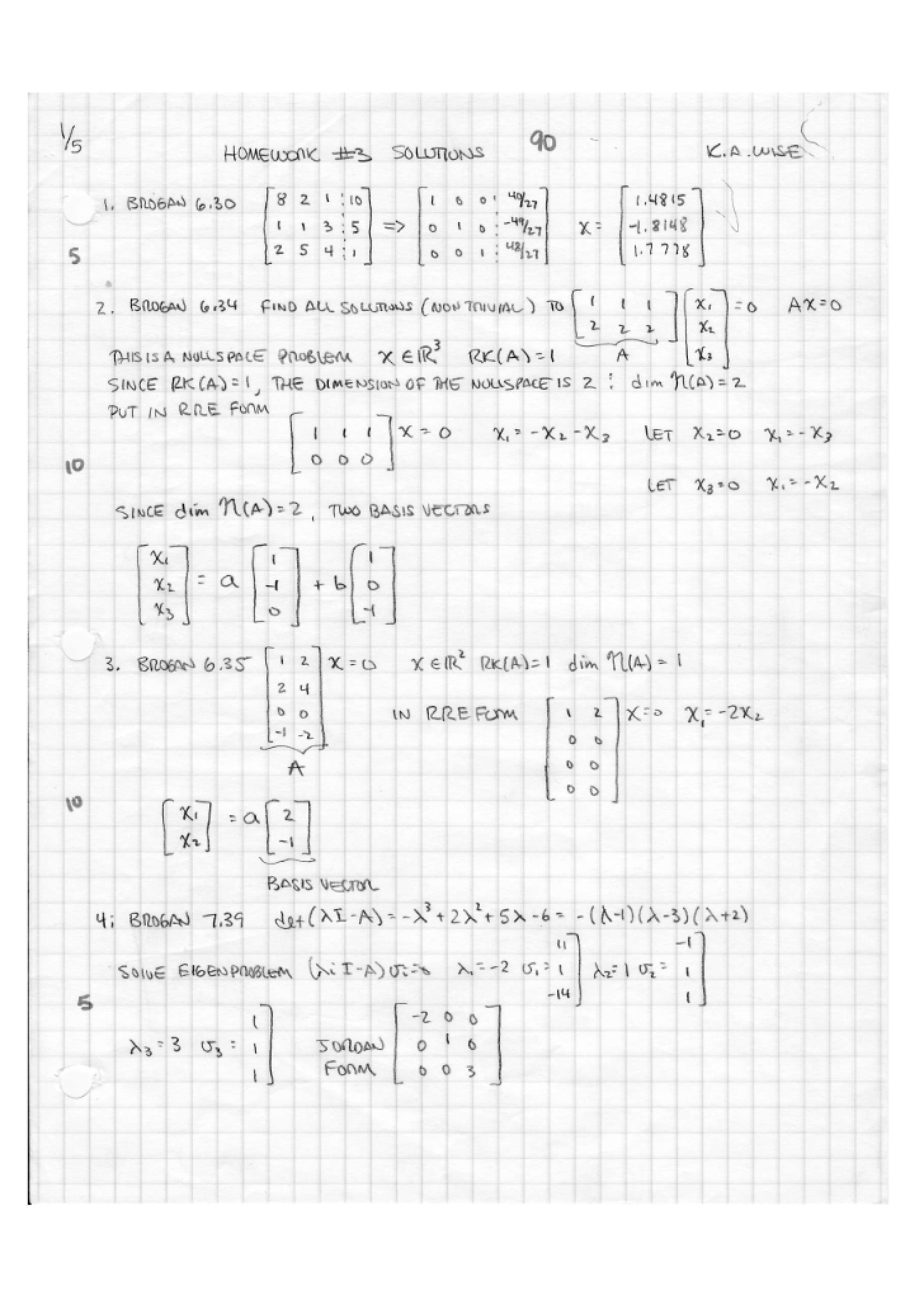
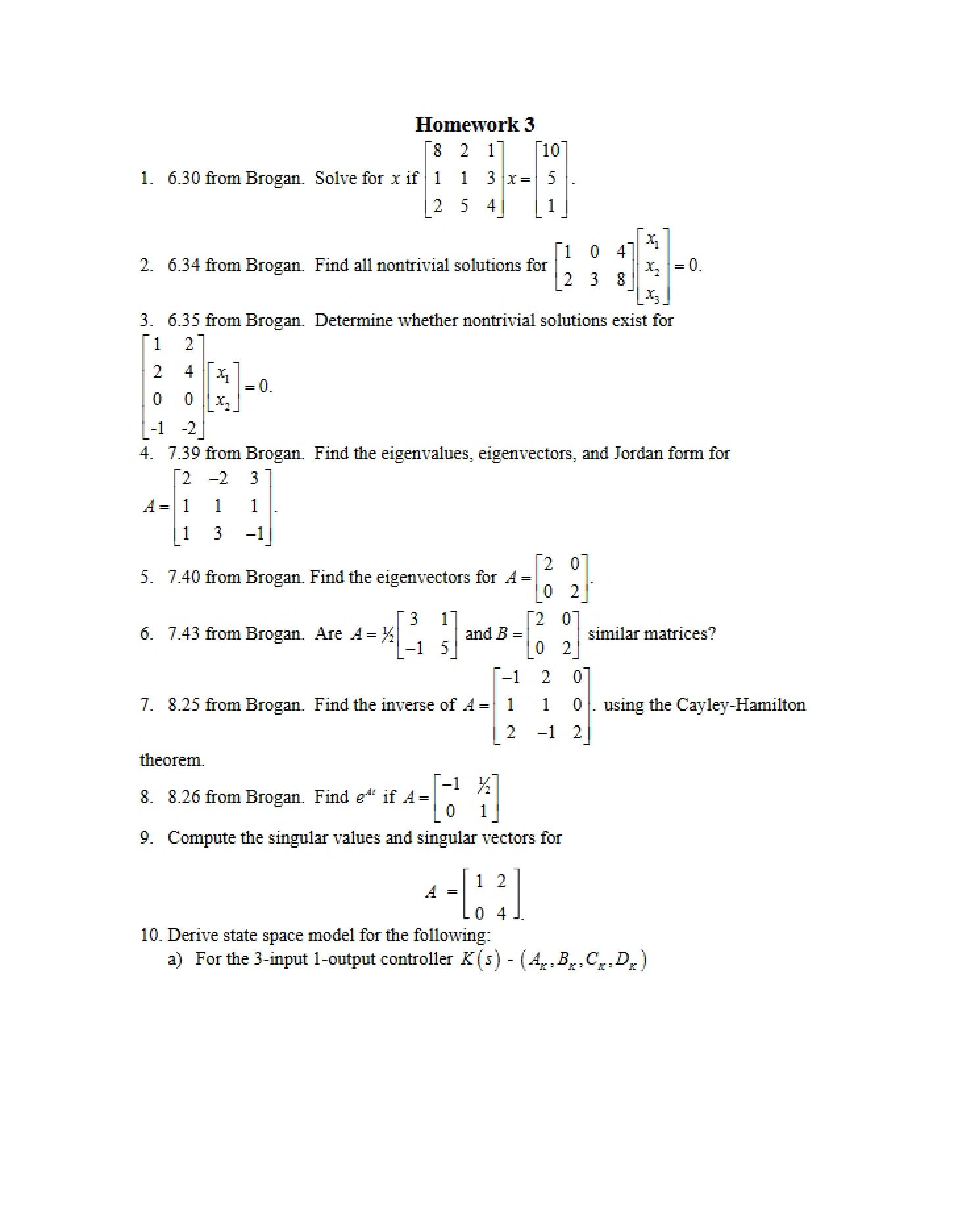
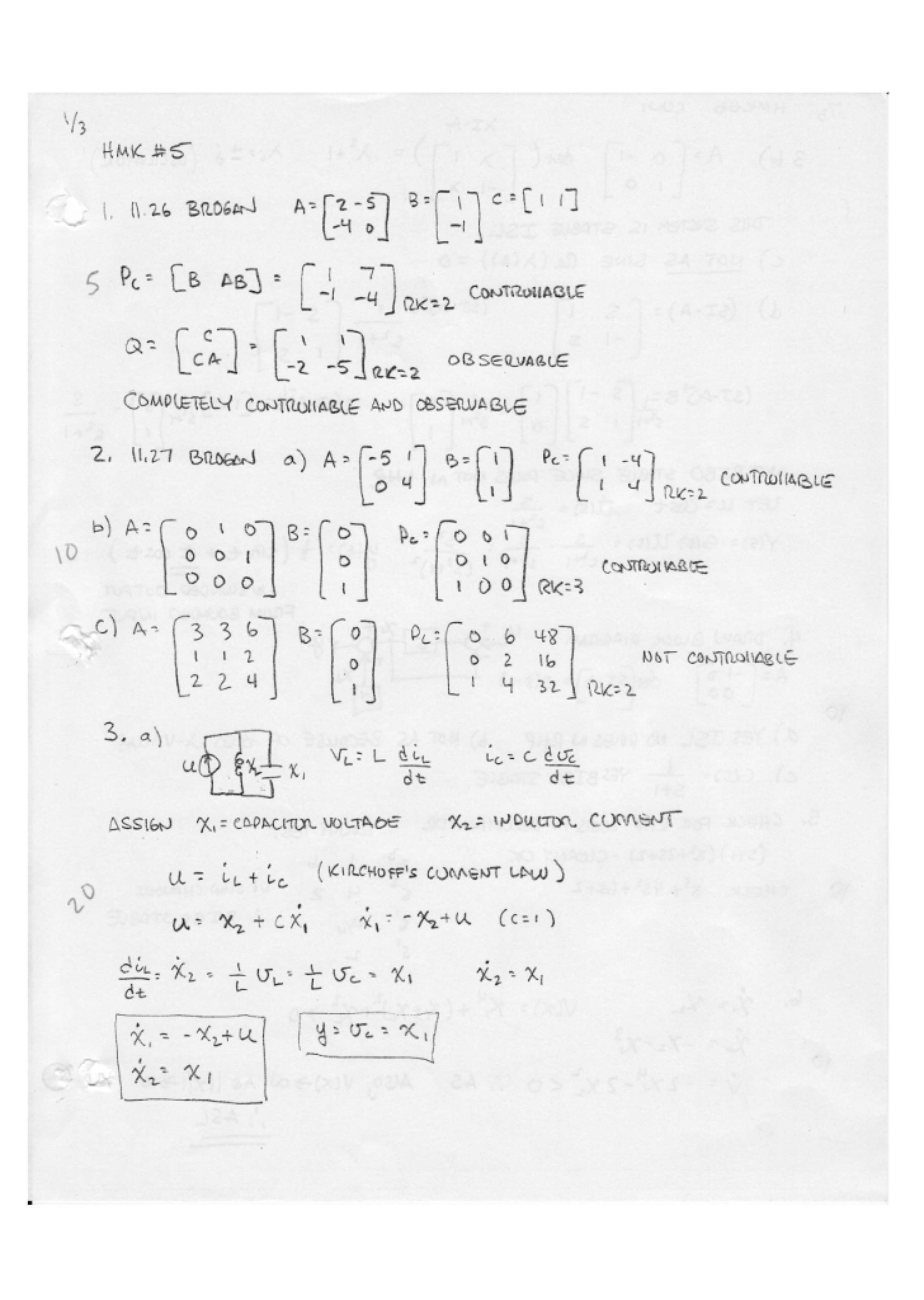
This document presents a detailed solution set for Homework Three within the ESE 543 course, Control Systems Design by State Space Methods, offered at Washington University in St. Louis. It focuses on applying state-space techniques to analyze and solve control system problems. The material builds upon foundational concepts covered in lectures and previous assignments, delving into more complex analytical procedures. It appears to cover topics related to matrix properties, stability analysis, and potentially controllability/observability.
Why This Document Matters
This resource is invaluable for students enrolled in advanced control systems courses utilizing state-space representations. It’s particularly helpful for those seeking to solidify their understanding of the theoretical concepts through worked examples. Reviewing a complete solution set can illuminate common pitfalls and demonstrate a systematic approach to problem-solving. It’s best used *after* attempting the homework problems independently, as a means of verifying your work and identifying areas where your understanding needs strengthening. Students preparing for exams or quizzes on state-space methods will also find this a useful study aid.
Common Limitations or Challenges
This document provides a completed solution to a specific homework assignment. It does *not* offer a comprehensive re-teaching of the underlying concepts. It assumes a foundational understanding of state-space representation, matrix algebra, and control systems principles. While the solutions demonstrate *how* to approach the problems, it won’t necessarily explain *why* certain methods are chosen or provide alternative solution pathways. It is also limited to the specific problems presented in Homework Three and does not cover all possible scenarios within state-space control systems design.
What This Document Provides
* Detailed step-by-step workings for each problem in Homework Three.
* Analysis related to the properties of matrices used in control system modeling.
* Application of theoretical concepts to practical control system examples.
* Illustrations of how to verify the properties of system matrices.
* Exploration of concepts related to the characteristics of eigenvectors and eigenvalues.
* Discussions on the relationship between matrix properties and system stability.